The night my mother died, I sat with her in silence for a full hour before I picked up my phone, and my sister, Claudette, has never forgiven me for that.
She found out, of course. In our family, everything comes out eventually. Claudette called me three days after the funeral, her voice tight and clipped the way it gets when she’s building toward something, and she said, “You sat there alone with her and didn’t call me. You had an hour with her that I didn’t get, and you stole that from me.”
I didn’t argue. There was nothing I could say that would sound right to her.
What I didn’t tell her — what I couldn’t tell her yet — was that I hadn’t been alone in that room at all.
My mother spent her last four months in a hospice facility outside of town. It cost $6,400 a month, which wiped through her savings faster than any of us wanted to admit, and the arrangement had already caused its own quiet war inside our family. Claudette had wanted to move Mom into her house. I’d been the one who toured the facility, who sat with the financial coordinator, who eventually said yes when Mom herself whispered that she wanted to go. Claudette never quite accepted that I hadn’t made that decision to sideline her. She saw it as control. She always sees my decisions as control.
But Mom had been happy there. That much I knew.
Every Tuesday, a hospice volunteer named Ruth came and read to her. Literary fiction, mostly. Mom had always loved Ann Tyler. Ruth told me this herself the evening Mom died — she was still in the building when I arrived, gathering her bag in the hallway, and she stopped when she saw me come through the door. She said, “I’m so glad you’re here. She talked about you a lot, you know.”
I didn’t know what to do with that. Mom and I had a complicated history, the kind that takes years to describe and even longer to understand. I loved her. I also spent most of my forties grieving the mother I wished she had been. When I walked into her room that night and found her still and small in that bed, I sat down next to her and I just stayed. I didn’t cry. I didn’t pray. I held her hand and I thought about all of it — every holiday, every phone call, every silence between us — until the room got dark.
I don’t know exactly when Ruth came back in. She must have waited in the hallway for a long time before she knocked softly and stepped inside. She didn’t say anything at first. She just stood near the door, and somehow that was exactly right.
Then she reached into her bag and held out a folded envelope. “She asked me to give this to you,” Ruth said. “She dictated it two weeks ago. She made me promise I’d put it directly into your hands.”
I stared at it. My name was written on the front in Ruth’s handwriting.
I didn’t open it that night. I put it in my coat pocket and I sat for another twenty minutes before I finally called Claudette.
She arrived in forty-five minutes. My brother, Dennis, came with his wife about an hour after that. The room filled up with people and noise and the particular grief that happens in groups, and I stood a little apart from all of it with that envelope pressed against my ribs.
I read it two days later, alone in my car outside a grocery store.
Mom had dictated four paragraphs. She talked about the hospice room, how she could see a small maple tree from her window, how Ruth had just finished reading her a novel she loved. And then she got to it. She said that she knew she had not always made things easy for me. That she had leaned on me in ways that weren’t fair and then blamed me for the leaning. That the decision to come to the hospice had been hers alone and she needed me to know that she had been glad — genuinely glad — to make it.
She said she knew Claudette would be angry. She said she was sorry she hadn’t found the courage to say any of this to my face.
And then she wrote — Ruth’s careful cursive rendering my mother’s voice — “You were the one who showed up. Every time. I should have said so.”
I sat in that parking lot for a long time.
I never showed the letter to Claudette. That might sound cruel, but I don’t think it is. The letter wasn’t for her. It wasn’t ammunition or evidence or anything that needed to be litigated at a family dinner. It was just my mother, finally, saying the thing she should have said while she was alive.
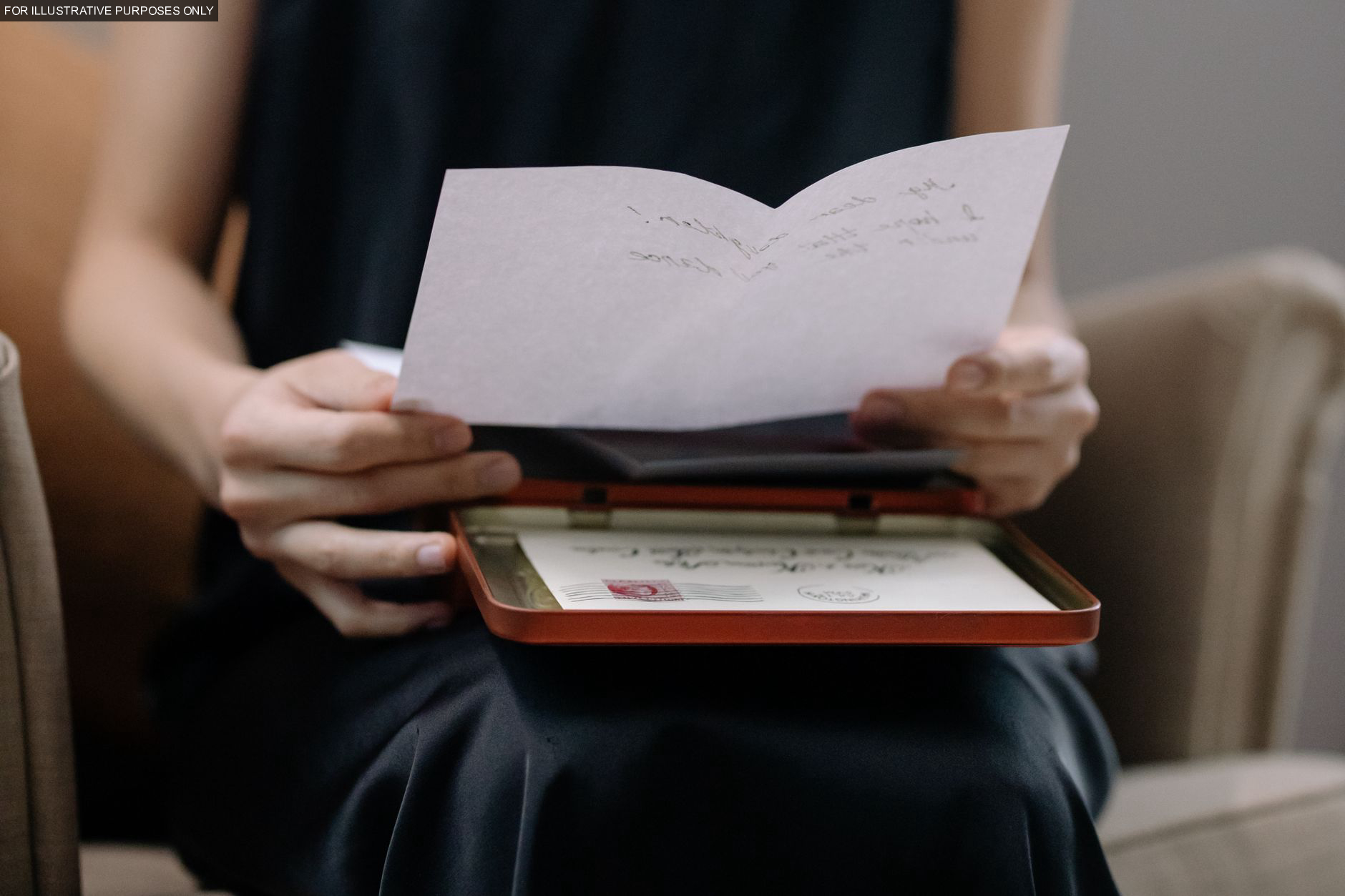
I keep it in the same red tin box where I keep the other things I don’t want to lose. I have taken it out and read it maybe a dozen times in the two years since she died.
It still lands the same way every time.
Some things aren’t meant to be shared. Some things are just meant to be carried.