My grandfather left me a voicemail three weeks before he died, and I almost deleted it without listening.
I had never met the man. My mother, Rosalind, had been estranged from her father, Gerald, since before I was born. She never talked about him — not really. If I asked, she would just say, “Some doors are better left closed,” and change the subject. So when an unfamiliar number from Myrtle Beach showed up on my phone one Tuesday afternoon in October, I let it go to voicemail and forgot about it entirely.
Three weeks later, I got a call from a hospice social worker telling me Gerald had passed at the Pineview Care Center in Conway, South Carolina. He had listed me as a secondary contact — God knows how he even found my number. The social worker said there were no funeral arrangements and asked if the family wanted to handle anything. I said I would call her back.
That was when I finally played the message.
His voice was thin and slow, the way old men sound when they are choosing every word carefully. He said, “This is your grandfather Gerald. I know you don’t know me and I know that’s my fault. I have something that belonged to your mother — it should have gone to her a long time ago. I left it with a woman named Patrice on my floor. She’s good people. Please tell Rosalind I’m sorry it took this long.”
That was it. Forty-one seconds.
By the time I drove down to Conway, Pineview had already cleared his room. His few belongings had been bagged and sent to a Goodwill on Highway 501. I stood in the hallway outside his old room feeling like an idiot, not even sure what I was looking for or why I had driven three hours for a man I had never spoken to.
Then a woman in teal scrubs came around the corner and asked if I was Rosalind’s daughter. I said I was. She said, “I’m Patrice. I’ve been waiting on you.”
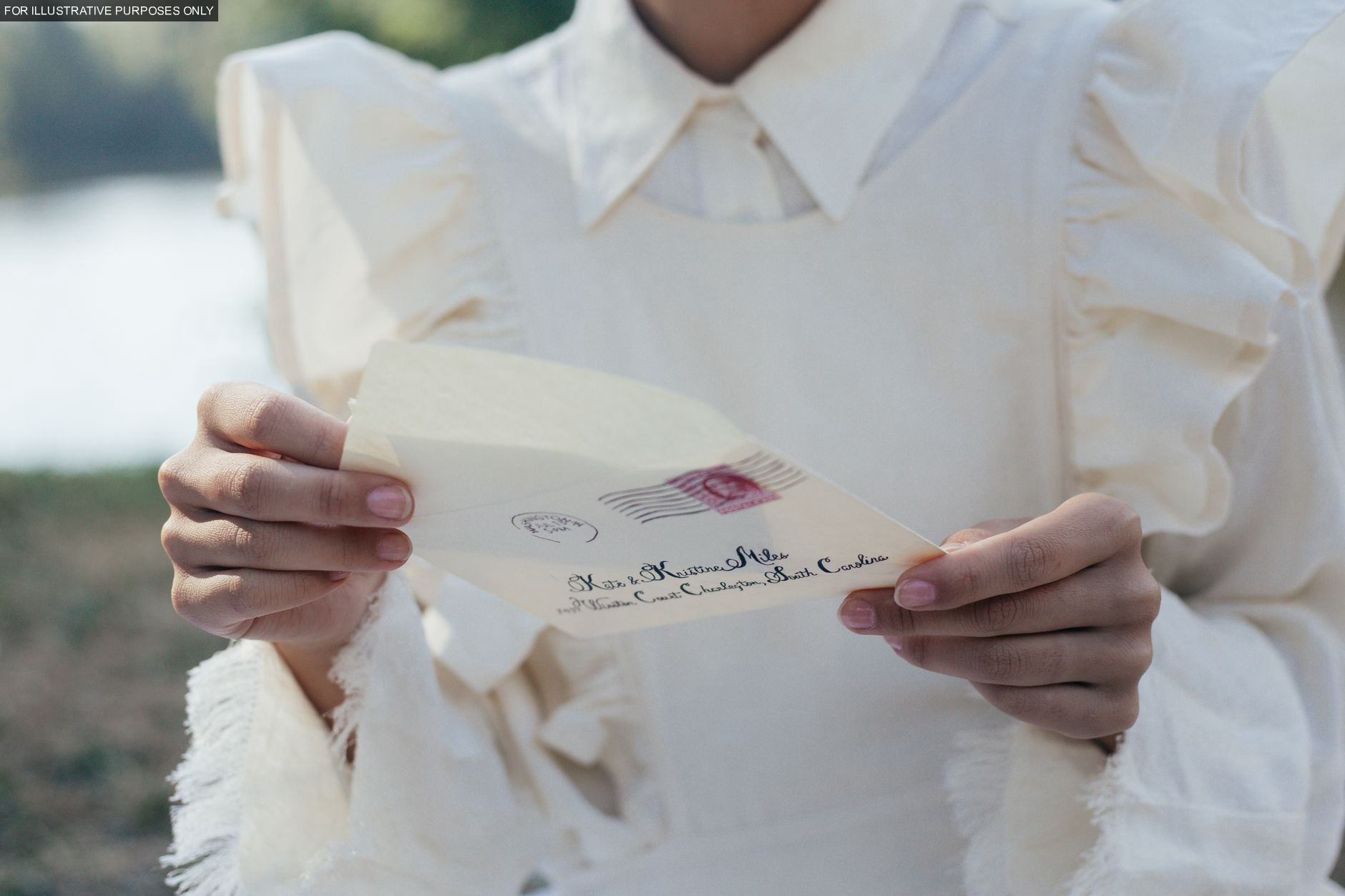
She walked me to the nurses’ station and pulled a manila envelope from the bottom drawer of her locker. It was old — the paper had gone the color of cream, and it was sealed with tape that had dried and re-stuck itself over the years. My mother’s name was written on the front in blue ballpoint. Rosalind Anne Holt. Her maiden name.
I drove home with that envelope on my passenger seat and called my mother before I even got on the highway.
She didn’t say anything for a long time after I told her about the voicemail. Then she said, very quietly, “What’s in it?”
I told her I hadn’t opened it. That it was hers.
She flew in from Phoenix two days later. My mother’s younger brother, my uncle Derek, drove up from Savannah because she called him and told him what was happening. The three of us sat at my kitchen table on a Thursday morning, and my mother opened the envelope with a butter knife, slowly, like she was trying not to tear whatever was inside.
Inside was a handwritten letter and a savings account passbook from a bank that no longer existed — First Federal of the Carolinas. The account had been opened in my mother’s name in 1987, the year she left home at eighteen, and the last recorded balance was $31,400.
The letter was four pages long. I won’t share all of it because it wasn’t written for me, but the part my mother read out loud — after she sat quietly for almost ten minutes — was a paragraph near the end where Gerald wrote that he had opened the account the month she left because he knew he had failed her, and he had added to it over the years when he could, and he had never sent it because he was ashamed and kept telling himself he would do it in person, and then the years went by the way years do.
The bank was long gone but the account had been absorbed through two mergers into a regional bank that still operated. My uncle Derek, who works in finance, spent the next six weeks tracking it through the FDIC records. The original $31,400 had sat dormant long enough to be transferred to South Carolina’s unclaimed property division.
My mother filed the claim herself. Fourteen weeks later, she received a check for $31,400.
Not a penny of interest — the state doesn’t pay that — but every dollar Gerald had saved for her.
She framed the passbook. It’s hanging in her hallway in Phoenix now, next to a photo of herself at seventeen that I had never seen before, one she said came from the same envelope. In it she is standing in front of a house I don’t recognize, squinting into the sun, and her father is standing just behind her with his hand on her shoulder.
She looks happy. So does he.
Some doors, I guess, are better opened late than never.