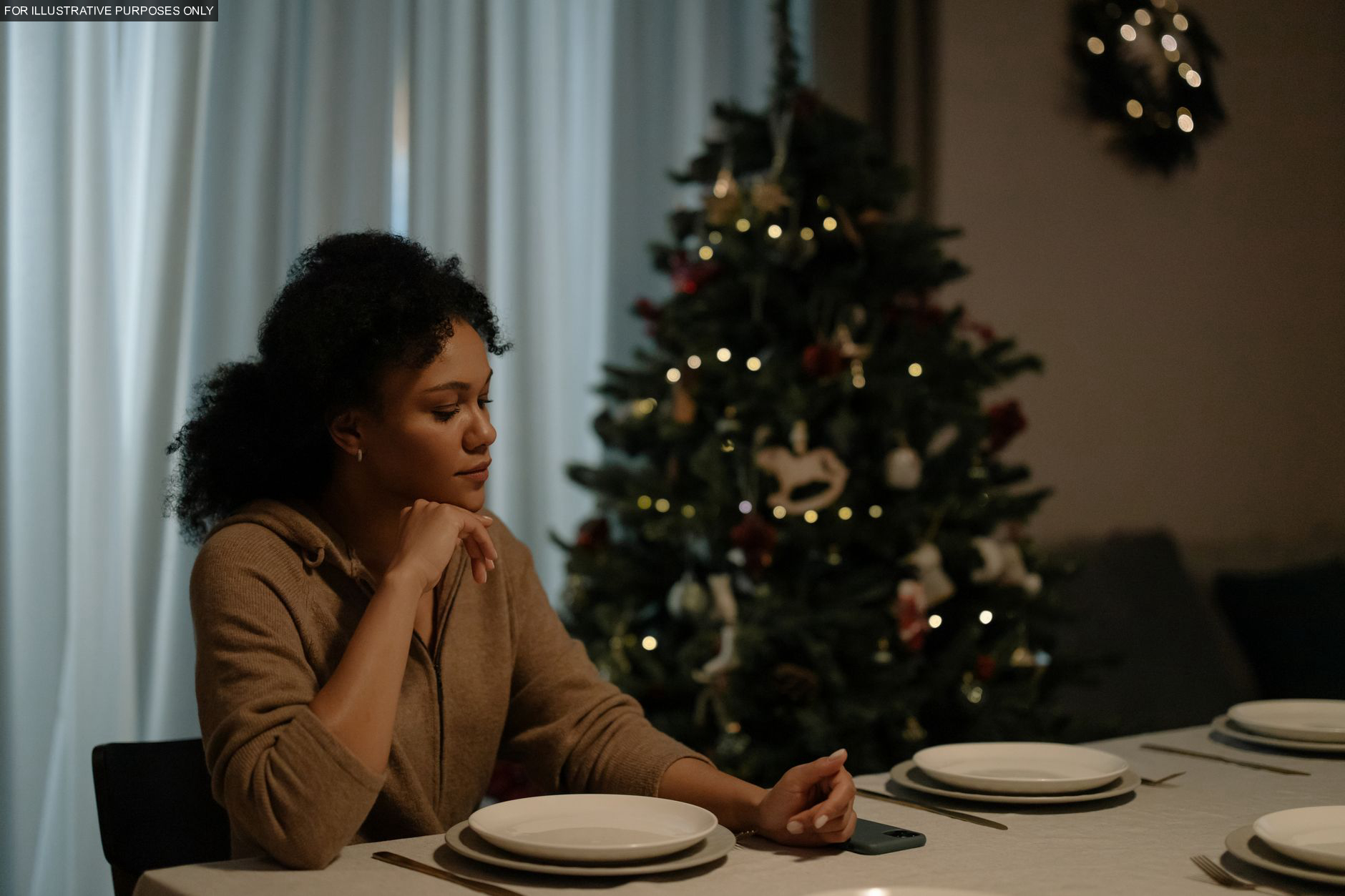
My mother-in-law, Diane, stood at the head of my Thanksgiving table and told fourteen people that I had killed her grandchild — and I sat there and let her.
That was three years ago. I was seven months out from burying my daughter, Maren, who lived for eleven days after being born at twenty-six weeks. I had not slept a full night since the funeral. I had not eaten a real meal. I had barely learned how to breathe again, and Diane was using the holiday I had still somehow decorated for and cooked for to tell her entire side of the family that my “stress and negativity” during the pregnancy had caused everything.
My husband, Joel, sat two seats away from me and said nothing.
I remember the exact feeling of my hands going flat on the tablecloth. My grief counselor, a quiet woman named Patricia who charged me $180 a session because our insurance had a cap and we had already burned through $4,200 in covered visits, had warned me about this. She said the first year after losing a child would make me unrecognizable to myself. She said I would sometimes go very still in moments that should have made me explode, and that the stillness was not weakness — it was my nervous system doing the only thing it knew how to do.
She was right. The woman at that table was not really me.
Diane had been building toward this for months. She had told Joel’s sister, my sister-in-law Priya, that I had refused bed rest. That was a lie. I had been on modified bed rest for six weeks. She told people I had kept working. Also a lie. I had taken leave the moment my perinatologist recommended it. She had constructed an entire version of events in which I was careless and selfish, and she had shared it quietly, in the way that certain women share things — in parking lots after church, in text threads I was not part of, in the kind of whisper that sounds like concern.
I did not confront her at Thanksgiving. I cleared the plates. I wrapped the leftovers. I drove home in silence while Joel told me she hadn’t meant it the way it sounded.
“She’s grieving too,” he said.
“I know,” I said. And I meant it. I did know. But grief does not give you the right to burn someone else to the ground.
What Diane did not know — what no one knew — was that I had been keeping records since the week Maren was born.
Not because I was planning anything. Not because I was strategic or cold. I kept records because I am a person who processes pain by documenting it. I have done it since I was a child. I kept a journal through my parents’ divorce, through every hard thing I had ever lived through. When Maren was in the NICU, I wrote down everything the doctors said. I saved every voicemail from the hospital. I kept the printed care summaries. I kept my own prayer journals. When we got the bill — $312,000 total, of which we owed $22,400 after insurance — I kept that too, along with every payment confirmation.
After Thanksgiving, I kept more. I started saving Diane’s texts to Joel that he left open on his phone. Screenshots, dated and organized by month. I saved a voicemail she left me in February, eight months after Maren died, telling me I needed to “make peace with what happened” and “stop punishing Joel for your choices.” I saved the email she sent to both of us in March suggesting that our marriage was struggling because I had “never fully bonded with the pregnancy.”
I put everything in a box. I labeled it with Maren’s name, because everything I do now is for her.
Joel and I separated fourteen months after Maren died. It was not dramatic. It was just two people who had broken in different directions and could no longer find each other in the dark. We were kind about it. We split what we had. I moved into a small apartment and started over.
Diane told Priya that I had left because I was “running from guilt.”
Priya called me directly to tell me what Diane had said. That was the first time I understood that Priya had been watching all of this more carefully than I realized.
“She’s been doing this to people for thirty years,” Priya told me on the phone. “She did it to my mother. She does it to anyone who can’t fight back.”
Last month — two and a half years after that Thanksgiving — Priya called me again. Their father, Joel’s and Priya’s father, had passed away. He had been sick for a while. In his final months, he had quietly revised his estate documents. Diane had assumed she would control everything, as she always had. She had already told people she planned to sell the family lake house and divide the proceeds however she saw fit.
What she did not know was that her husband had spoken to Priya, and to a lawyer, and had left the lake house jointly to Joel and Priya — not to Diane. He had also left a separate account of $47,000 specifically designated for Priya and Joel’s children or future children, with a handwritten note that named Maren by name as the reason he had wanted something protected for them.
He had known. He had watched his wife rewrite history in real time, and in his quiet, slow way, he had done something about it.
Diane found out at the reading of the will. Priya was there. She said Diane went very still.
I know that feeling. I know exactly what that stillness is.
I did not go to the reading. I did not need to. I was at home with my box, and Maren’s name on the outside of it, and the knowledge that the truth has always had a way of holding its shape — even when no one is watching.