The sound stopped them cold.
It was faint at first — a soft, rhythmic crying echoing up through the stone throat of the cave. The group of hikers had been exploring the limestone caverns of rural Vietnam when one of them held up a hand and whispered: “Do you hear that?”
They all did.
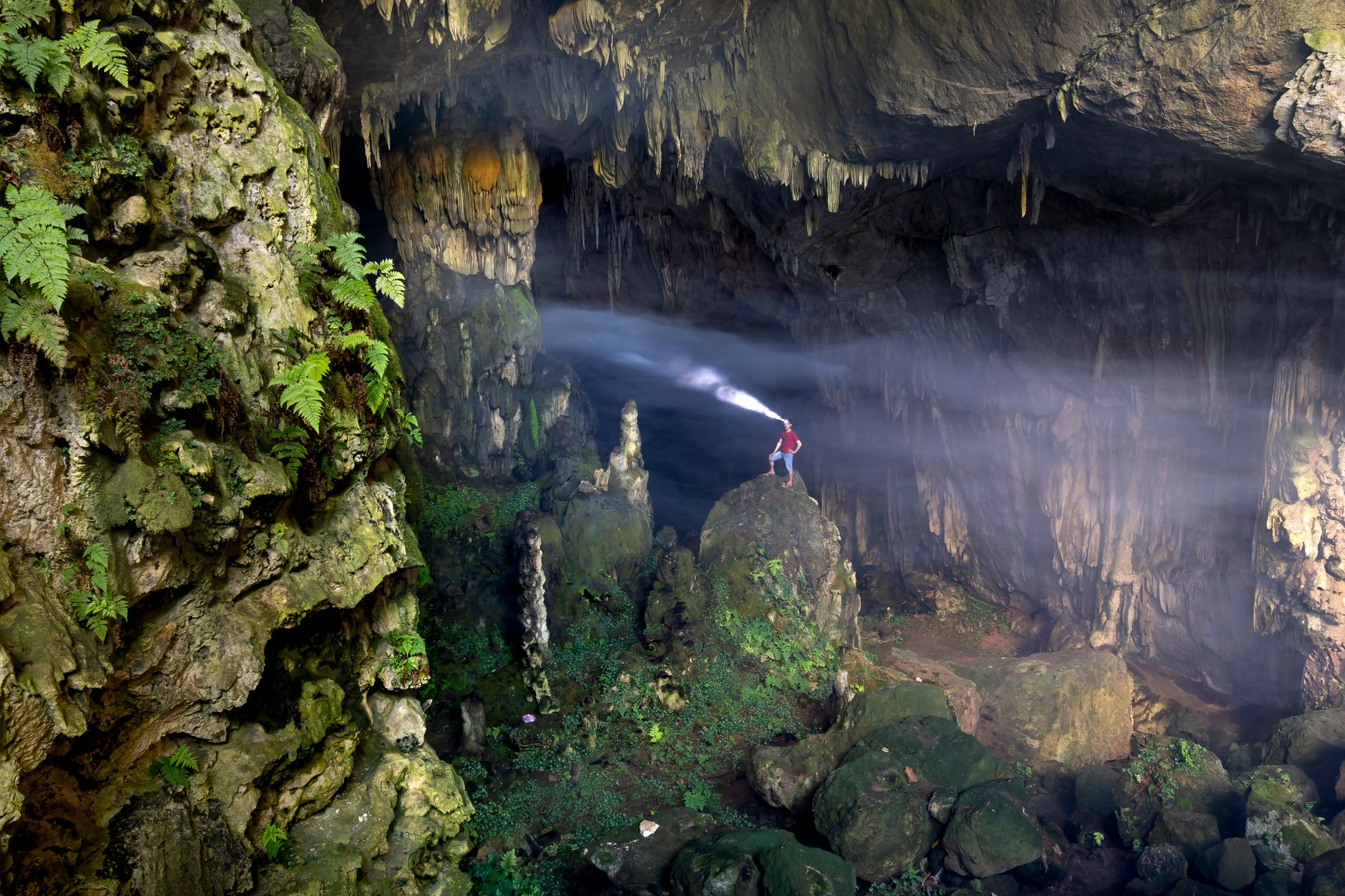
For a moment, nobody moved. The beam of a headlamp swept across the cave ceiling — thousands of stalactites hanging like frozen daggers above them, the air thick with mist and the smell of ancient earth. Whatever was making that sound was deep inside. Very deep.
They had two choices. Turn back. Or follow it.
They went in.
The path down was not a path at all — it was a scramble over moss-slicked boulders, through curtains of hanging fern that had somehow found life in the near-dark, past stalagmites rising from the cave floor like pale, silent sentinels. The crying grew louder with every step. More desperate. More urgent.
One of the hikers, a man named Minh, would later describe the moment the cave opened up into a massive underground chamber as something out of a dream. The ceiling vaulted fifty feet above them. Shafts of pale light fell through cracks in the rock, illuminating clouds of mist that drifted through the chamber like living things. And there, on a narrow ledge of stone in the middle of it all, was the source of the sound.
A dog.
Small, muddy, and trembling, the animal was stranded on an elevated rock formation surrounded by a drop it clearly couldn’t navigate. It had been there long enough that its voice had gone hoarse. When the beam of Minh’s flashlight found it, the dog stopped crying and simply stared — as if it couldn’t quite believe the light was real.
“We all just looked at each other,” Minh said. “Nobody said anything. We just started climbing.”
Getting to the dog wasn’t easy. The rock was slippery, the drop was real, and none of them had gear designed for anything like this. It took nearly forty minutes of careful movement across the cave floor and up the rock face before one of the hikers was finally close enough to reach out a hand.
The dog didn’t hesitate. It stepped forward, and let itself be lifted.
Back on flat ground, wrapped in a spare jacket from one of the hikers’ packs, the dog — later named Dong, meaning “cave” in Vietnamese — ate half a granola bar and fell asleep in Minh’s arms before they even made it back to the cave entrance.
Vets later confirmed the animal was dehydrated and had been stranded for at least two days, possibly longer. How it got down there in the first place remains a mystery. The cave system is vast, unmapped in parts, and the chamber where they found him sits nearly 300 meters from the nearest entrance.
Dong was adopted by one of the hikers two weeks later.
He sleeps indoors now. He’s never been back to the cave. But sometimes, Minh says, when the lights go out at night, Dong lifts his head toward the dark and listens — like he’s still not entirely sure the sound won’t start again.