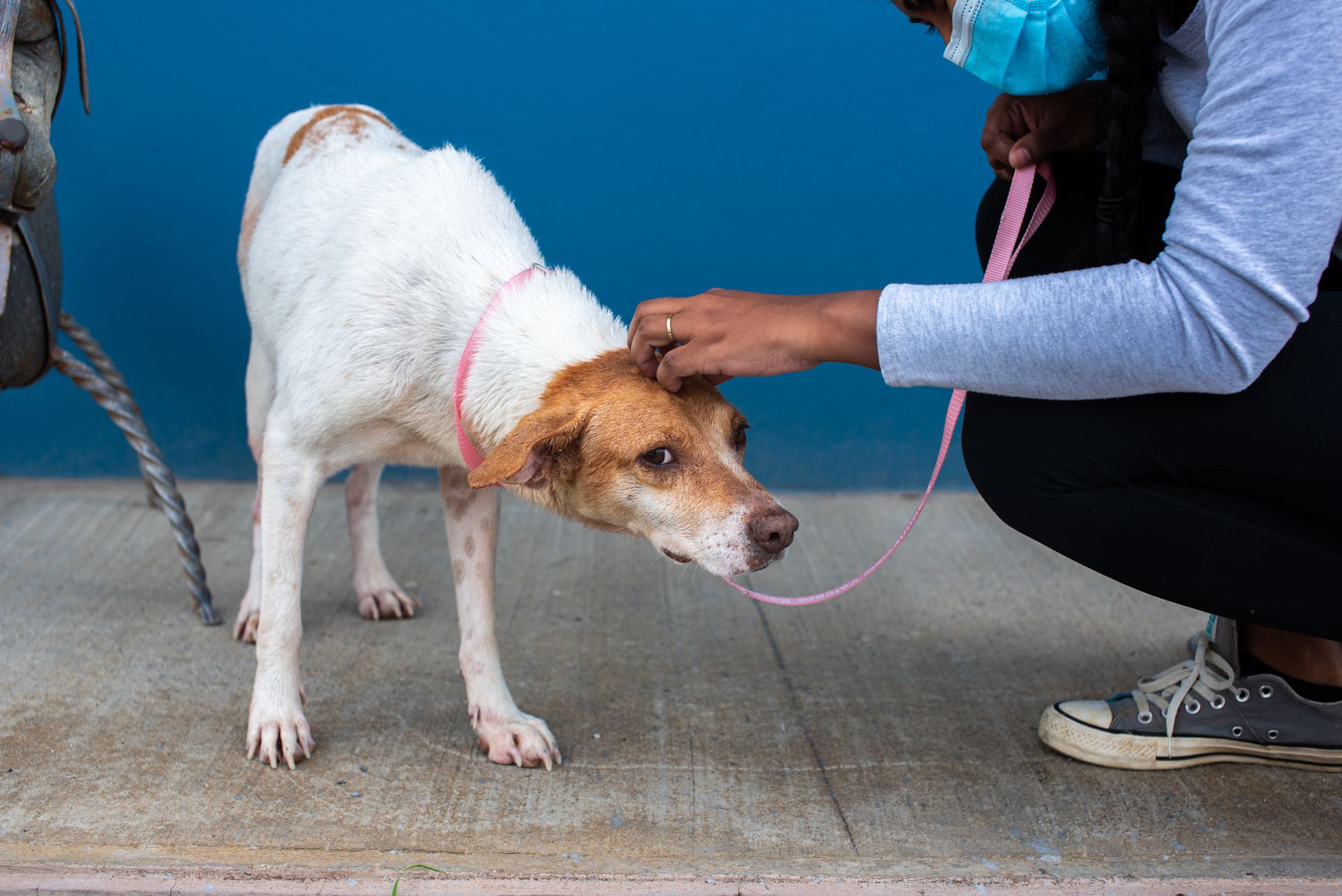
The seventh time Maya was returned to the shelter, she didn’t even lift her head when the door opened.
She just lay in the corner of her kennel, chin flat on the concrete, eyes fixed on nothing. Staff members exchanged glances they didn’t need to put into words. Seven families. Seven chances. Seven goodbyes.
She had come in as a stray — a lean, brown-and-white mixed breed with soft ears and a cautious face that volunteers described as “almost human.” The kind of dog that makes people stop mid-walk and say, “That one. I want that one.”
And they did. Over and over again.
The first family said she was too anxious. The second said she wouldn’t stop shaking. The third said she hid under the bed for a week and wouldn’t come out. By the fifth return, shelter staff began gently suggesting that maybe Maya needed a “special home” — quiet, patient, experienced with trauma. Nobody was listening.
The sixth family lasted nine days. The seventh, just four.
What none of them understood — what nobody had taken the time to figure out — was that Maya wasn’t broken. She was terrified. Somewhere in her past, before the shelter found her wandering a highway overpass alone, something had happened that rewired how she experienced the world. Loud voices. Fast movements. Strangers reaching for her head too quickly. Any one of these could send her spiraling into a freeze response so complete she looked almost catatonic.
She didn’t need a new owner. She needed someone who understood that trust, for some creatures, isn’t given — it’s built. Slowly. Painfully. On the animal’s own timeline.
Then came the Reyes family.
They weren’t looking for an easy dog. Diana Reyes had spent years volunteering with a rescue network and had fostered dogs with severe trauma histories before. Her teenage daughter, Camila, had been following Maya’s story on the shelter’s social media page for months, quietly devastated each time a new return was posted.
“We’re not going to rush her,” Camila told the shelter coordinator on intake day. “We don’t care how long it takes.”
The first two weeks, Maya stayed behind the couch. They left food near — not in front of — her hiding spot and sat on the floor nearby, reading, talking softly, doing nothing that required anything from her.
On day sixteen, Maya took a single step toward Camila’s outstretched hand.
On day twenty-three, she slept on the foot of Camila’s bed.
By the end of the second month, she was running in the backyard, ears back, tail going like a propeller — a dog who had been written off seven times, finally learning what safety felt like.
Diana posted a video of Maya on the day they made the adoption official. In it, Maya is pressed against Camila’s legs, looking up at her with an expression that every dog owner in the world will recognize immediately.
It had been there all along. She just needed someone willing to wait for it.
The shelter staff cried. The post went viral. And Maya — the dog nobody could keep — finally came home.