He told me he was a marine engineer somewhere off the Norwegian coast, and I almost sent him $2,400 to cover a port fee that never existed.
It started eight months ago on a perfectly ordinary Wednesday. My sister, Claudette, had convinced me to try one of those dating apps after my divorce was finalized. “You’re forty-one, not dead,” she said, sliding my phone across the kitchen table with the app already downloaded. I laughed. I made a profile. I met Daniel.
He introduced himself as a marine engineer contracted to a Norwegian oil platform, three weeks on, one week off. He had a calm, measured way of writing that felt nothing like the other men on the app. He asked about my job, my daughter, my neighborhood. He remembered things I said three conversations ago. He called me by my name, not “babe,” not “gorgeous.” He felt real.
Over six weeks we talked every single day. He said things like, “I have never met anyone who made me want to come home before the contract ended.” I told Claudette about him. She was cautious. I told my mother, Renata, who is seventy and has seen enough of the world to be suspicious of most things. Renata said, “Men on boats are lonely for a reason.”
I smiled and kept talking to him.
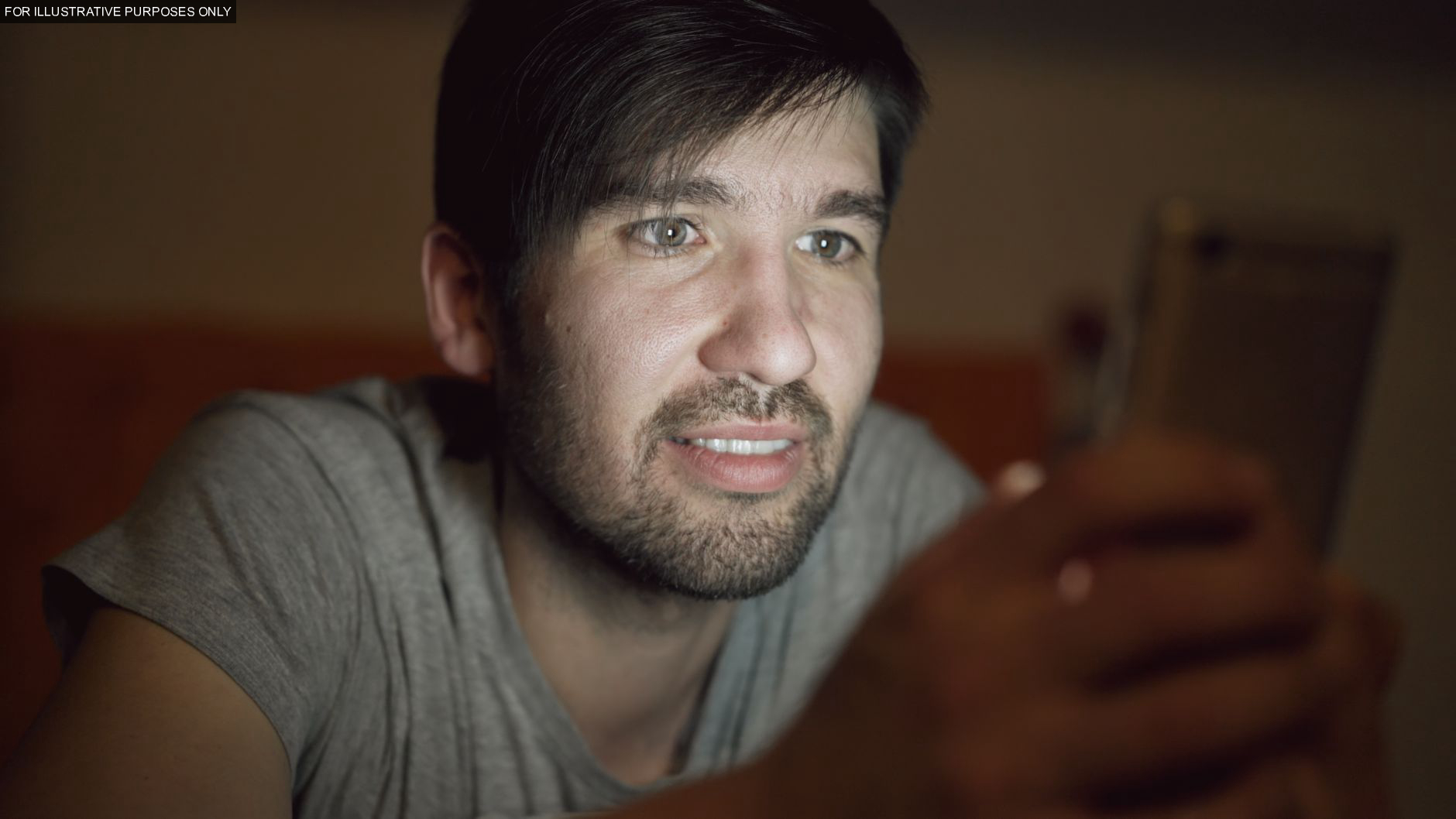
He sent photos. A man in a hard hat on a metal walkway over gray water. A sunset that looked like it belonged on a postcard. A selfie taken in what appeared to be a small crew cabin, fluorescent light overhead, fatigue convincingly written into his face.
Then, four weeks ago, the tone shifted. He told me his contract was ending early, that the company had a paperwork dispute with the port authority in Stavanger, and that his personal accounts were frozen pending some kind of compliance review. He said if I could wire $2,400 directly to the port logistics company, he could clear the hold, fly home, and we could finally meet in person. He said he would pay me back within seventy-two hours. He said, “I know how this sounds. I would never ask if I wasn’t desperate.”
Something in that sentence stopped me cold.
I did not send the money. Instead I sat with my phone for a long time and looked at every photo he had ever sent me. Most of them were clean. Stock-photo clean. But the last one he sent, that selfie in the crew cabin, had something in the corner I had scrolled past a dozen times without registering. A window. And through the window, faintly, a skyline.
I am not a technical person. I do not know how to extract GPS metadata from a photo. But I do know how to use a reverse image search, and I know how to zoom. I spent an hour with that image enlarged on my laptop screen until I recognized the shape of what I was seeing. That was not the Norwegian coast. That was a skyline I had seen in travel articles. Flat, inland, unmistakably landlocked.
I ran the photo through two different metadata tools I found after a quick search. The location embedded in the file read coordinates that placed him squarely in Minsk, Belarus. Timestamp on the photo: 11:47 a.m., local time, a Tuesday. He had sent it to me that same Tuesday and told me it was taken on the platform.
I sat very still for a moment.
Then I did something I am not proud of, but also am not ashamed of. I kept talking to him. I told him I needed one more day to arrange the transfer. I asked him to send me one more photo, something current, something with a timestamp visible. He sent one within the hour. Same cabin. Same fluorescent light. The clock on the wall behind him read a time that was consistent with Central European Time, not Norwegian time. The difference is one hour. It was a small crack, but it was enough.
I took everything, both photos, both metadata reports, and the complete message thread going back eight months, and I forwarded it to the cybercrime division of my country’s federal fraud reporting service. I filed the report on a Thursday evening. I received a confirmation number and a case reference within twenty-four hours.
I also sent him one final message. I did not accuse him. I did not explain what I had found. I simply wrote, “I hope whoever you really are finds something worth being honest about.”
He never replied.
Claudette called me after I told her what happened. She was quiet for a long moment and then she said, “I’m so sorry. Are you okay?”
I told her I was. And I meant it, which surprised me a little.
I never sent the $2,400. I still have it. I put it toward a weekend trip with my daughter, because she had been asking to visit the coast for two summers and I had kept saying maybe next year.
We went last month. The water was real. The horizon was real. Nobody was pretending to be anything they weren’t.
Renata called me the night we got back. “Men on boats,” she said, and I could hear her smiling through the phone.
“You were right,” I told her.
“I usually am,” she said. “But I’m glad it only cost you eight months and not $2,400.”
So am I.