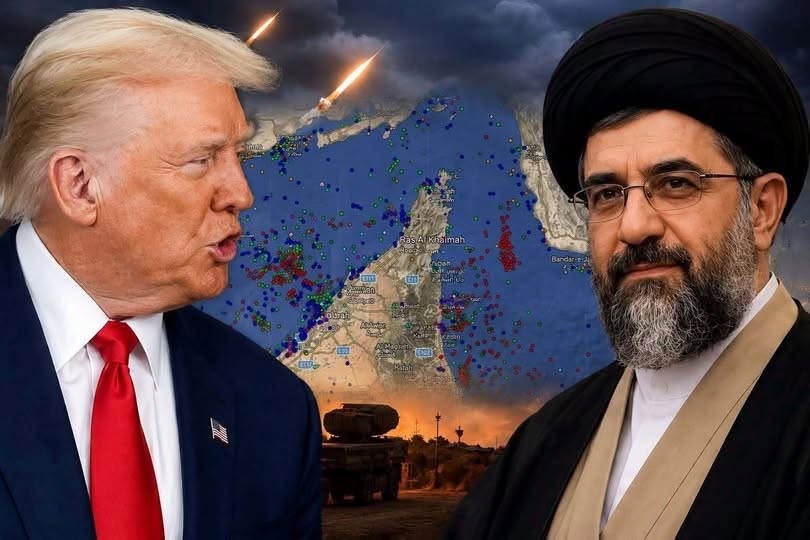
A new and potentially explosive allegation has emerged from Washington, one that could significantly alter perceptions of the ongoing tensions in the Middle East and deepen concerns about the growing involvement of major global powers in regional conflicts. According to US officials, Russia is reportedly providing Iran with intelligence regarding the locations of American military assets operating throughout the Middle East. The information allegedly includes the positions of US warships, military aircraft, and radar systems, data that could help Tehran track, monitor, and potentially target American forces stationed across the region.
The claims have immediately drawn international attention because they suggest a level of indirect involvement that extends beyond traditional diplomatic support. While Russia has not publicly commented on the allegations and is not officially participating in any active fighting involving US forces, American officials argue that the intelligence-sharing effort could provide Iran with valuable strategic advantages during a period of heightened regional instability.
The allegations come at a time when tensions throughout the Middle East remain elevated. Military deployments have increased, governments have strengthened security measures, and intelligence agencies across the world are closely monitoring developments. The possibility that one major power could be assisting another nation with sensitive military intelligence introduces a new layer of complexity into an already volatile geopolitical landscape.
According to officials familiar with the matter, the intelligence reportedly being shared includes detailed information about the movements and locations of American naval assets operating in strategically important waterways. These vessels play a critical role in maintaining security, protecting international shipping routes, supporting regional allies, and projecting military power throughout the area. Access to information regarding their locations could potentially provide Iran with a clearer understanding of American military operations and capabilities.
Military experts note that warships are among the most important components of US military strategy in the Middle East. Aircraft carriers, destroyers, cruisers, and support vessels often operate across large areas, serving as mobile platforms capable of responding rapidly to emerging threats. While modern naval forces employ sophisticated security measures to protect operational information, any intelligence regarding their positions could be strategically valuable to adversaries seeking to assess American activities.
US officials also claim that information concerning military aircraft is being shared. Aircraft play a vital role in surveillance, reconnaissance, logistics, deterrence operations, and rapid-response missions. Understanding where aircraft are deployed, how they are being utilized, and when they are conducting operations can provide insight into broader military planning and objectives.
In addition to ships and aircraft, officials suggest that intelligence concerning radar installations and monitoring systems may also be included. Radar systems serve as critical components of modern military operations by detecting incoming threats, coordinating air defense activities, and providing situational awareness. Knowledge regarding the placement and capabilities of such systems could potentially allow adversaries to better understand defensive coverage and operational limitations.
The allegations have naturally prompted questions regarding Russia’s motivations. While Moscow has not responded publicly to the claims, analysts note that Russia and Iran have developed increasingly close political and strategic relationships in recent years. The two countries have cooperated on various regional and international issues, often finding themselves aligned in opposition to certain Western policies and initiatives.
Some geopolitical observers believe that any intelligence-sharing arrangement would reflect broader efforts by Russia to strengthen strategic partnerships and challenge American influence in key regions. Others suggest that such cooperation could be intended as a signal of support for Iran during a period of increased pressure and uncertainty.
At the same time, experts caution that intelligence cooperation between nations is a common aspect of international relations. Governments routinely exchange information with allies and partners regarding security threats, military developments, and geopolitical risks. What makes the current allegations particularly significant is the suggestion that intelligence may be directly supporting a country that has ongoing tensions with the United States.
Should the claims prove accurate, they could have implications extending far beyond the immediate region. Intelligence sharing involving military deployments is generally regarded as a highly sensitive matter because it directly affects operational security and strategic planning. Information concerning force locations, movement patterns, and defensive systems can influence military decision-making and risk assessments.
The allegations have also reignited discussions regarding the broader competition among major global powers. The Middle East has long served as a focal point for international rivalry due to its strategic location, energy resources, and political significance. The involvement of multiple global actors often complicates regional disputes and increases the potential for misunderstandings or unintended escalation.
American officials reportedly view the alleged intelligence-sharing effort as evidence that Russia may be playing a more active role behind the scenes than previously understood. While Moscow is not directly participating in combat operations involving US forces, the provision of military intelligence could be interpreted by some as indirect involvement in ongoing tensions.
Military analysts emphasize that modern conflicts are not always defined solely by direct military engagement. Intelligence operations, cyber activities, information campaigns, economic pressure, and strategic partnerships increasingly play important roles in shaping geopolitical outcomes. In many cases, indirect support can influence events without requiring direct participation on the battlefield.
The situation has also attracted attention because of what officials say is not happening. According to the same US sources, China does not appear to be providing similar intelligence assistance to Iran. This distinction is noteworthy given China’s growing economic and diplomatic influence throughout the Middle East.
Over the past decade, China has significantly expanded its relationships across the region through trade agreements, infrastructure investments, energy partnerships, and diplomatic initiatives. Beijing maintains important relationships with multiple Middle Eastern nations, including Iran, Saudi Arabia, and the United Arab Emirates. However, US officials indicate there is currently no evidence suggesting China is sharing military intelligence with Tehran in a manner similar to the alleged Russian activities.
Analysts believe China’s approach may reflect different strategic priorities. Beijing has generally emphasized economic development, commercial stability, and regional cooperation while avoiding direct involvement in military disputes whenever possible. Maintaining balanced relationships across the region is often viewed as essential to protecting Chinese economic interests and ensuring stable access to global markets.
The contrast between the alleged Russian and Chinese approaches highlights the diverse strategies major powers employ when pursuing their interests abroad. While Russia and China frequently cooperate on certain international issues, they do not necessarily share identical objectives or methods in every region.
For the United States, the allegations raise important questions regarding force protection and operational security. American military personnel remain deployed throughout the Middle East in support of various missions, including counterterrorism operations, regional security initiatives, and defense partnerships. Protecting those forces requires constant vigilance against both traditional and emerging threats.
Defense experts note that the US military possesses extensive capabilities designed to mitigate intelligence risks. Advanced surveillance systems, cybersecurity measures, operational security protocols, and intelligence networks are all intended to reduce vulnerabilities and protect sensitive information. Nevertheless, reports suggesting that adversaries may be receiving intelligence regarding force locations are likely to receive significant attention within defense and intelligence communities.
International observers are closely monitoring the situation because of its potential implications for regional stability. The Middle East remains one of the world’s most strategically important regions, influencing global energy markets, trade routes, and security dynamics. Any development involving major powers and military intelligence naturally attracts scrutiny from governments and analysts worldwide.
Energy markets have also taken notice of the allegations. Although the claims do not directly affect energy production or transportation, geopolitical tensions often influence market sentiment. Investors and industry leaders frequently evaluate developments in the region for potential impacts on stability, supply chains, and commercial operations.
Diplomatic implications may also emerge if additional information becomes available. Relations between Washington and Moscow have remained strained across multiple issues in recent years, including security concerns, sanctions, and competing geopolitical interests. Allegations involving military intelligence could add another point of friction between the two governments.
Experts caution, however, that many questions remain unanswered. The specific nature of the alleged intelligence-sharing activities has not been publicly disclosed in detail, and independent verification remains limited. As with many intelligence-related matters, much of the available information originates from government sources that may not be able to reveal all supporting evidence publicly.
For now, governments, intelligence agencies, and military planners continue evaluating the situation. Additional information may emerge in the coming weeks as officials assess the credibility and significance of the claims. Until then, the allegations serve as a reminder of the increasingly complex environment in which modern geopolitical competition unfolds.
The world today is shaped not only by visible military deployments but also by the invisible flow of information. Intelligence has become one of the most valuable strategic assets in international affairs, capable of influencing decisions, shaping outcomes, and altering perceptions without a single shot being fired. Whether the allegations ultimately prove accurate or not, they underscore the growing importance of intelligence operations in defining the relationships between nations.
As tensions continue to evolve across the Middle East, governments around the world will be watching closely. The outcome of these developments could affect diplomatic relations, military planning, regional security calculations, and the broader balance of power for years to come. For now, the allegations remain a significant and closely watched chapter in an increasingly complex geopolitical story.