A woman I had never met sent me a message through a genealogy site last spring, and I sat with what she told me for three days before I could bring myself to write back.
Her name was Celeste. She said she had done a DNA test out of curiosity after her mother passed, and the results had thrown her entire life into question. She had grown up believing her father was a man named Gerald, who had died when she was eleven. But the DNA said something different. It said she had close relatives she had never heard of — relatives with my family’s last name.
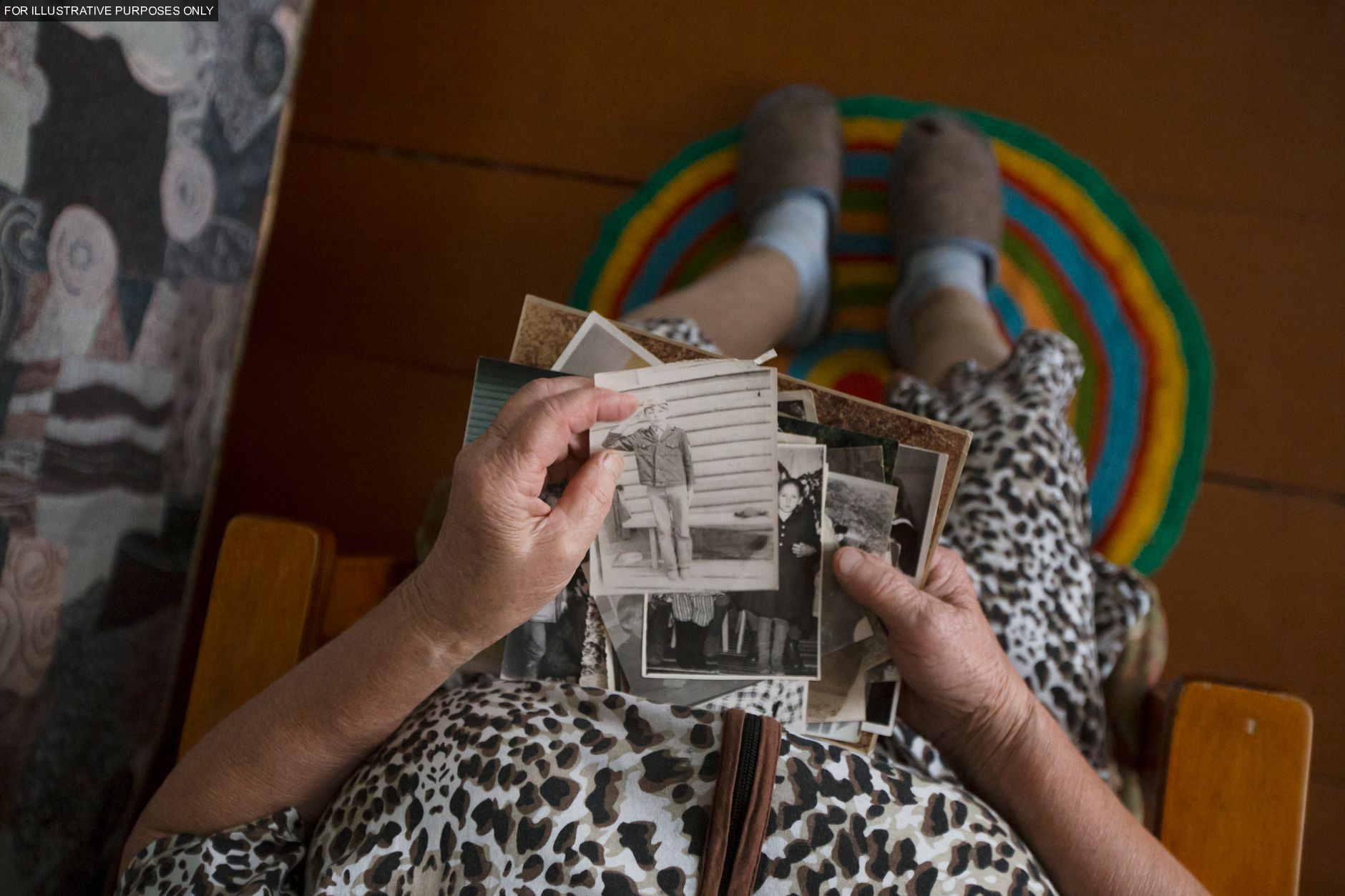
She attached a photograph.
I recognized the man in it immediately. The suit, the way he stood with one hand in his pocket, the particular tilt of his chin. I had seen that photograph before, or one nearly identical to it, tucked inside a shoebox my aunt Norma kept on the top shelf of her closet. I had found it as a teenager when I was looking for wrapping paper.
The man in Celeste’s photograph was my uncle Raymond — my mother’s older brother, Raymond, who had been married to my aunt Norma for forty-one years and who had died of a stroke two winters ago.
I sat with it for three days because I needed those three days to figure out how much of the truth was mine to give.
Celeste was not asking me for anything dramatic. She was not threatening anyone. She was a woman in her late fifties who had just buried her mother and discovered, through a cotton swab and a database, that the story of her own life was not the story she had been told. She wrote carefully. She said she was not trying to cause trouble. She said, “I just want to know if I have people.”
That sentence undid me.
I thought about Aunt Norma first. She is seventy-three years old. She lives on a fixed income of about $1,400 a month from Raymond’s pension, and Raymond is gone, and she has enough grief already. I thought about my cousin Delia — Norma and Raymond’s daughter, Delia, who is forty-four and who had been named the sole beneficiary of Raymond’s modest estate, which settled out at roughly $83,000 after the house sold. I thought about what it would mean for Delia to find out she had a half-sister she never knew about.
I thought about Raymond, who was not here to answer for any of it.
On the fourth day, I wrote back to Celeste.
I did not tell her everything in that first message. I told her I recognized the photograph and that I needed to speak with some family members before I said more. I told her I believed her. I told her I was sorry for the confusion and the loss and the waiting.
She wrote back within an hour. She said, “Thank you for not pretending you didn’t know.”
I went to see Aunt Norma on a Tuesday afternoon. I did not tell her why I was coming. I brought a coffee cake from the bakery she likes, and we sat at her kitchen table, and I asked her to tell me about a photograph she kept in a shoebox. The color went out of her face so fast it frightened me.
She was quiet for a long time. Then she said, “He told me it was handled.”
She had known. She had known since before Delia was born, since the late 1960s, since a woman Raymond had been involved with had contacted him and then, according to Norma, had eventually stopped. Norma had chosen to believe it was finished. She had chosen Raymond and their life together and forty-one years of holidays and grandchildren and she had locked the shoebox on the top shelf and left it there.
I did not judge her. I am not in a position to judge anyone for the compromises they make to keep their family intact.
But Celeste was real. Celeste existed. Celeste had people, whether anyone had chosen her or not.
It took four more months and one very painful Sunday dinner where I sat across from my cousin Delia — who cried and then got angry and then cried again — but Celeste and Delia eventually agreed to meet. I drove two hours to sit in a neutral coffee shop and watch two women in their fifties recognize the same nose, the same hands, the same way of pressing their lips together when they were thinking.
Delia has since asked Celeste to come to Thanksgiving.
Aunt Norma is not ready. That is her right. But she told me, the last time I saw her, that she was glad I had not pretended I didn’t know. She used almost the exact same words Celeste had used.
I think about that a lot — how the two of them, who had never spoken, both needed the same thing first. Not answers. Not money. Not an apology from a dead man.
Just someone willing to say: yes, this is real, and you are not alone in it.