The sound didn’t make sense. They were deep inside a limestone cave — half a mile from the entrance, torchlight bouncing off stalactites, the air thick with mist and mineral dampness. And yet, somewhere beneath them, something was crying.
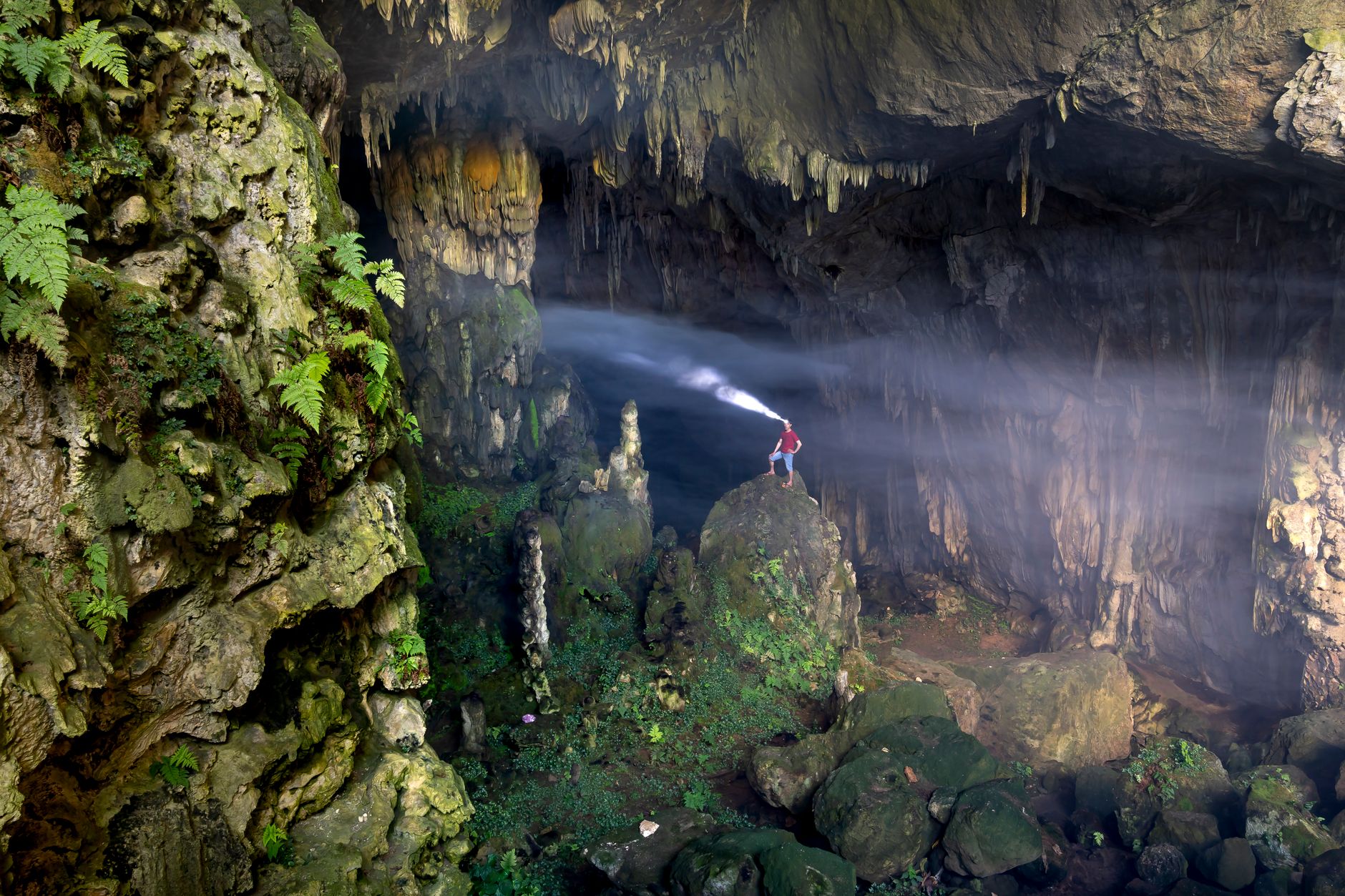
The group of hikers had originally entered the cave system in rural Vietnam for the views alone. These caves are some of the most spectacular on Earth, cathedral-sized chambers with ancient rock formations and green ferns pushing through cracks where light somehow still finds a way in. It was supposed to be a straightforward, if challenging, exploration.
But the sound stopped them cold.
It was soft at first — easy to mistake for water dripping, or the wind bending through one of the cave’s hidden tunnels. But it was too rhythmic. Too desperate. One of the hikers, a man named Minh, held up his hand and the group went silent. There it was again. A thin, trembling cry, echoing off the stone walls.
They moved toward it carefully, picking their way across slick rock formations and mossy boulders. The cave floor dropped unexpectedly in places, and one wrong step meant a fall into the dark. Minh swept his torch in wide arcs, trying to locate the source. The crying grew louder.
What they found at the base of a rock shelf stopped everyone in their tracks.
A small dog — barely more than a puppy — had somehow fallen deep into the cave system and wedged itself into a narrow crevice between two large stalagmites. It was shivering. Its paws were raw from scrambling against the stone. Its eyes, when the torchlight hit them, were wild with fear and exhaustion.
No one could explain how it had gotten there. The nearest village was over three kilometers from the cave entrance. The terrain between them was thick jungle and steep limestone karst. Puppies don’t wander that far alone — not without being chased, or lost, or terrified beyond reason.
The group spent the next two hours carefully freeing it. The crevice was tight, and they were terrified of injuring the dog or causing a rockfall. One woman in the group, a teacher named Lan, kept her voice low and steady the entire time — talking to the puppy the way you’d talk to a frightened child, slow and soft and certain that everything was going to be okay.
When it finally came free, the dog collapsed against Lan’s chest and went still. Not dead — just finally, completely exhausted. It had stopped fighting. It knew it was safe.
The group carried it out of the cave between them, passing it gently from person to person as the terrain demanded. When they emerged into daylight, the puppy lifted its head for the first time and blinked at the sun.
Lan kept him. She named him Hang, which means cave in Vietnamese. He sleeps at the foot of her bed now, in a village house three kilometers from the dark place where strangers heard him crying and refused to walk away.
Some people say animals don’t understand being rescued. That they don’t hold onto the memory of a moment like that.
Lan thinks those people have never looked into the eyes of a dog who was once lost in the dark and found his way back to the light.