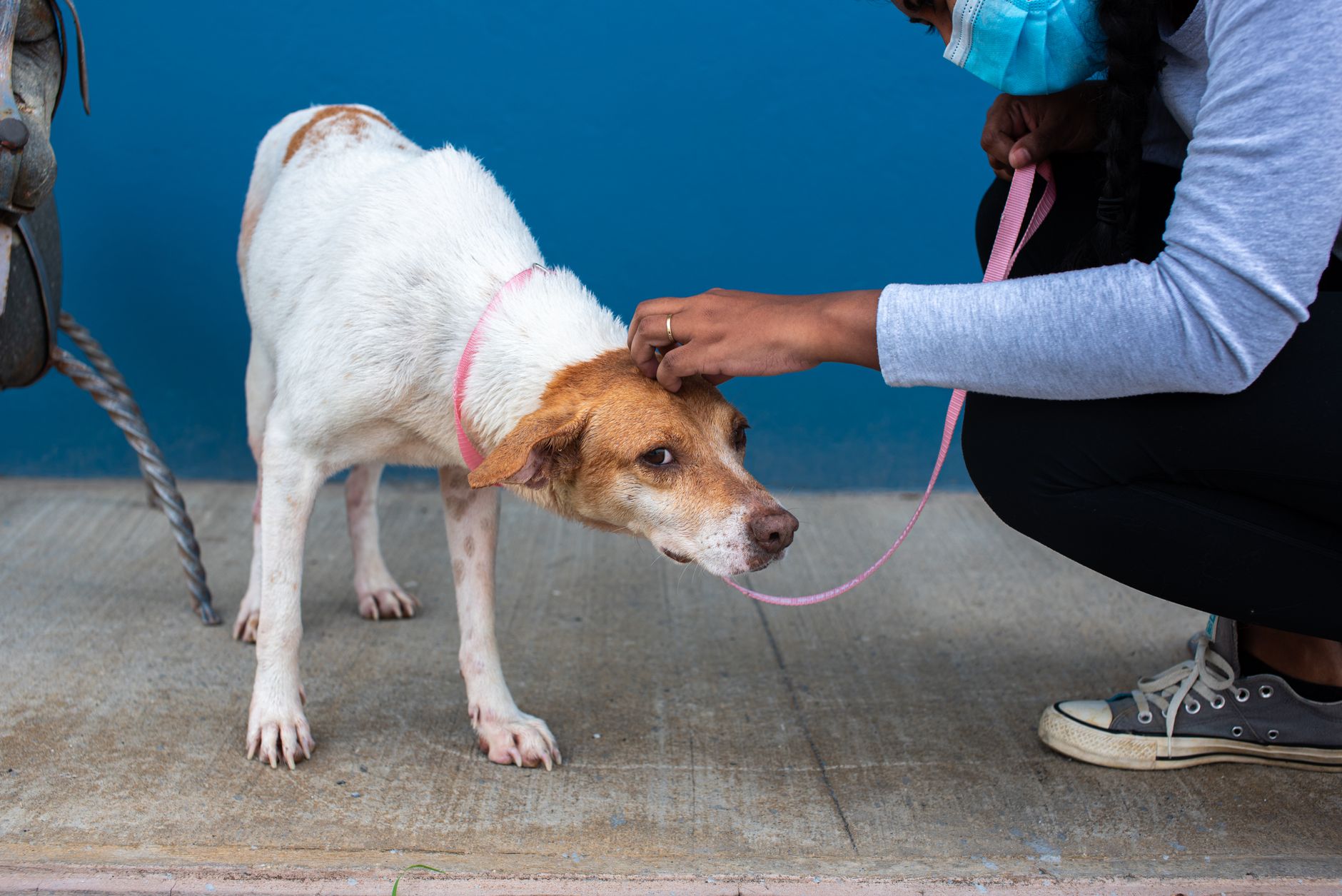
She stood at the back of her kennel again. Head down. Eyes fixed on the concrete floor. It was the seventh time shelter staff had updated Daisy’s intake form with the same word: returned.
Seven families. Seven new homes. Seven times someone had decided she was too much — or not enough.
The staff loved her. That was never in question. But love inside a shelter has a ceiling, and everyone could feel it. Daisy had stopped wagging her tail when people came to look at her. She had learned, in the way dogs quietly learn things, that excitement only leads to a car ride that eventually reverses.
The first family said she was too anxious. The second said she wouldn’t stop shaking near the front door. A third returned her after four days, no explanation given — just a form, a leash handed back over a counter, and then the sound of a car pulling away.
Shelly Marcos, one of the senior volunteers, started keeping notes. There was a pattern nobody had named yet.
Every single return had happened within two weeks. And every family had one thing in common: a loud, high-traffic household. Kids sprinting through hallways. Televisions on full volume. Doors slamming. Normal family life — just not Daisy’s version of it.
Daisy, Shelly realized, wasn’t broken. She was noise-sensitive to a degree most people had never encountered. Loud sounds sent her into a spiral she couldn’t come back from quickly. And instead of waiting her out, families panicked. They saw the trembling and assumed aggression, or illness, or something unfixable.
Shelly wrote it all down and attached it to Daisy’s kennel card. She also started something new: a handwritten letter placed inside every adoption folder, addressed directly to whoever took Daisy home next.
“Please,” it began, “give her ten minutes in every new room before you expect anything from her.”
The Nguyens read that letter three times before they even filled out the paperwork.
They were a quiet couple — two adults, a small apartment, a routine that barely varied. Mira Nguyen had grown up with a dog who had similar sensitivities. She recognized the behavior immediately when she saw Daisy on the shelter’s website, not as a warning sign, but as a familiar language.
They brought Daisy home on a Tuesday. They sat on the floor with her for two hours, not reaching for her, not talking loudly, just existing in the same space.
On Wednesday, she ate her full bowl of food for the first time in months.
On Thursday, she climbed onto the couch and rested her chin on Mira’s knee.
By the end of the first month, shelter staff received a photo: Daisy stretched out in a beam of afternoon sunlight, tail mid-wag, eyes soft and open in a way they had never seen inside those kennel walls.
Shelly taped the photo above her desk. Underneath it, she wrote four words.
“She just needed quiet.”
Daisy was never returned again.