My stepmother tried to have me cut from my father’s will three days before his funeral — she didn’t know he’d already told me everything.
Three years ago, when my father, Robert, was first diagnosed with stage-three lung cancer, I moved back to my hometown to help. I left my apartment, my job, my life in another city — all of it — and came home. My stepmother, Claudette, had been married to my dad for eleven years by then, and from the moment I pulled into the driveway with my bags, she treated my presence like a slow leak she needed to patch.
She never said it directly. That wasn’t her style. It was the small things — moving my things out of my old room without asking, referring to the house as “our home” in a way that made it clear she didn’t mean me, cutting me out of doctor’s appointments by scheduling them when she knew I was running errands. Little exclusions, stacked like bricks.
My dad saw it. He never confronted her about it, which I understood — he was sick and exhausted and he needed peace. But he saw it.
About eight months before he passed, he asked me to drive him to an appointment alone. In the car on the way back, he told me he’d already been to see his attorney. He said he’d updated his will the week before. He told me that the house, which he’d owned outright since before he met Claudette, was to be split equally between me and my half-brother, Derek — Claudette’s son from her first marriage, who my dad had legally adopted. He also said he was leaving me a separate account worth $84,000 that he had kept in his name alone, money he’d saved over decades before Claudette ever came into the picture. He said, “I’m telling you now so nobody can tell you differently later.”
I held onto those words.
He passed on a Tuesday in late March, last year. The hospice nurse called me at 6 a.m. and I was at the house within twenty minutes. Claudette barely looked at me.
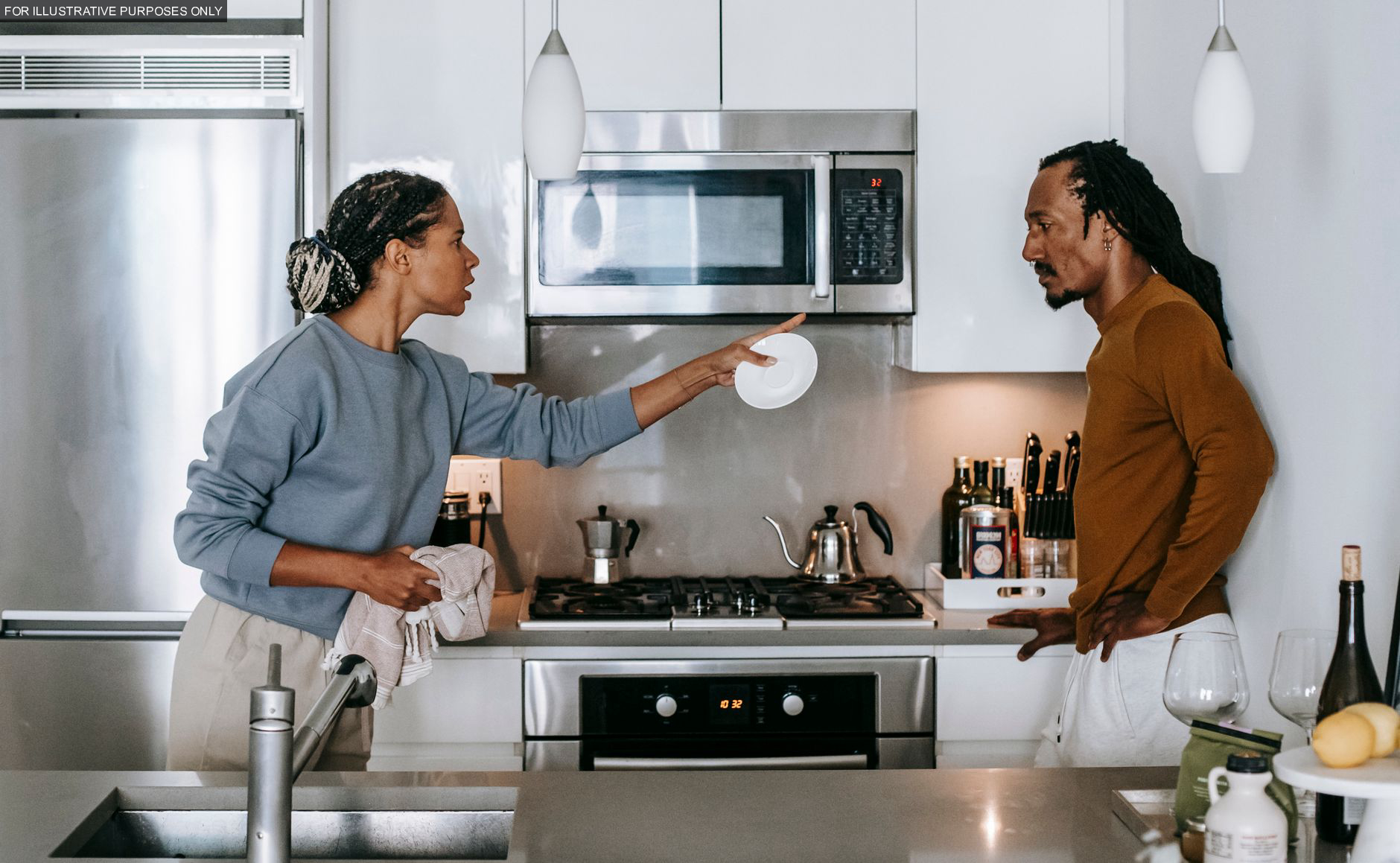
Three days later, we were supposed to be finalizing arrangements for the service. Instead, Claudette asked me to sit down at the kitchen table. She had a legal pad in front of her. She told me she’d spoken to my father’s attorney — a man named Gerald, who my father had used for twenty years — and that she wanted to “simplify” the estate. She said Derek needed stability, that the house should go to him entirely, and that the separate account “probably wasn’t meant to be that large” for me. She used the word “reasonable” four times in about six sentences.
Then she said it plainly: “I think it’s only fair you consider stepping back from the will voluntarily. Your father would have wanted this to be peaceful.”
I remember the way the kitchen smelled — like old coffee and the flowers someone had sent. I remember thinking how strange it was to be sitting there, three days from burying my father, being asked to give up $84,000 and half a house.
What Claudette didn’t know — what she couldn’t have known — was that the week after my father told me about his will in the car, I had called Gerald myself. My father had authorized him to speak with me. Gerald confirmed every detail. He also told me, gently, that he’d already received an inquiry from Claudette once my father’s condition worsened, asking whether the will could be changed. Gerald had told her it could not be changed without my father’s direct instruction, and my father had given no such instruction.
I let Claudette finish talking.
Then I told her I’d already spoken with Gerald. I told her I knew about her inquiry. I told her that my father had specifically discussed this with me, in the car, eight months ago, and that I had documentation of that conversation because I had asked Gerald to note it in the file — which he had, dated the same week.
Her face went through about four expressions in two seconds.
She said I was being dramatic. She said she was only trying to help. She said my father had been confused near the end.
I stood up and told her I’d see her at the service.
The estate settled four months later, exactly as my father had written it. I received my half of the house and the $84,000 account. Derek, to his credit, never involved himself in any of it — he called me privately and apologized for his mother, and we’ve stayed in contact since.
Claudette and I have not spoken since the day of the funeral.
My father knew what he was doing when he told me in that car. He knew I’d need it. He gave me the one thing that couldn’t be taken back — the truth, delivered early, witnessed, and documented.
I think about that drive home from the appointment sometimes. The way he looked straight ahead at the road when he said, “I’m telling you now so nobody can tell you differently later.”
He was right. Nobody did.