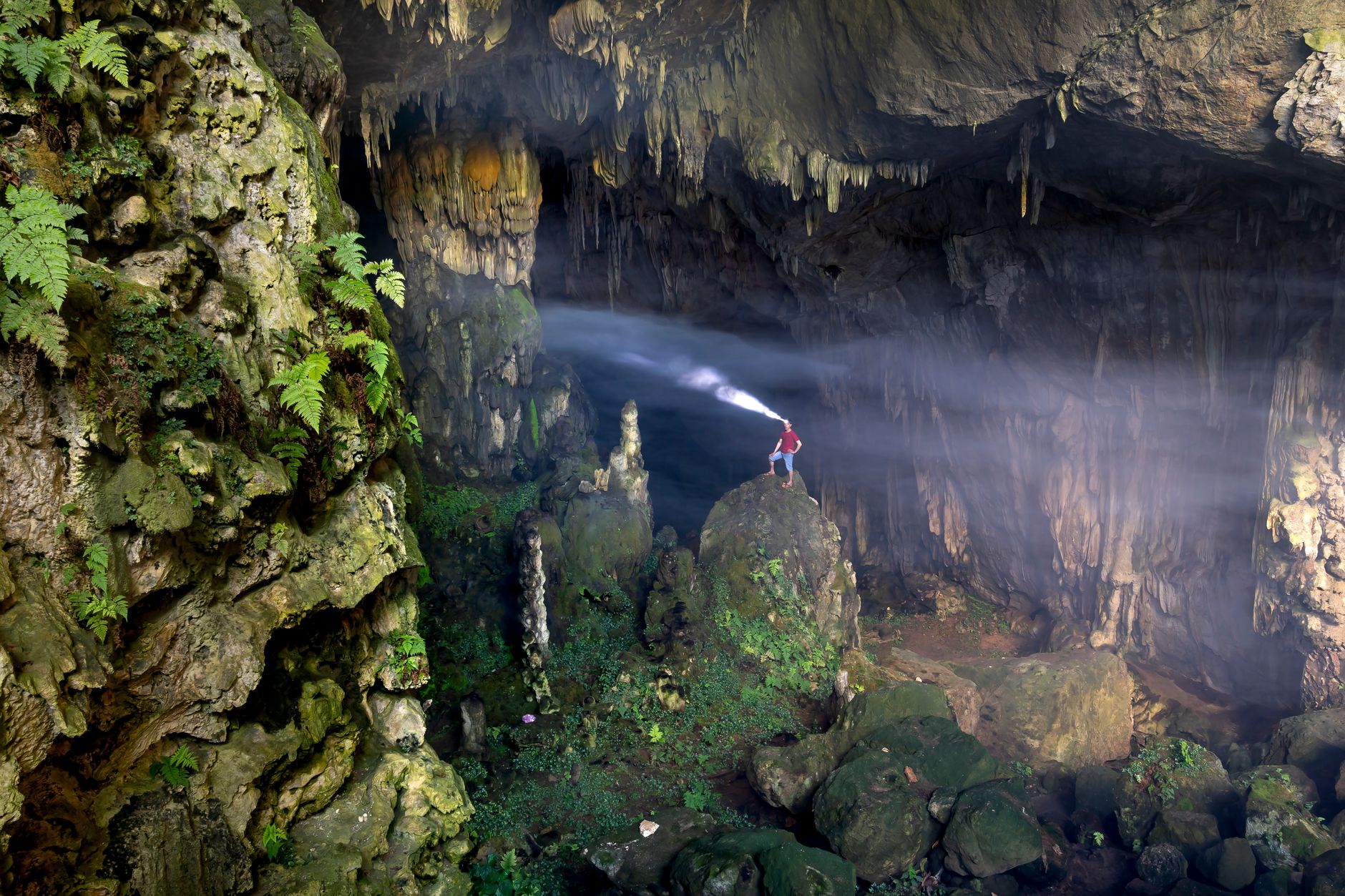
The sound was unmistakable — a soft, desperate whimpering echoing off ancient stone walls, bouncing through the dark in a way that made it impossible to tell exactly where it was coming from. The group of hikers froze at the cave entrance, flashlight beams cutting through the mist. They looked at each other. Nobody said it out loud, but everyone was thinking the same thing: something was alive in there, and it was suffering.
They almost didn’t go in. The cave was deep, the kind of deep that swallows light whole and gives nothing back. Stalactites dripped overhead like the ceiling was slowly dissolving. The air smelled like moss and cold earth. But the crying continued — rhythmic, broken, heartbreaking — and turning away wasn’t something any of them could bring themselves to do.
They moved carefully, single file, following the sound through narrow passages and over slick limestone formations that had been growing for thousands of years. The deeper they went, the louder it got. One hiker later described it as sounding “almost human” — a detail that made the hair on everyone’s arms stand straight up.
After nearly twenty minutes of careful navigation, their beams landed on a rock ledge about eight feet off the cave floor. And there, wedged into a crack just wide enough to trap but not wide enough to escape, was a small dog — a young one, barely older than a puppy, shaking violently, eyes glassy with exhaustion.
No one knew how it got there. The nearest trail was over two miles away. The cave wasn’t marked on any local map. The dog had no collar, no tag, no way to trace where it had come from or how long it had been trapped in the dark. Vets who later examined it estimated it had been without food or water for at least two days.
Getting it down wasn’t simple. The ledge crumbled at the edges, the dog was too frightened to be coaxed, and one wrong move meant a dangerous fall for whoever climbed up. One hiker, a former rock climber, volunteered without hesitation. The others held their breath.
It took forty-five minutes. The dog fought at first — terrified, snapping in blind panic — but the moment it was cradled against a human chest, something shifted. The whimpering slowed. The shaking eased. It pressed its face into the hiker’s neck and went almost completely still, as if it understood, somewhere in its exhausted animal brain, that the worst was over.
The group carried it out by hand, passing it gently between them through the narrowest passages. When they finally stepped back into daylight, the dog blinked against the brightness and let out one long, slow breath.
It was adopted three weeks later by one of the hikers who had made the rescue — the same one who climbed up to reach it on that ledge. She named him Echo. He sleeps on her bed now, terrified of nothing, and apparently has no interest in ever going near a cave again.