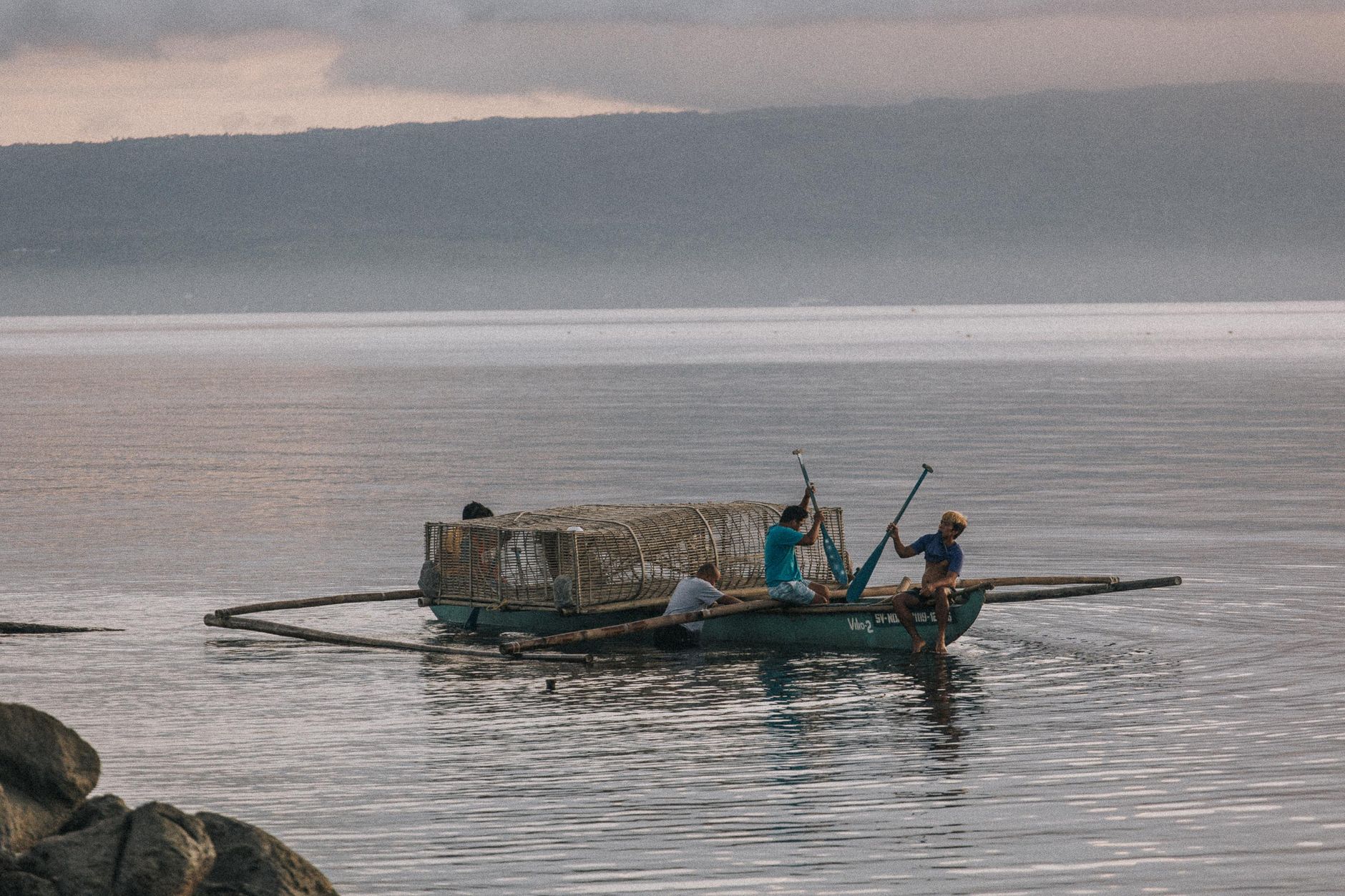
The net came up heavier than it should have.
The three fishermen on the small outrigger barely had time to register the weight before the cage broke the surface — and something inside it moved. Something large. Something that shouldn’t have been there at all.
It was early morning on Lake Naujan, the mist still sitting low on the water, the mountains on the far shore barely visible through the grey. These men had been fishing this lake their whole lives, same as their fathers before them. They thought they knew every creature that lived in its depths.
They were wrong.
Coiled inside the bamboo trap was a Philippine freshwater crocodile — a species so rare, so devastatingly close to extinction, that wildlife officials would later struggle to find the right words. The last confirmed sighting of a living specimen in this lake had been recorded more than a hundred years ago. Some researchers had quietly assumed the local population was simply gone.
For a long moment, nobody on the boat moved.
The crocodile was young — just over a meter long — but its presence alone rewrote everything the scientific community thought it knew about the species’ range. The Philippine crocodile, Crocodylus mindorensis, is one of the most endangered reptiles on the planet. Fewer than 250 are believed to survive in the wild. Each individual is, in the most literal sense, irreplaceable.
The fishermen didn’t panic. That detail matters.
Instead of killing it, which would have been the instinctive reaction for many, they did something remarkable. They kept it calm, kept it in the water alongside the boat, and made the decision to call it in. Word traveled fast across the shoreline. By the time wildlife officers arrived, a small crowd had gathered on the rocks — silent, watching, as if everyone understood the weight of what was happening.
Biologists who examined the animal said the condition it was in suggested it had been living and feeding successfully in the lake for at least two to three years. That means it didn’t just pass through. It was home.
The implications sent a ripple through the conservation world. If one juvenile had survived undetected for years, there was a real — if fragile — possibility that a remnant breeding population still existed somewhere in the lake’s deeper, reed-choked edges. Surveys that had been shelved for lack of funding were suddenly back on the table.
The crocodile was tagged, measured, and released back into the lake the same afternoon.
As it disappeared beneath the surface, one of the fishermen — the one who had first felt the weight in the net that morning — stood at the bow of the outrigger and watched the water settle back to glass.
He didn’t say anything. He didn’t need to.
Sometimes the lake keeps its secrets for a hundred years. And then, on an ordinary morning, in an ordinary trap, it decides to give one back.