My brother, Gerald, began circling our father’s house like a vulture before the flowers on the grave had even wilted.
Dad passed on a Tuesday in March. By Wednesday morning, Gerald was walking through every room with a yellow legal notepad, clicking a pen, writing down what he wanted. The grandfather clock in the hallway. The fishing rods in the garage. The 1974 Chevy pickup that Dad had spent eleven years restoring by hand.
I stood in the kitchen doorway watching him, my coffee going cold, not saying a word.
My younger sister, Priya, was sitting at the kitchen table behind me. She whispered, “Does he think this is an auction?”
I didn’t answer her because I didn’t have one.
Gerald had always operated this way. He was the oldest, so in his mind, that meant he was the most entitled. Growing up, he had borrowed $14,000 from our father in 2019 alone — I know the exact number because Dad showed me the ledger he kept, a narrow spiral notebook where he tracked every loan to every child with the patience of a man who never expected to be paid back but still wanted a record. Gerald had never repaid a single dollar of it.
Dad had known, I think, that the end was coming faster than the doctors were saying. Three weeks before the hospice call came, I received a small padded envelope in the mail at my apartment. Inside was a brass key, the old-fashioned kind with a circular bow, and a handwritten note in my father’s slanted cursive. It said: “The study drawer. Not for everyone. Use good judgment, son.”
I didn’t open the drawer that day. I drove to the hospice instead and held his hand, and we talked about baseball and his garden and nothing important, and I did not ask him what was inside because I understood that he had already told me what I needed to know.
Now Gerald was standing at the door of the study.
I watched him try the handle on the center drawer of Dad’s old oak desk. It didn’t move. He jiggled it twice, wrote something on his notepad, and moved on without looking up.
Priya appeared at my shoulder. “What’s in there?”
“I don’t know yet,” I said. Which was true.
That evening, after Gerald had driven back to his hotel — he was staying at a Holiday Inn fifteen minutes away rather than in the house, which told you everything about his relationship with grief — I sat down at the desk alone and put the brass key in the lock.
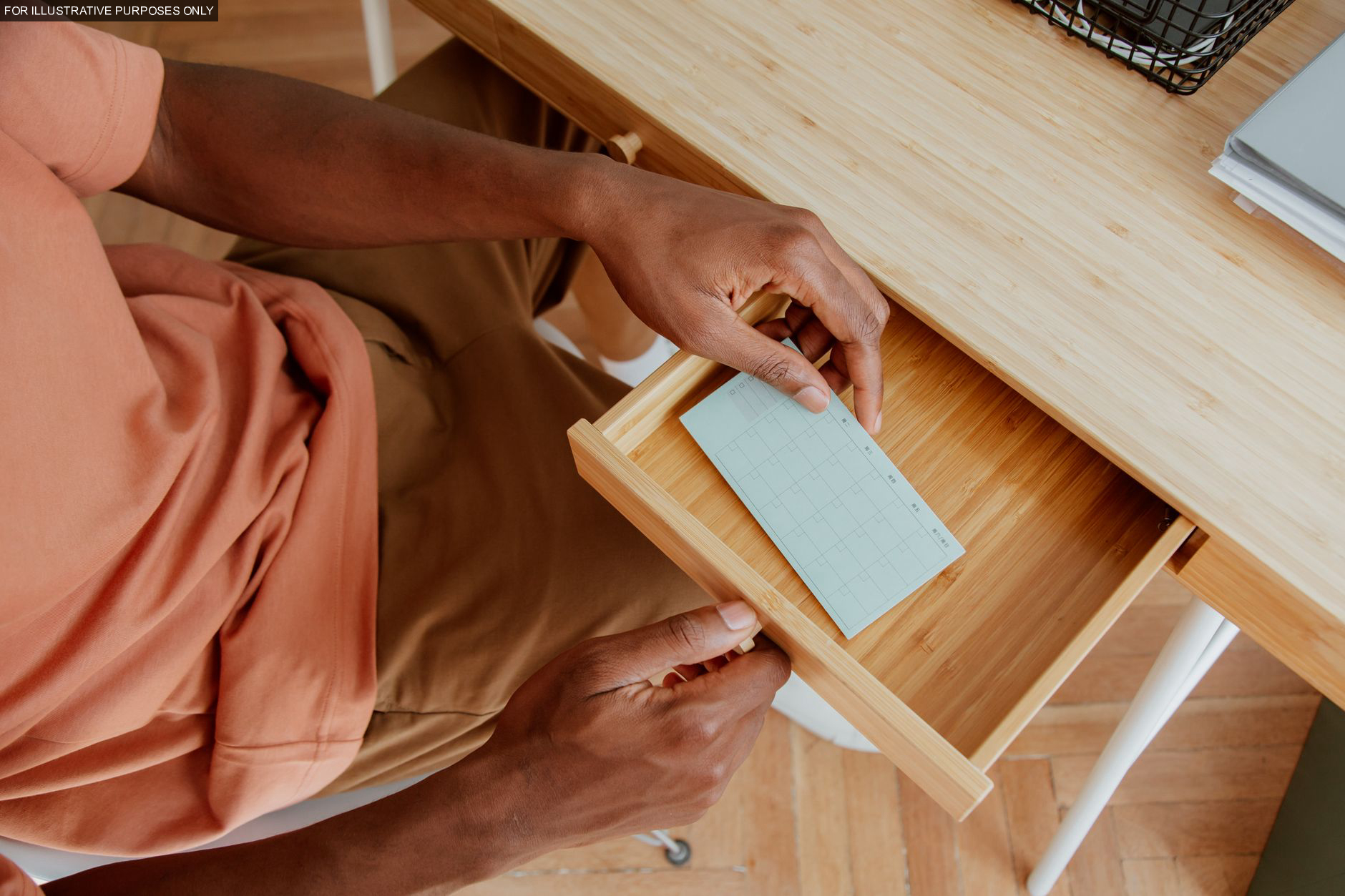
Inside the drawer was a manila envelope, sealed with a strip of packing tape. Inside the envelope was a single updated page from Dad’s will, signed and notarized on February 9th, less than six weeks before he died, along with a letter from his attorney, a man named Douglas Hale whose office address was stamped in the corner. The amendment was clear. The house, the truck, and a $91,000 savings account that Gerald had no idea existed were to be divided equally between me and Priya. Gerald was to receive the grandfather clock, the fishing rods, and the outstanding balance of his loans — forgiven, zeroed out, marked as his inheritance.
Dad had done the math quietly and by himself, the same way he did everything.
I called Douglas Hale the next morning before Gerald came back. He confirmed he had the original, that it had been filed properly, and that Gerald had never been contacted because Dad had specifically requested that no one be told until after his burial.
“Your father was very deliberate about the timing,” Douglas told me.
“Yes,” I said. “He was.”
When Gerald arrived that afternoon with his notepad and started talking about listing the house — he had already called a real estate agent, had already gotten a preliminary number of $340,000 — I let him finish his sentence. I let him pour himself a glass of water. I let him settle into the chair across from me at the kitchen table.
Then I slid the manila envelope across to him.
He didn’t say anything for a long time. He read the amendment twice. He looked at the notary stamp. He looked at me.
“He knew,” Gerald finally said. It wasn’t a question.
“He always knew,” I said.
Priya was in the doorway. She hadn’t seen the documents yet. I looked at her and nodded, and she understood enough to stay quiet.
Gerald left without the notepad. He forgot it on the table, and I noticed his list stopped at the study. He had written a question mark next to “desk drawer.”
Dad had spent his whole life being gentle with people who didn’t deserve it. But he had also spent those last weeks making sure that gentleness didn’t cost us what was ours. That brass key had been his way of saying: I see what’s happening, and I already handled it.
I keep the key on my dresser now. Some nights I just look at it and think about the kind of quiet, careful love it takes to protect your children from beyond a hospice bed.
Gerald got the clock. It stopped working two months later.