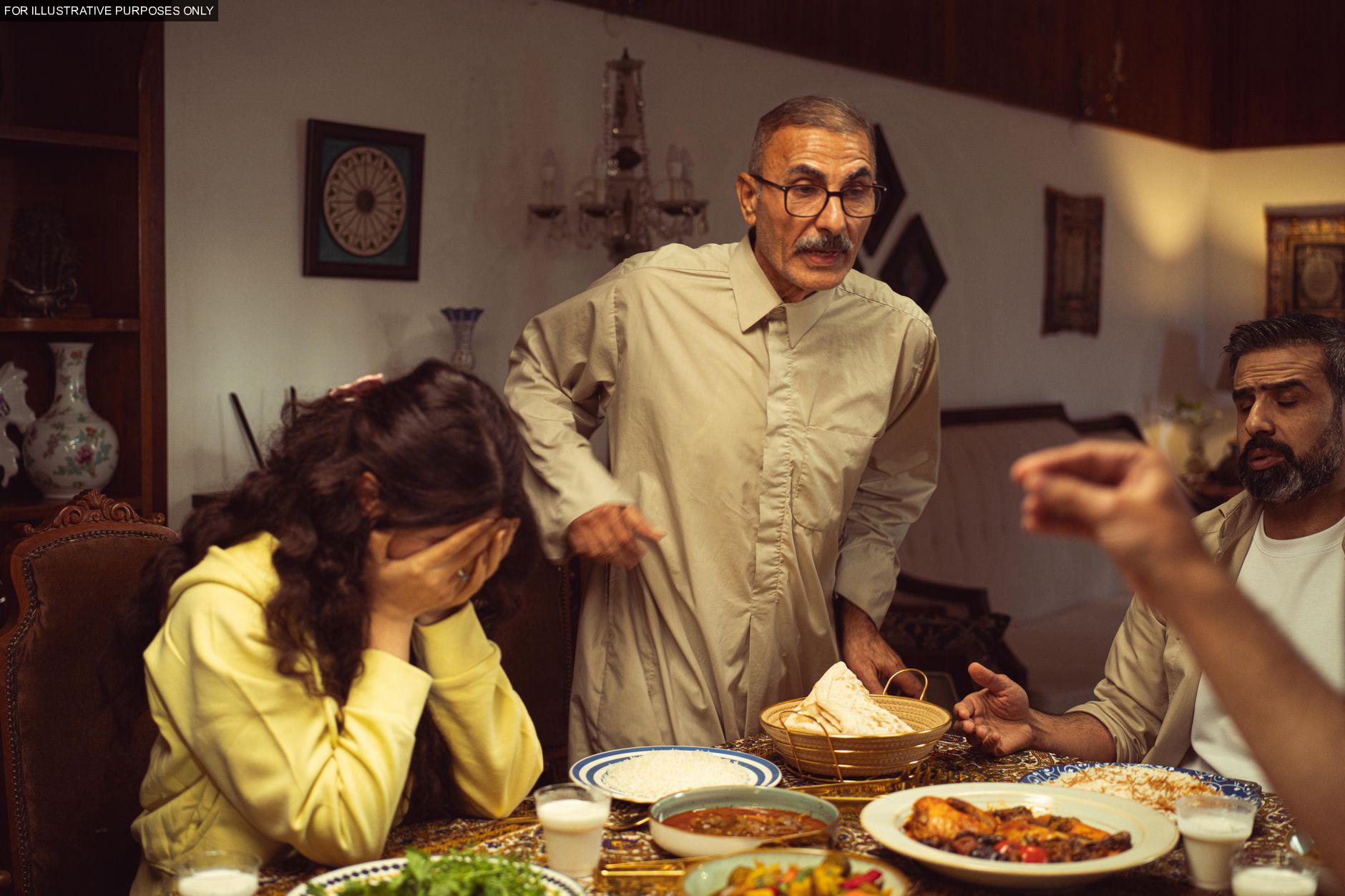
My mother-in-law, Diane, announced at Christmas dinner that my father-in-law’s lake cabin was going to his church’s foundation — and she said it the way people say things they have already arranged, like she was reading from a document she had already signed.
We were all sitting around the table, my kids included. My daughter, Piper, was twelve that year and she loved that cabin more than almost anything in the world. She and her grandfather, my father-in-law, Roland, had spent every July there together since she was four. She had a specific chair on the dock that she called hers. She had carved her initials into the porch railing when she was seven and Roland had pretended to scold her and then laughed for ten minutes straight.
Roland had passed away the previous March. He had been sick for a long time, and when he went, he went quietly. He had not updated his will in the last two years of his life. That part mattered, because the will I had seen — the one Roland had shown my husband, his son, Derek, back when Roland was first diagnosed — left the cabin jointly to Derek and his sister, along with explicit language that the property should stay in the family.
Diane knew we had seen that will. She knew it said what it said. And yet there she was, on Christmas Eve, spooning rice onto her plate and telling my children that the foundation would be taking over the cabin in the spring, that it was going to be used as a retreat space, that Grandpa Roland had wanted it that way.
Piper looked at me across the table. She didn’t say anything. She just looked.
Derek sat very still. He is not a man who reacts loudly to things. He reached over and put his hand on my arm, and I could feel how tight his jaw was even from there.
Diane said, “Roland talked to Pastor Glenn about it before he passed. He felt very strongly that the ministry needed the space.” She said it smoothly. She said it like it was already finished.
I said almost nothing that night. I helped clear the plates. I helped the kids get their coats. I hugged Diane at the door and I drove home in silence.
But I had heard her say one specific thing that caught on something in my brain like a nail in wood. She had said the foundation was “finalizing the transfer in the new year.” Finalizing. Not completed. Not done. Finalizing.
The following morning, while Diane was presumably sleeping off Christmas dinner, I looked up the foundation’s main office online. I found the director’s name, a man listed on their website as Brother Thomas Hadley. I called the number at eight fifty-three in the morning and asked to speak with him directly.
I told him I was calling about a property donation the foundation might be processing — a lake cabin in Marquette County, previously owned by Roland Asher. I kept my voice calm. I asked whether the foundation had received and accepted the formal transfer paperwork yet.
There was a pause on the line.
Brother Thomas said, carefully, that he was not at liberty to discuss pending gifts in detail. But then he said something I wrote down word for word: “I can tell you that nothing at this point is finalized from our end.”
I thanked him and hung up.
I called Derek’s sister, my sister-in-law, Claudette, that same afternoon. Claudette had been frozen since Roland died, too grief-stricken to push back on anything Diane said or did. But she had also been named in that original will. She had rights, even if she hadn’t exercised them yet.
I told her what Diane had said at dinner. I told her what Brother Thomas had told me. And then I told her something else: Derek and I had quietly consulted an estate attorney two months earlier, in October, when we first started hearing rumors from Diane about Roland’s “final wishes” being different from what the will said. That attorney had flagged the situation immediately. He had told us that if no new signed and witnessed will existed superseding the one on record, the original document controlled the estate.
The attorney had also told us the cabin’s assessed value was $312,000. Diane had apparently decided that was a reasonable amount to redirect away from her own children without telling them.
Claudette was silent for a long moment. Then she said, “She never mentioned any of this to me. Not once.”
We retained the attorney formally the first week of January. Diane hired her own counsel and produced what she claimed was a revised letter of intent signed by Roland. The letter was not witnessed. It was not notarized. It had been typed, not handwritten, and the signature — when compared to Roland’s documented signatures from the previous two years, during which his illness had significantly affected his motor control — looked nothing like his deteriorated handwriting from that period. It looked, if anything, like Roland’s handwriting from five or six years earlier, when his hand was steadier.
The estate attorney called that a problem. Diane’s attorney, eventually, agreed.
The cabin remained in the estate. Claudette and Derek inherited it as the original will specified. Piper spent the following July in her chair on the dock, and when I walked past the porch railing and saw those initials she had carved when she was seven, I put my hand over them for a second and just stood there.
Diane has not spoken to us since the settlement. I have made my peace with that.