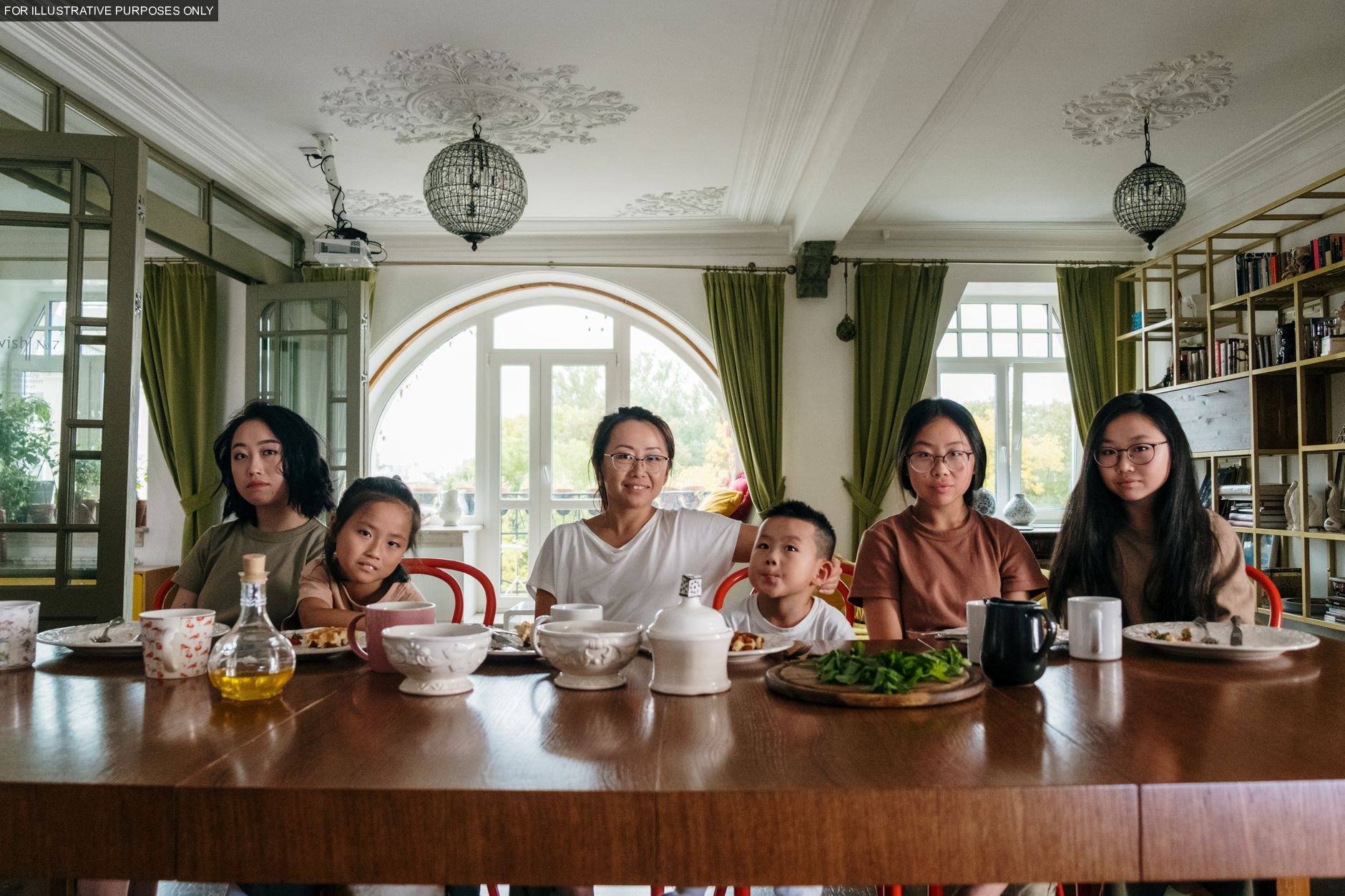
My father-in-law announced at Sunday dinner that he had added his girlfriend of eight months to the deed on the lake house — and I was the only person at that table who had already read my mother-in-law’s original trust.
I had been married to my husband, Derek, for eleven years. That lake house was the spine of his whole childhood. Every summer, every Christmas Eve, every birthday that mattered had happened under that roof. His mother, Carol, had spent the last two years of her life making sure the property would pass cleanly to her four kids. She had told me so herself, sitting at the kitchen table with a cup of tea she never finished, pressing my hand and saying, “I don’t want them to fight over it. I just want them to always have a place to come back to.”
Carol passed fourteen months ago. She was sixty-one.
Six months after the funeral, Derek’s father, Gerald, started seeing a woman named Patrice. We heard about her the way you hear about weather — in brief, cheerful updates that didn’t invite questions. She liked hiking. She had a grown son. She made Gerald laugh for the first time in years. Nobody wanted to be the person who pushed back on that.
So when Gerald invited all four of his kids and their families to Sunday dinner last April, everyone showed up in good faith. Derek’s sisters, Mara and Lynn, drove two hours each. His brother came with his wife. I made a peach cobbler because Gerald used to request it every time we visited.
Patrice was already there when we arrived, standing at the counter like she had been standing there for years.
Dinner was warm and ordinary right up until dessert. Then Gerald set down his fork, looked around the table with the expression of a man who had rehearsed this, and said, “I want you all to know that Patrice has kept me going this past year in ways I can’t fully put into words. She is important to me. And I’ve made a decision that I think reflects that.”
He said he had added her to the deed on the lake house.
The table went completely quiet. Not the polite quiet of people processing good news. The suffocating quiet of people trying to understand what they had just heard and whether it was as wrong as it felt.
Mara said, “Dad, what does that mean, exactly?”
Gerald said it meant Patrice was now a co-owner. Equal standing. He said Carol would have wanted him to be happy.
Derek reached under the table and found my hand.
Here is the thing Gerald did not know: three months earlier, I had helped Derek locate a copy of Carol’s original revocable living trust because we were updating our own estate documents and our attorney had asked whether any family property would eventually pass to us. I had read the whole thing. Carol had been specific. The lake house was to pass in equal shares to her four children upon Gerald’s death or voluntary transfer. Any transfer to a non-family party was to require the written consent of all four children. That clause existed because Carol had watched her own grandmother’s house disappear into a second marriage, and she had told her attorney she never wanted that to happen to her kids.
I did not say any of this at the dinner table. I squeezed Derek’s hand and I listened and I watched Gerald explain his decision to four people who were too stunned and too well-raised to scream.
On the drive home I told Derek what I remembered from the trust. He pulled over on a county road in the dark and sat there for a full minute without saying anything.
The next morning we contacted our attorney, a woman named Sherry who does not waste words. She reviewed the trust within forty-eight hours and confirmed what I had read. Carol’s trust included a specific provision protecting the lake house. Gerald’s transfer to Patrice — executed, we later learned, via a quitclaim deed signed just eleven days before that dinner — was a direct violation of the trust’s terms. Sherry put the figure at stake plainly: based on the county’s most recent assessed valuation, the lake house was worth approximately $612,000. Each of the four children stood to lose roughly $153,000 in inheritance without ever being asked.
Derek called his sisters and his brother that same afternoon. Nobody had known about the trust clause. Nobody had thought to look.
Sherry sent Gerald a formal letter within the week. She was not unkind, but she was precise. The quitclaim deed was challenged on the grounds that it violated the terms of an existing revocable trust to which Gerald himself was the named trustee and therefore bound.
Gerald called Derek furious. He said we were trying to control his life. He said Patrice was being humiliated. Derek told his father, quietly, that his mother had written those terms herself, in her own words, with her own attorney, because she had loved her children enough to protect them even from a future she hoped would never come.
The deed transfer was ultimately unwound four months later. Patrice’s name came off the property. Gerald was angry for a long time, and some of that anger is still there, sitting at the edges of every family gathering like a chair no one wants to pull out.
But last Christmas, all four of Derek’s siblings were at the lake house. Their kids ran the same hallways Derek had run as a boy. Mara made Carol’s potato soup from the handwritten recipe card still taped inside the cabinet door.
I thought about Carol pressing my hand across her kitchen table, telling me she just wanted her kids to have a place to come back to.
They still do.