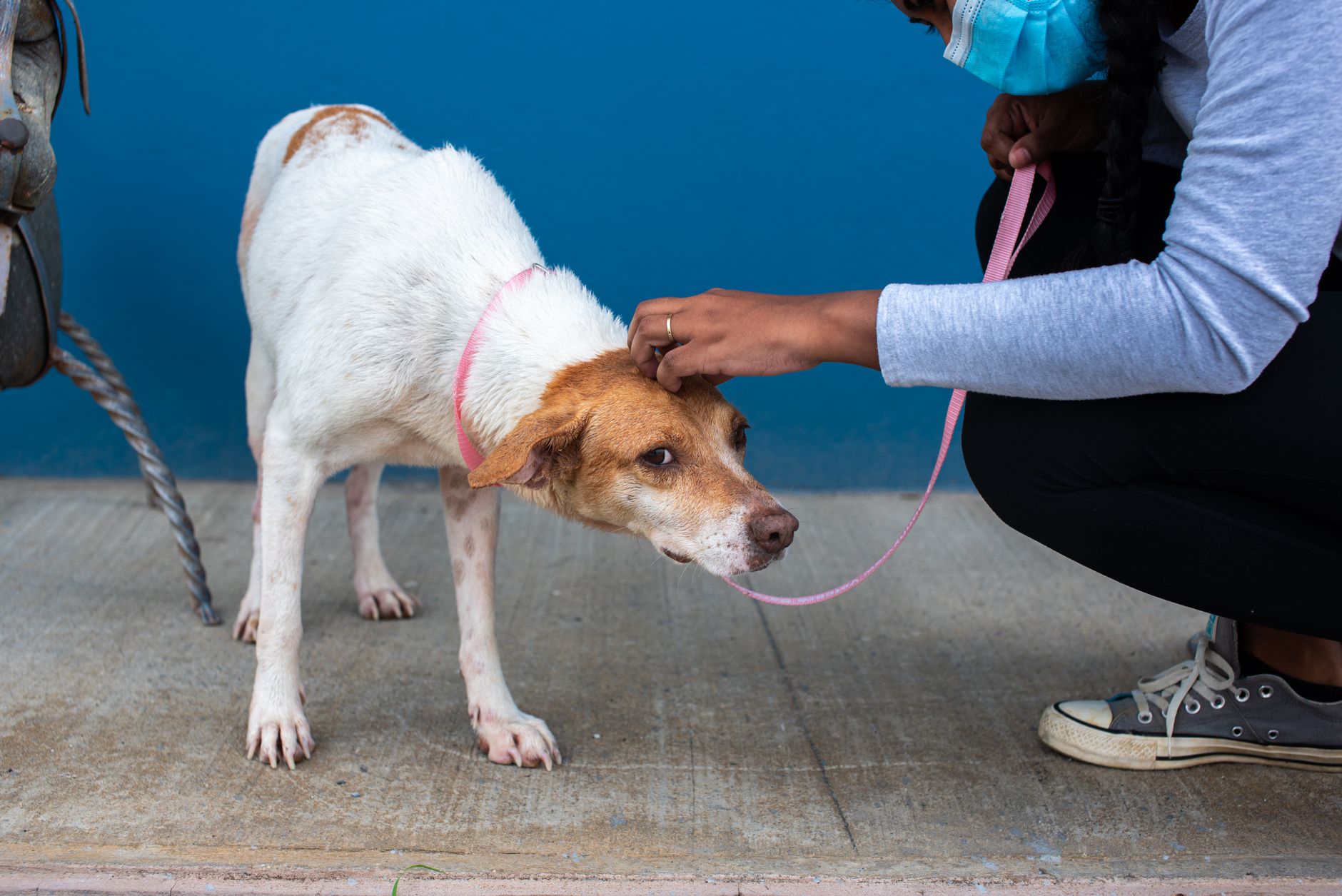
Seven times. Seven families walked into that shelter, looked into her brown eyes, and chose her. And seven times, they brought her back.
Her name was Biscuit — a white and tan mixed-breed with a pink collar that staff kept reattaching every time she came back through the door. Each return felt like a small death. The volunteers would note it in her file without saying much. There wasn’t much to say.
The reasons were always different. Too anxious. Doesn’t get along with the cat. Hid under the bed for three weeks. Destroyed a couch. The reasons stacked up until Biscuit’s file was thick enough to make any new adopter hesitate.
What no one had figured out yet was that every single one of those reasons pointed to the same thing.
Biscuit wasn’t a problem dog. She was a traumatized one.
Shelter staff had noticed she flinched at raised voices. That she pressed herself against walls when strangers moved too fast. That she ate only when no one was watching. These weren’t behavioral flaws — they were a map of everything she’d survived before anyone thought to document it.
The eighth family almost didn’t happen.
A woman named Carmen had been volunteering at the shelter for two years. She’d watched Biscuit come and go, come and go. She’d never considered adopting her — Carmen already had two dogs, a small apartment, and a life that felt full. But one afternoon she sat on the kennel floor next to Biscuit just to keep her company, and Biscuit did something she had never done with any of the seven families.
She put her head in Carmen’s lap and stayed there.
Carmen didn’t rush it. She came back the next day, and the day after that. She didn’t try to leash her. She didn’t bring treats. She just sat. And slowly, over two weeks, Biscuit started moving toward the door on her own when she heard Carmen’s voice.
When Carmen finally brought her home, she did something none of the previous families had done — she gave Biscuit a room of her own for the first week. No forced introductions. No schedule pressure. Just a quiet space with a bed, water, and a window.
By day four, Biscuit had started sleeping in the hallway instead of hiding.
By day ten, she was on the couch.
By the end of the first month, Carmen posted a video of Biscuit running through a park — tail up, ears back, mouth open in that loose, joyful way that only dogs who feel safe can manage. The comments filled up fast. People who had never met this dog were crying.
The shelter staff cried too, in a quiet back office, over a folder that finally had nowhere left to go.
Sometimes the problem was never the dog. Sometimes the dog was just waiting for the person who was willing to sit on the floor long enough to find out.