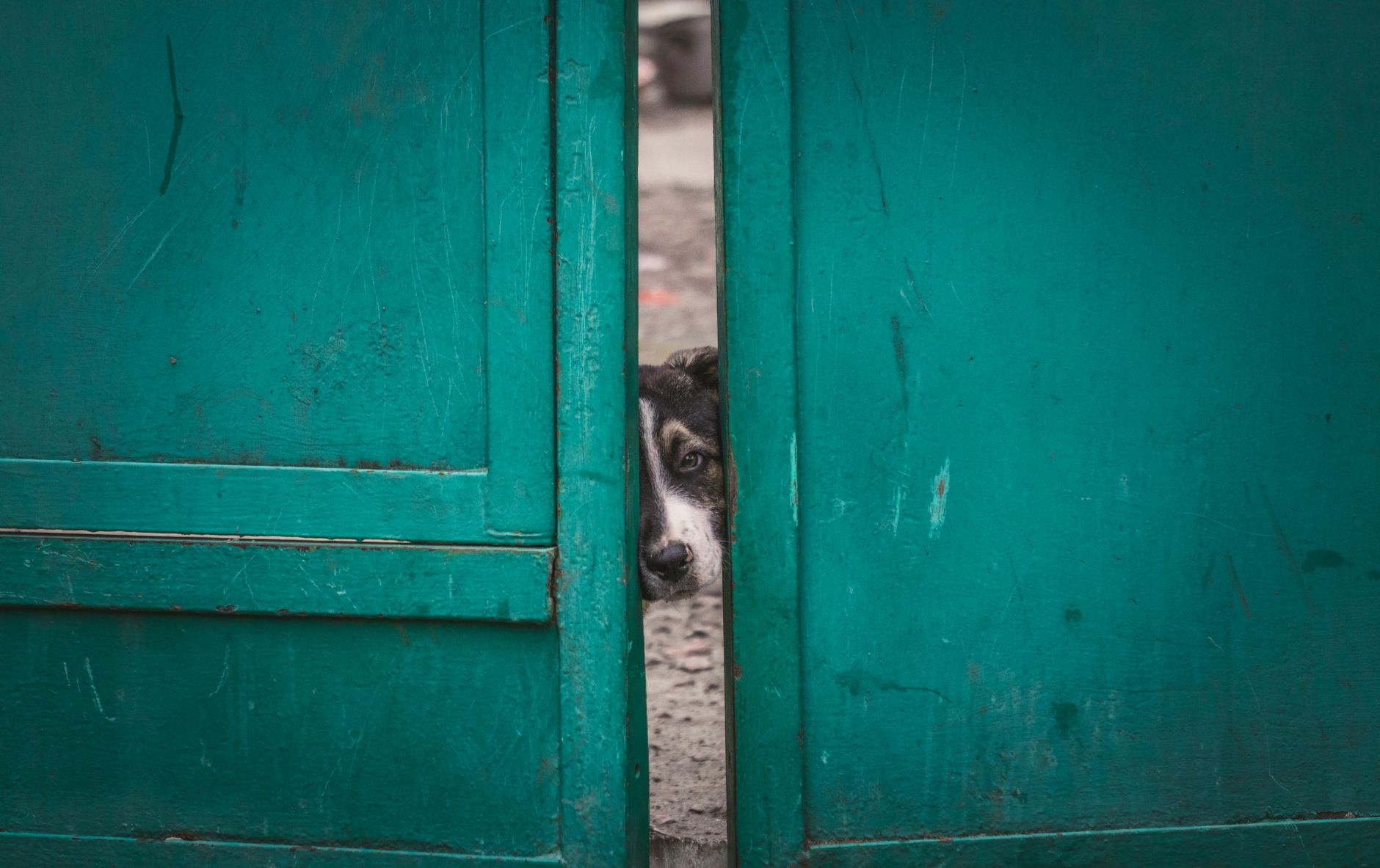
He sat perfectly still in the rain, nose pressed to the gap between the sliding glass doors, watching everyone who walked in and out. Staff had tried to shoo him away twice. He always came back.
The black-and-white dog had appeared on a Tuesday morning, just as the early shift began at Batumi Regional Hospital in Georgia. No collar. No tags. Thin, but not wild-eyed. He didn’t bark, didn’t beg for food, didn’t approach visitors. He simply waited — with an intensity that made the nurses uncomfortable in a way they couldn’t explain.
By nightfall, one of the orderlies, a man named Giorgi, brought out a bowl of broth and a torn piece of bread. The dog ate without taking his eyes off the entrance. When Giorgi tried to pet him, the dog stepped gently to the side and returned to his post.
Day two. Then day three.
The hospital director was ready to call animal control. But something made the staff hesitate. A nurse named Tamar had started watching him more closely. She noticed that every time the doors opened, the dog rose to his feet — not aggressively, not playfully. Just alert. Searching.
He wasn’t guarding the hospital. He was looking for someone inside it.
Tamar began quietly asking patients’ families if anyone had lost a dog. Nothing. She asked the security staff to review the entrance footage from the day the dog first appeared. What they found stopped her cold.
On the footage, just hours before the dog showed up at the door, a man had been brought in by ambulance — elderly, unconscious, with no identification. He’d been found collapsed near the old port district, about two miles from the hospital. The timestamp on his arrival matched almost exactly with the dog’s first appearance at the entrance.
The unnamed patient was in critical care on the fourth floor.
Tamar walked up herself. She stood in the doorway of the room and looked at the old man — frail, pale, connected to monitors, still unconscious. And then she looked at the photo she’d pulled from the security still on her phone: a black-and-white dog, nose to the glass, waiting.
She went back downstairs. She asked two colleagues to help her. Together, they carried the dog — who did not resist — up in the service elevator.
When they brought him into the room, the dog jumped onto the bed before any of them could stop him. He pressed his face against the old man’s hand and went completely still.
The monitors didn’t change. The man didn’t wake up.
But he curled his fingers.
Just slightly. Just enough. The dog whimpered once — a small, exhausted sound — and lay his chin down across the man’s wrist.
Hospital staff stood in the hallway and cried. Some couldn’t explain why. Others didn’t try.
The man was identified two days later through a missing persons report filed by a neighbor. His name was Arsen. He was 74 years old, a retired fisherman, and had lived alone for eleven years — except, it turned out, for one companion.
Arsen regained consciousness on the sixth day. The first thing he saw when he opened his eyes was a pair of dark, watchful eyes looking back at him from the edge of the bed.
He had never stopped waiting. Neither had the dog.