Let’s not pretend this is a simple question.
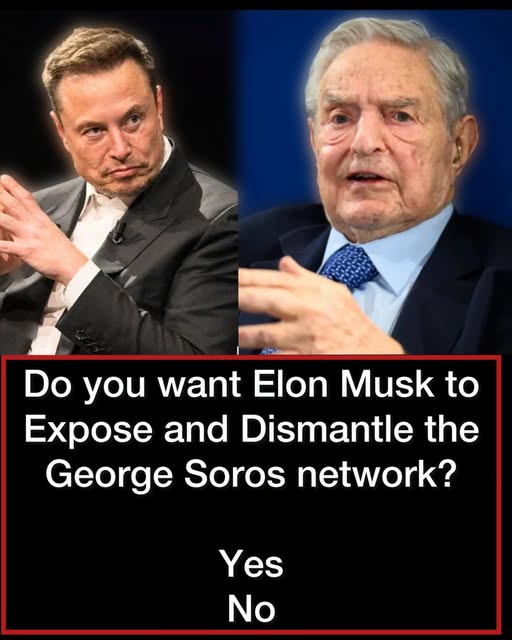
For millions of conservatives, the name George Soros sits at the center of everything they believe is wrong with modern American politics. For millions on the left, he’s a philanthropist being used as a scapegoat — a Jewish billionaire whose name gets weaponized in ways that make a lot of people deeply uncomfortable. And now, with Elon Musk sitting at the intersection of government access, media power, and an enormous public platform, the question has become louder than ever.
So let’s actually talk about it. Who is George Soros? What is his network? What does Elon Musk say he wants to do about it? And — most importantly — what would it actually mean if he did?
George Soros is 93 years old. He’s a Hungarian-born Jewish billionaire who survived the Nazi occupation as a child, built a hedge fund empire, and became one of the most consequential political donors in modern history. His Open Society Foundations have spent billions of dollars — over $32 billion by some estimates — funding causes across the globe. Democracy initiatives. Criminal justice reform. Immigration advocacy. Drug policy reform. Media organizations. Think tanks. Legal groups.
To his supporters, he is a man who puts his money behind open societies, civil liberties, and the underprivileged. To his critics, he is a shadow operator who has used extraordinary private wealth to reshape politics, fund progressive prosecutors, flip local elections, and push an ideological agenda across institutions most people don’t even know he’s involved in.
Both things can have elements of truth.
That’s the part that often gets lost.
The critique of Soros from the right is not entirely without basis. He has, without question, poured enormous sums into changing the American legal landscape through district attorney races — funding progressive prosecutors in cities like San Francisco, Los Angeles, Chicago, and Philadelphia. Those prosecutors pursued policies that critics argue contributed to spikes in crime, retail theft, and public disorder. Whether you agree with that assessment or not, the money trail is real and documented. Soros-backed PACs spending millions on local DA races is not a conspiracy theory. It’s public record.
He has also funded media organizations, policy groups, and advocacy networks in ways that are legal but deliberately low-profile. Influence operations — and that’s what they are, on both the left and the right — don’t typically advertise their funding structures. That opacity is worth scrutinizing.
A reasonable person can look at the scale of one private citizen’s political spending and ask: should this much influence be concentrated in one set of hands, regardless of ideology?
That is a legitimate question.
But here’s where it gets complicated. And this is the part that a lot of people on the right don’t want to sit with.
The “Soros network” framing, as it circulates in the darkest corners of the internet, is not always a policy critique. It has become, in many spaces, something uglier. The imagery used. The language used. The way his religion gets referenced. The conspiracy theories that attach to his name — about population control, about puppet-mastering governments, about deliberately destabilizing nations — these are not policy arguments. They are recycled antisemitic tropes dressed up in modern political clothes.
And that matters. Because when Elon Musk — the most powerful private citizen on Earth right now, with 180+ million followers and direct access to the levers of government through DOGE — starts amplifying content about Soros, the line between legitimate critique and something far more dangerous gets very thin, very fast.
Power plus a megaphone plus an angry audience is not an investigation. It’s a targeting system.
So what does Musk actually want here? That’s genuinely unclear.
He has posted about Soros. He has agreed with characterizations of Soros’s influence as destructive. He has called him out by name. But “exposing a network” through social media posts is very different from a formal, legal, accountable investigation with due process — the kind that actually leads somewhere legitimate.
If Musk — through his government access, through DOGE, through his platform — wants to pursue a genuine, transparent audit of how political money flows through nonprofit structures, PACs, and dark money channels to influence American institutions, that could be a valuable thing. Done correctly, with equal application across donors of all ideological stripes. Koch network included. Adelson network included. Every billionaire who has quietly shaped American policy from the shadows — included.
If that’s what “exposing the Soros network” means, then yes — a lot of Americans across the political spectrum might actually support that.
But if it means using government access and platform power to target one specific man, one specific ideological ecosystem, while the right-wing equivalent operates without scrutiny — that’s not justice. That’s not accountability. That’s political warfare dressed up as transparency.
And those are not the same thing.
The honest answer to the question in this headline is that most people haven’t thought through what they’re actually asking for when they say yes to this.
They’re reacting to something real — the very real and very legitimate concern that billionaire money has warped American democracy, bought prosecutors, captured media, and funded ideological capture of institutions without voter input or public debate.
That frustration is valid.
But the solution to billionaire political influence is not a different billionaire using government power to go after his ideological enemies. That’s just replacing one problem with a scarier version of the same problem.
Real reform means sunlight on all of it. Public funding of elections. Disclosure requirements. Limits on what private money can buy in a democracy.
Not a billionaire with a government badge deciding which other billionaire deserves to be made an example of.