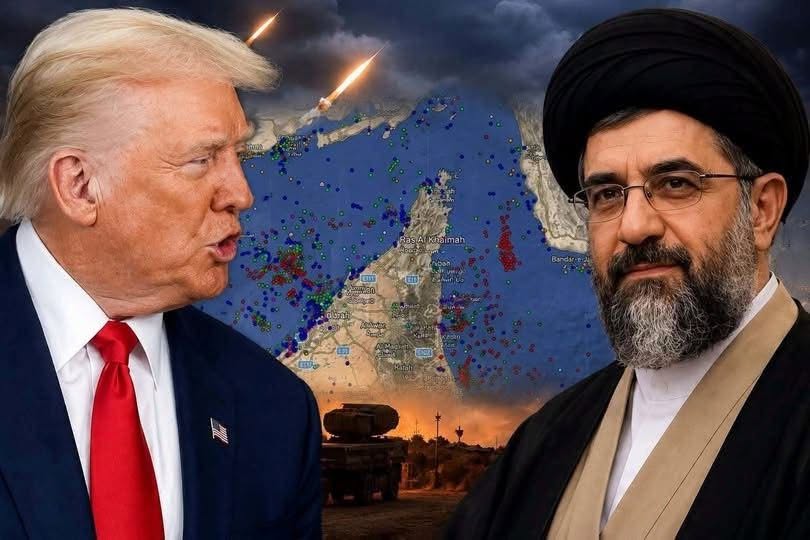
US officials have claimed that Russia is providing Iran with intelligence regarding the locations of American military assets in the Middle East, a development that could significantly increase tensions across an already volatile region. According to the officials, the intelligence reportedly includes information about the positions of US warships, military aircraft, radar installations, and other strategic assets operating throughout the Gulf and surrounding areas.
The allegations, if accurate, suggest a new and potentially dangerous dimension to the growing geopolitical competition involving the United States, Russia, and Iran. While Moscow has not publicly commented on the claims, US officials believe the intelligence-sharing effort could help Tehran monitor American military activity more effectively and potentially improve its ability to respond to or target US forces if tensions escalate further.
The reports emerge at a time when the Middle East is experiencing one of its most sensitive security environments in recent years. Regional conflicts, military deployments, and ongoing diplomatic disputes have already placed governments across the area on high alert. The possibility that a major world power may be assisting Iran with military intelligence has therefore attracted immediate attention from policymakers, military analysts, and international observers.
According to the officials familiar with the matter, the intelligence allegedly being shared includes detailed information regarding the movement and deployment of US naval forces operating in key waterways throughout the Middle East. These waterways are among the most strategically important in the world, serving as major routes for international trade and energy shipments.
American warships operating in the region often play multiple roles, including protecting commercial shipping routes, conducting surveillance missions, supporting allied nations, and maintaining a military presence designed to deter potential threats. Knowledge of their precise locations could provide valuable information to any actor seeking to track US operations or evaluate military options during a crisis.
Officials also indicate that information regarding US aircraft movements may be included in the intelligence reportedly provided to Iran. Military aircraft are frequently used for reconnaissance missions, force projection, defensive patrols, and rapid response operations throughout the region. Access to information regarding their locations and movements could potentially allow foreign military planners to gain a clearer understanding of American operational patterns.
In addition to ships and aircraft, US officials say radar systems and other monitoring infrastructure may also be included within the intelligence-sharing effort. Such systems are often critical components of modern military operations, providing early warning capabilities, air defense coordination, and battlefield awareness. Knowledge of their locations could theoretically assist an adversary in assessing regional military capabilities.
While officials have not publicly released evidence supporting these claims, the allegations have sparked discussion regarding the broader strategic relationship between Russia and Iran. Over recent years, the two countries have developed closer political, economic, and military ties. Shared interests in several regional and international issues have led to increased cooperation, particularly in areas where both nations oppose US influence or Western-led initiatives.
Analysts note that intelligence cooperation between countries is not uncommon in international relations. Nations frequently share information with partners and allies to support mutual interests. However, if intelligence regarding US military deployments is being transferred to Iran specifically for operational purposes, many experts believe it would represent a significant escalation in strategic competition.
The alleged intelligence-sharing arrangement also raises questions about the potential risks facing US military personnel stationed throughout the Middle East. American forces operate at numerous bases and facilities across the region, often in partnership with allied governments. These forces support a variety of missions, including counterterrorism operations, regional security initiatives, and protection of international shipping routes.
Military experts emphasize that operational security remains a top priority for US forces regardless of external intelligence threats. The United States possesses extensive surveillance, cybersecurity, and intelligence capabilities designed to protect military operations and identify potential risks. Nevertheless, reports suggesting that sensitive information could be reaching potential adversaries are likely to receive close attention within defense circles.
The allegations come during a period of increased scrutiny regarding global intelligence activities. Modern military operations rely heavily on information gathering, satellite surveillance, electronic monitoring, and data analysis. Access to accurate intelligence can influence strategic decisions, military planning, and diplomatic calculations. As a result, intelligence-sharing arrangements often carry significant geopolitical implications.
Some analysts believe the reported Russian assistance may be intended primarily as a political signal rather than a direct military contribution. By strengthening ties with Iran and demonstrating support for a strategic partner, Russia could be seeking to reinforce its influence within the region while challenging US interests. Others argue that any intelligence-sharing involving military positions carries practical implications regardless of political intentions.
At the same time, experts caution that many details surrounding the claims remain unclear. Publicly available information is limited, and officials have not disclosed the specific methods through which the intelligence is allegedly being transferred. Without additional evidence, observers say it is difficult to fully assess the scope or impact of the reported cooperation.
Meanwhile, US officials have emphasized that China does not appear to be providing similar assistance to Iran. This distinction has attracted considerable interest given China’s growing economic and diplomatic presence throughout the Middle East. Beijing has expanded trade relationships, energy partnerships, and infrastructure investments across the region over the past decade.
Although China maintains strong relations with Iran, analysts note that Beijing often seeks to balance its relationships with multiple countries throughout the Middle East. Chinese policymakers generally prioritize economic stability, uninterrupted trade flows, and regional cooperation. According to US officials, there is currently no indication that China is participating in intelligence-sharing activities comparable to those allegedly involving Russia.
The differing approaches attributed to Moscow and Beijing highlight the complex nature of global power competition. While both countries frequently cooperate on certain international issues, their strategic priorities are not always identical. Regional stability, economic interests, military relationships, and diplomatic objectives can influence decision-making in different ways.
International observers are also examining how these reports may affect broader geopolitical dynamics. Relations between the United States and Russia have remained strained across multiple fronts in recent years. Disagreements involving security issues, sanctions, regional conflicts, and competing strategic interests have contributed to an increasingly tense environment.
If evidence emerges supporting the claims, some analysts believe it could lead to additional diplomatic friction between Washington and Moscow. Governments often view intelligence activities involving military operations as particularly sensitive matters. Any perception that one nation is assisting a potential adversary can influence policy decisions and diplomatic relations.
Regional governments are likewise watching developments closely. Many Middle Eastern nations maintain security partnerships with the United States while also pursuing economic and diplomatic relationships with Russia and China. Managing these relationships often requires careful balancing as geopolitical competition intensifies.
Energy markets and financial institutions are also monitoring the situation. Although the allegations themselves do not directly affect energy production or transportation, investors frequently react to developments that could influence regional stability. Concerns regarding military tensions, security risks, or diplomatic confrontations can contribute to uncertainty in global markets.
Experts stress that information warfare and intelligence competition have become increasingly important components of modern geopolitics. In many cases, strategic influence is exercised not only through military deployments but also through information gathering, cyber capabilities, surveillance technologies, and intelligence partnerships. The current allegations reflect the growing significance of these activities in shaping international relations.
For military planners, intelligence regarding force locations represents valuable information regardless of whether conflict occurs. Understanding where assets are positioned can assist with strategic assessments, contingency planning, and operational decision-making. This reality explains why reports involving military intelligence often attract substantial attention from defense communities worldwide.
As discussions continue, officials from multiple countries are expected to evaluate the claims carefully and assess potential implications for regional security. Intelligence agencies, defense ministries, and diplomatic institutions will likely continue monitoring developments while seeking additional information.
For now, many questions remain unanswered. Moscow has not publicly addressed the allegations, and independent verification has not been presented publicly. Nevertheless, the claims have already intensified debate regarding international alliances, military cooperation, and the evolving balance of power in the Middle East.
The coming weeks may provide greater clarity regarding the nature of the alleged intelligence-sharing activities and their potential impact. Until then, governments, military analysts, and international observers will continue watching closely as one of the world’s most strategically important regions navigates another period of uncertainty.
Whether the allegations ultimately prove accurate or not, they underscore a broader reality of contemporary geopolitics: competition among major powers increasingly extends beyond traditional battlefields into intelligence networks, strategic partnerships, and information-driven operations. In an era defined by rapid communication, advanced surveillance technologies, and global interconnectedness, intelligence itself has become one of the most valuable assets in international affairs.
As tensions continue to evolve, the world will be watching closely for responses from the governments involved and for any new information that sheds light on the claims. The outcome could influence diplomatic relations, military planning, and regional security calculations for months or even years to come.