From Panic to Control: How to Handle Bugs on Your Child Without Fear
That split-second of terror when you notice something moving on your child’s scalp—or crawling across their skin—is something nearly every parent recognizes. Your heart jumps, your mind races, and worst-case scenarios flood in instantly. Is it lice? Something worse? How long has it been there? How did it happen?
But here’s the truth: while that moment feels overwhelming, it doesn’t have to control you. Most of the common culprits—lice, ticks, fleas, carpet beetle larvae, even booklice—are far less dangerous than they sound. The real challenge isn’t the bug itself. It’s the panic that comes with not knowing what you’re dealing with.
Once you replace fear with understanding, the entire situation changes.
The Power of Identification
The single most important step in handling any of these situations is simple: identify what you’re dealing with. Without that, everything feels urgent and chaotic. With it, you gain clarity and direction.
Start with the basics. Good lighting is essential—natural daylight if possible. Take a close look, or better yet, take a clear photo with your phone. If you can, capture the insect using tape or place it in a small container. This might sound unpleasant, but it turns a guessing game into a solvable problem.
From there, you have options. A pediatrician, school nurse, or even a pharmacist can often identify the issue quickly. In many cases, what feels like a crisis can be clarified in minutes.
That shift—from “What is happening?” to “Okay, I know what this is”—is powerful. It puts you back in control.
Understanding the Usual Suspects
Each of these bugs has its own behavior, and understanding that behavior removes much of the fear.
Head lice, for example, are probably the most emotionally charged. They spread through close contact, especially among children, but they are not a sign of poor hygiene. They don’t carry disease, and while they are annoying, they are manageable with consistent treatment.
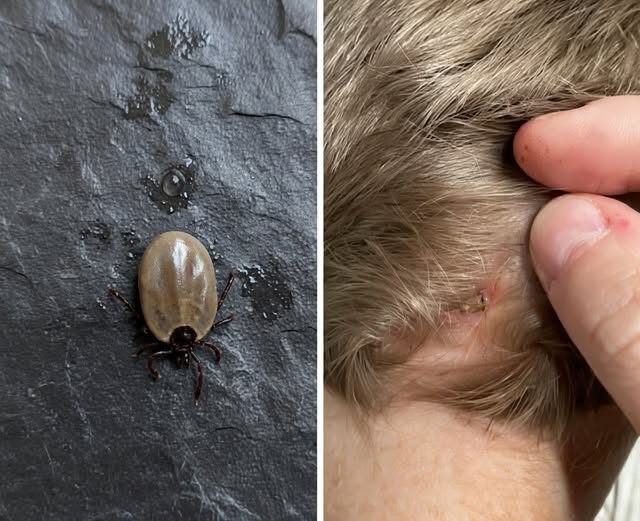
Ticks tend to provoke a different kind of fear because of their association with illness. But even here, knowledge matters. Most ticks can be safely removed with fine-tipped tweezers by pulling straight out. Acting promptly and correctly greatly reduces risk.
Fleas are often linked to pets. They bite, yes, but their presence usually points to an environmental issue that can be addressed—treating pets, washing bedding, and cleaning thoroughly.
Carpet beetle larvae and booklice, despite their unsettling names, are typically harmless to humans. They may irritate skin or simply appear in unexpected places, but they don’t live on the body. Once you identify their source—fabrics, dust, humidity—they can be eliminated with cleaning and simple environmental changes.
In every case, the pattern is the same: what seems frightening becomes manageable once you understand it.
Response Over Perfection
When something like this happens, it’s easy to feel like you need to respond perfectly. To fix everything immediately. To ensure it never happens again.
But perfection isn’t the goal. Response is.
If it’s lice, you treat methodically. Use appropriate products, follow instructions, and repeat as needed. Comb carefully. Check other family members. Stay consistent.
If it’s a tick, you remove it properly, clean the area, and monitor for symptoms if necessary.
If the source is environmental—like fleas or carpet pests—you clean, wash, vacuum, and address the root cause.
None of these require panic. They require steps. Clear, calm, repeatable steps.
And here’s something important: these situations are incredibly common. They happen in clean homes, in careful families, in every kind of environment. They are not a reflection of your parenting.
Protecting More Than the Body
In moments like these, it’s not just your child’s physical well-being that matters. It’s their emotional experience too.
Children pick up on your reactions instantly. If they see panic, disgust, or shame, they internalize it. They may start to feel embarrassed or “dirty,” even when they’ve done nothing wrong.
That’s why your response matters so much.
Keep your tone calm. Explain what’s happening in simple, reassuring terms. Avoid language that assigns blame. This isn’t about fault—it’s about care.
You can even turn it into a learning moment. Talk about how bodies work, how bugs exist in the world, and how we handle situations like this safely. When approached this way, what could have been a frightening experience becomes something manageable—even empowering.
Building Confidence Through Action
There’s something deeply reassuring about having a plan. Once you know what you’re dealing with and how to respond, the situation stops feeling overwhelming.
You move from reacting emotionally to acting intentionally.
That confidence doesn’t just help in this moment—it carries forward. The next time something unexpected happens, you’ll remember that you’ve handled something like this before. That you figured it out. That you got through it.
And your child will remember too.
They’ll remember that when something scary happened, you stayed calm. You took care of them. You solved the problem together.
That’s a powerful lesson.
Letting Go of the Stigma
One of the biggest challenges in dealing with things like lice or fleas isn’t the bugs themselves—it’s the stigma.
There’s a lingering belief that these issues are tied to cleanliness or neglect. But that simply isn’t true. Lice, for example, actually prefer clean hair. Fleas can enter homes in countless ways. Ticks are part of nature.
Letting go of that stigma is essential. It allows you to focus on what actually matters: solving the problem and supporting your child.
You are not failing because this happened. You are responding—and that’s what matters.
A Different Way to See the Moment
It’s easy to view these situations as purely negative. As interruptions, inconveniences, or even crises.
But there’s another way to see them.
They are moments where you model calm under pressure. Where you teach problem-solving. Where you show your child that unexpected things can be handled without fear.
They are opportunities to build resilience—not just in your child, but in yourself.
Conclusion
That initial moment of fear—the instant you see something you don’t recognize—may never completely go away. It’s a natural reaction, rooted in instinct and protection.
But what comes next is within your control.
With knowledge, simple tools, and a calm approach, you can turn panic into clarity. You can replace fear with action. And you can guide your child through the experience in a way that leaves them feeling safe, supported, and unashamed.
In the end, it’s not about avoiding every unexpected moment. That’s impossible. It’s about how you meet those moments when they come.
With facts in your hands and panic out of the driver’s seat, you and your child don’t just get through it—you come out stronger.