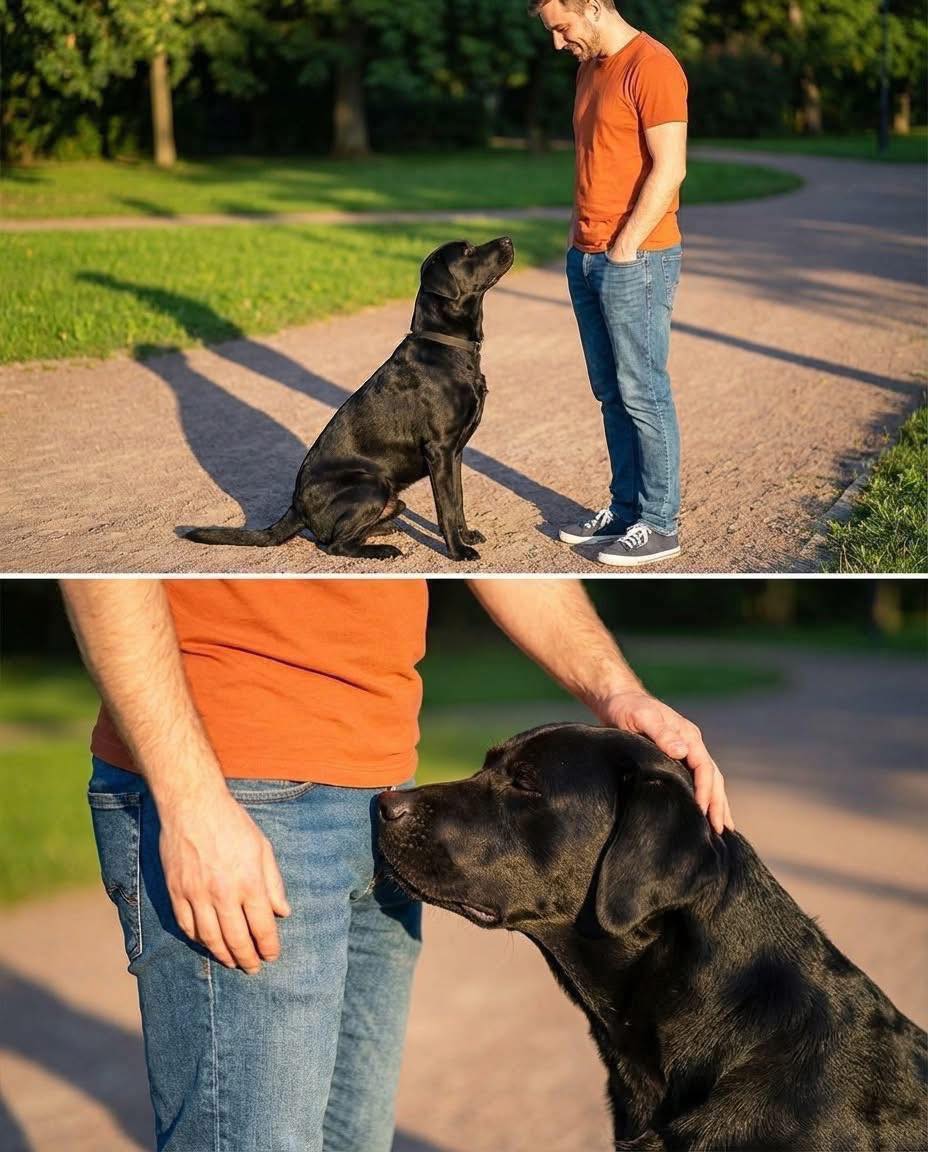
Dogs often seem to know more about us than we realize.
They notice things before we speak, react to emotions we haven’t fully processed, and sometimes behave in ways that feel strangely personal—like they’re responding to something invisible. A sudden nudge when you’re quiet. A stare that lingers a little too long. Or that awkward moment when a dog insists on sniffing you in a way that feels, well… uncomfortable.
To us, these moments can feel confusing or even embarrassing.
To a dog, they are full of meaning.
What looks like odd behavior is actually a glimpse into a completely different way of understanding the world—one that is deeper, more instinctive, and in many ways, more honest than our own.
A Language of Scent
Dogs don’t rely on words the way humans do. They don’t need tone, facial expressions, or explanations to understand what’s happening around them.
They rely on scent.
A dog’s nose is not just powerful—it is extraordinary. While humans have around 5 to 6 million scent receptors, dogs can have up to 300 million. But it’s not just about quantity. Their brains are also wired to process smells in far greater detail, turning scent into something like a story they can read.
When a dog sniffs a person, it’s not random curiosity.
It’s investigation.
They are gathering information about you—your age, your sex, your emotional state, and even subtle clues about your health. Hormones, pheromones, and chemical signals that we are completely unaware of become clear and structured to them.
To a dog, your scent is your identity.
And when they approach you to sniff, especially in those more personal areas, they’re not being inappropriate.
They’re saying hello.
In the dog world, this is the equivalent of a handshake, an introduction, a first impression. It’s how they confirm who you are, what you’re feeling, and whether you are safe or familiar.
It may feel awkward to us—but to them, it is completely natural.
When Curiosity Feels Uncomfortable


4
Even when we understand the reason behind it, the behavior can still feel uncomfortable.
A dog approaching too closely, sniffing too insistently, or focusing on one area for too long can make anyone feel exposed. Social norms, personal boundaries, and human expectations don’t always align with canine instincts.
And that’s okay.
Understanding a behavior doesn’t mean you have to accept it without limits.
Setting boundaries is not about rejecting the dog—it’s about guiding it.
Dogs are highly responsive to calm, consistent communication. A gentle command, a step back, or redirecting their attention to something else can signal that the interaction needs to change. Positive reinforcement—rewarding calm behavior, encouraging appropriate greetings—helps shape their actions without confusion or fear.
What matters most is the approach.
Harsh reactions, punishment, or sudden anger can disrupt the trust between you and the dog. From their perspective, they are simply trying to understand you. Responding with patience allows them to learn without feeling rejected.
It becomes a quiet agreement:
“I understand what you’re trying to do—but let’s do it in a way that works for both of us.”
More Than Instinct: Emotional Awareness
Beyond physical scent, dogs seem to respond to something even deeper—our emotional state.
Many dog owners have experienced it.
A dog that becomes unusually calm when you’re sad.
One that stays close when you’re overwhelmed.
Or one that reacts before you’ve even realized how you feel.
Science suggests that dogs can detect changes in hormones like cortisol (linked to stress) and adrenaline. But what we experience often feels like more than chemistry.
It feels like understanding.
A dog doesn’t need you to explain your bad day. It doesn’t need context, details, or words. It senses the shift and responds in the only way it knows how—by staying near, by watching, by quietly existing with you.
That same nose that causes awkward moments is the same one that picks up on your distress.
The same curiosity that feels intrusive at times becomes comfort when you need it most.
Connection, Not Disrespect


4
It’s easy to misinterpret a dog’s behavior through a human lens.
We see social boundaries, politeness, and intention differently. What feels like disrespect to us may actually be connection from their perspective.
Dogs are not trying to embarrass you.
They are trying to know you.
Their world is built on honesty—on signals that cannot be hidden behind words or expressions. Where humans can say “I’m fine” while feeling anything but, a dog reads the truth beneath that statement.
And it responds to that truth.
That’s why the same dog that greets you with overwhelming curiosity might later sit quietly beside you when you’re hurting. No questions. No expectations. Just presence.
In those moments, their behavior takes on a different meaning.
It becomes less about what they do—and more about why they do it.
“I know you,” their actions seem to say.
“Even when you don’t say anything.”
What We Can Learn From Them
Dogs remind us of something we often forget.
Connection doesn’t always need words.
It doesn’t always need perfection, politeness, or careful presentation. Sometimes, it’s about showing up as you are—curious, attentive, present.
Their way of understanding the world may feel foreign, even uncomfortable at times. But within it is a kind of clarity that humans rarely achieve.
They don’t overthink interactions.
They don’t hide behind social masks.
They don’t pretend not to notice.
They simply respond.
And maybe that’s why their presence feels so grounding.
Because in a world where so much is filtered, managed, and controlled, dogs remain real.
A Different Kind of Understanding
The next time a dog behaves in a way that feels awkward or unexpected, it helps to pause and reframe the moment.
Instead of asking, “Why is this happening?”
Ask, “What is the dog trying to understand?”
What seems like a small, uncomfortable interaction may actually be a meaningful exchange—one that reflects how deeply dogs are tuned into the world around them.
Their noses are not just tools.
They are bridges.
Bridges between instinct and emotion. Between physical presence and invisible signals. Between who we appear to be—and who we truly are in that moment.
And while we may never fully experience the world the way they do, we can learn to appreciate the depth of their perception.
Because sometimes, the things they notice about us…
are the very things we haven’t yet noticed ourselves.