There is a weird theory about people who’ve ‘never broken a bone.‘
For many, breaking a bone seems almost inevitable at some point in life, especially if you’ve spent your childhood climbing trees, playing sports, or simply being a little reckless.
Although most would chalk up the lack of broken bones to sheer luck or a cautious lifestyle, some corners of the internet suggest something much more unusual is at play.
A content creator on TikTok, who’s become known for diving into strange and speculative theories, has shared some interesting ideas about why certain people have managed to go through life without a single fracture.
The theories, while far from scientific, tap into spiritual and metaphysical beliefs that suggest a deeper meaning behind your intact skeleton.

How common is breaking a bone?
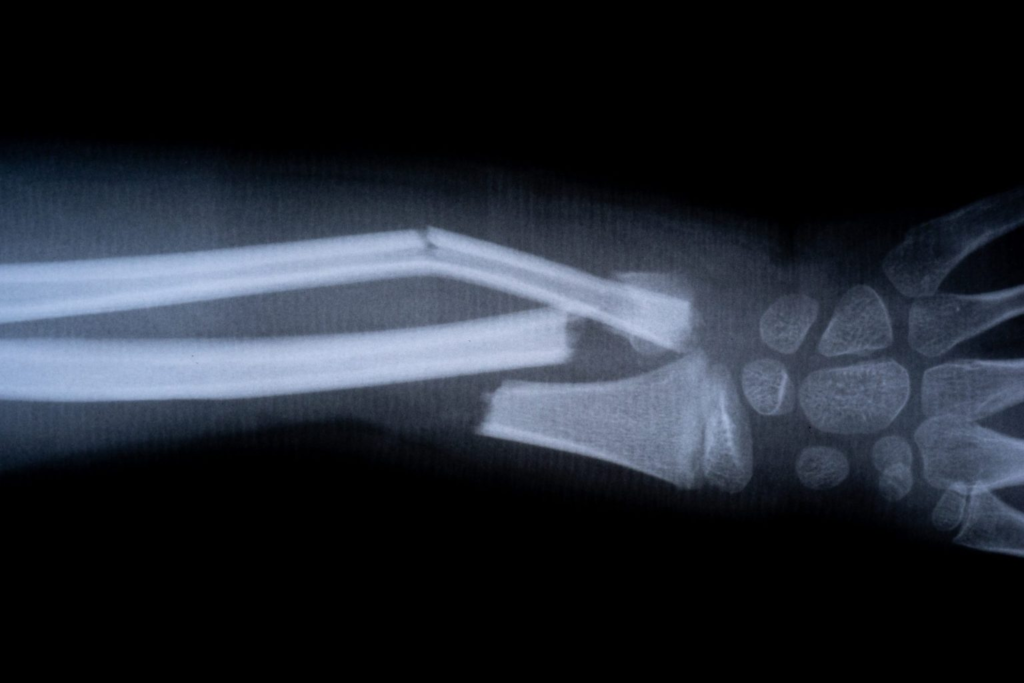
Breaking a bone is an extremely common occurrence. In fact, roughly 50 percent of people will break at least one bone in their lifetime.
Given the frenetic nature of children and how they play, youngsters are at a particularly high risk of breaking something, especially as their bones continue to develop at an early age.
In the elderly there is an increased risk too, especially in adults with osteoperosis.
Fracture rates in children tend to peak between the ages of 11 and 15-years-old, which is when a lot of kids will become involved in more physical team sports and adventurous pursuits.
In adults over the age of 50, spinal and hip fractures are the most common breakages, with bones beginning to weaken with age.
What are the most common bone breaks?
According to enablelaw.com, the most commonly broken bones are as follows:
1. Clavicle
2. Arm
3. Wrist
4. Hip
5. Ankle
6. Foot
7. Toe
8. Hand
9. Finger
10. Leg.
Arm breaks are the most common of all breaks and fractures. Falls and collisions are often the most prominent reason for people breaking bones, with the arms regularly taking the brunt of the force from these encounters, hence the heightened risk of breakages.
In older people, hips are particularly at risk of breaking from falls. While the femur is one of the body’s strongest bones, it can be severely weakened by osteoperosis, which usually occurs in adults over the age of 65. This means hips are far more at risk from falls and accidents.
Enable Law also explains how ankles are also ‘prone to breakage.’
“The ankle area is made up of three bones; the tibia, fibula and talus. It can be difficult to know if a break has occurred, as even the tendon damage of a sprained ankle can be very painful and prevent the sufferer from walking.
“As well as the more obvious breaks, ankles can sustain stress fractures which are when the bone cracks as a result of repeated pressure on it. This can occur if you run a lot.”
TikTok Star has wild theories about people never breaking a bone
Sara, the creator behind the TikTok account @sarasweirdworld, presents three primary theories to explain why some people have never broken a bone.
The first is what Sara calls spiritual protection.
As she puts it: “Apparently, there is a spiritual reason why people have never broken a bone. That’s because they are protected by spiritual protection. Almost untouchable in a weird sense. Protected by the higher powers.”
According to this view, those who remain unscathed by fractures may be under the watchful eye of some divine force.
Of course, this doesn’t mean they’re invincible, just that they might be shielded from specific kinds of physical harm.
A broken bone may not be the worst thing that can happen to someone, but avoiding one altogether certainly feels like a small victory.
The second explanation delves into the idea of karmic energy.
Sara explains: “The theory is that these types of people possess good karma, which they’ve earned by doing actions and kind deeds. This protects the individuals from coming to any harm.”
In other words, living a virtuous life could offer more than just moral satisfaction — it might grant a form of physical protection, too.
Is reincarnation behind people’s good luck?
The final theory borrows from beliefs in reincarnation.
Sara suggests that individuals who’ve had difficult or traumatic past lives may now be enjoying a reprieve.
“It is said that those people in this life who have never broken a bone may have experienced significant trauma in a past life,” she says. “So, the theory suggests that they are being spared from having similar experiences in this life.”
This view implies that suffering in one lifetime could lead to relative peace in the next.
Whether or not you believe in spiritual guardians, karma, or reincarnation, it’s clear that for some, the absence of broken bones is more than just a coincidence.
Still, many would argue it’s simply the result of being careful — or lucky.