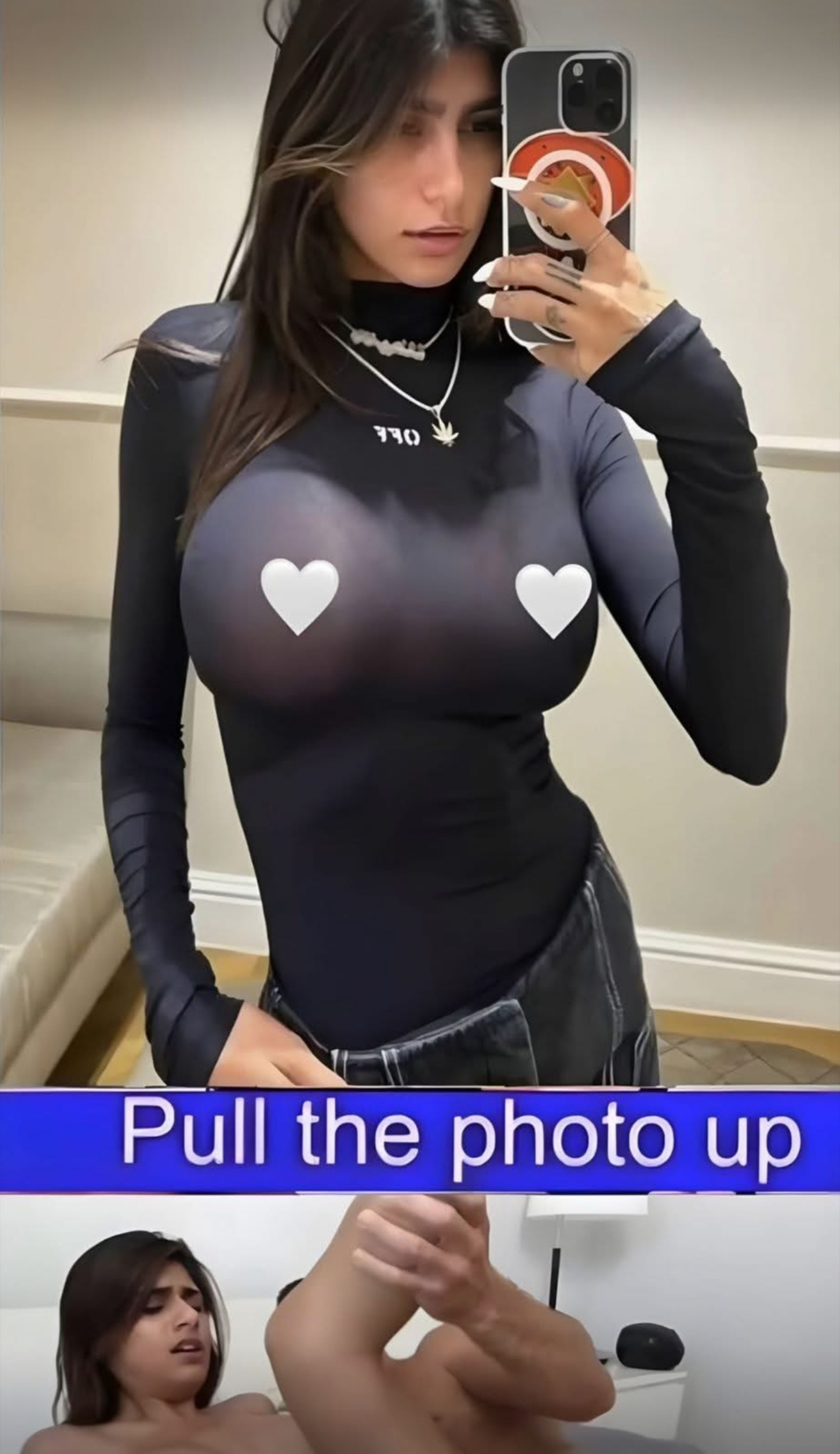
Years after stepping away from adult films, Mia Khalifa’s name still sparks instant reactions online. Any image, rumor, or visual echoing her past is enough to dominate timelines—showing that some exits never fully close, at least in the public imagination. In an era when attention is currency and controversy never expires, Khalifa’s story reveals how fame can become both a trap and a shadow that follows someone long after they try to leave it behind.
Mia Khalifa’s adult film career was famously brief. In 2014, she entered the industry, and within just a few months she became one of the most searched names on major adult websites in the world. Her rise was meteoric — but so was the backlash. One scene in particular, in which she wore a hijab, triggered international outrage, death threats, and global media attention. What might have been just another controversial moment in a hyper-provocative industry became a geopolitical and cultural flashpoint.
By 2015, Khalifa had quit the adult industry. She has repeatedly explained that she earned very little money from her brief time in porn — far less than most people assume — and that the long-term consequences were devastating. The internet, however, never updated its memory. Her name, face, and videos became frozen in time, endlessly reposted, pirated, clipped, memed, and reshared. No matter how loudly she tried to redefine herself, her past kept resurfacing.
That tension — between who Mia Khalifa is today and who the internet insists she remains — is what makes her story so powerful.
Fame That Outlived the Career
Unlike most celebrities, Khalifa became famous for something she now publicly rejects. She didn’t gradually transition from one career to another — her adult film work ended abruptly, but her notoriety never did. This created a strange paradox: she was one of the most recognizable figures in adult entertainment, even though she no longer belonged to that world.
Search engines, recommendation algorithms, and social media platforms ensure that her past stays at the top of results. New generations who were still children when she quit continue to discover her name as if it were current. When people post provocative images or videos online, someone inevitably comments her name — even when the person in the image has nothing to do with her. Mia Khalifa has become less a person and more a symbol: shorthand for a certain type of fame, scandal, and sexualized internet memory.
This phenomenon says less about her and more about how the internet works. Platforms are designed to recycle whatever drives clicks. Her name does exactly that. It triggers recognition, curiosity, and controversy — the three ingredients of virality.
Reclaiming Her Identity
Since leaving porn, Khalifa has made a deliberate effort to reshape her public identity. She has worked as a sports commentator, social media personality, brand collaborator, and political voice. She has spoken openly about Middle Eastern politics, Palestinian rights, online exploitation, and women’s autonomy. On platforms like Instagram, TikTok, and X, she presents herself as outspoken, sarcastic, political, and unapologetically human.
Yet even as she builds this new identity, she cannot escape the digital ghost of her old one.
She has described how humiliating it feels to see clips of her adult films constantly resurfacing, especially when they are shared without her consent or stripped of context. For Khalifa, the issue isn’t just embarrassment — it’s the loss of control. Those videos belong to an industry she walked away from, but they still define how millions see her.
This raises uncomfortable questions about consent in the digital age. Can someone ever truly leave a career that exists forever online? Should a woman be permanently reduced to work she did briefly, especially when she has publicly rejected it?
The Internet’s Refusal to Let Go
Mia Khalifa’s ongoing relevance is not because she keeps returning to adult content — it’s because the internet refuses to let her move on.
Every time a new viral video features a woman who looks vaguely like her, her name trends. Every time an influencer posts a revealing selfie, comparisons emerge. Every time someone wants attention, invoking her past becomes an easy shortcut to engagement. Her name has become a kind of cultural reflex.
This phenomenon reflects something darker about online culture: women, especially those who once worked in sexualized industries, are rarely allowed to evolve. While male celebrities are praised for reinvention, women are often punished for their pasts. Khalifa is expected to forever represent a version of herself that existed for only a few months.
And that version wasn’t even fully in her control.
From Object to Voice
What makes Khalifa unique is that she refuses to be silent about this. Instead of retreating, she confronts the internet head-on. She calls out hypocrisy. She mocks the men who still obsess over her past. She exposes how little she was paid compared to how much her name still generates in traffic and profit for porn sites.
In doing so, she has become something rare: a former adult star who openly criticizes the industry while still being globally famous because of it.
Her presence complicates the simple narratives people like to tell about porn. She is neither a tragic victim nor a glamorous success story — she is something messier and more real. She is a woman who made a decision in her early twenties, paid a massive price for it, and now lives with consequences that never fully go away.
Why Her Name Still Trends
The reason Mia Khalifa’s name still explodes online isn’t just nostalgia or lust. It’s about unresolved cultural tension.
She represents:
- The collision of religion and sexuality
- The exploitation of young women by viral industries
- The permanence of digital footprints
- The hypocrisy of a society that consumes sexual content while shaming the people who make it
Every time her name resurfaces, all of those issues come with it. That’s why a single image, rumor, or mention can dominate timelines. It’s not just about her — it’s about what she symbolizes.
A Legacy She Never Chose
Mia Khalifa didn’t set out to become one of the most recognizable names in adult entertainment history. She didn’t plan to become a global cultural debate. She didn’t ask to be trapped in a role she left over a decade ago.
But the internet doesn’t care about intent — it cares about memory.
Years after stepping away from adult films, Mia Khalifa remains one of the most searched, referenced, and misunderstood figures online. Her story is a warning about how quickly fame can be created — and how slowly it fades. It is proof that in the digital age, some exits never fully close.
And perhaps the most striking part of her story is this: even as she continues to reinvent herself, speak out, and move forward, the world still insists on pulling her back — not because she wants to be there, but because we never stopped watching.