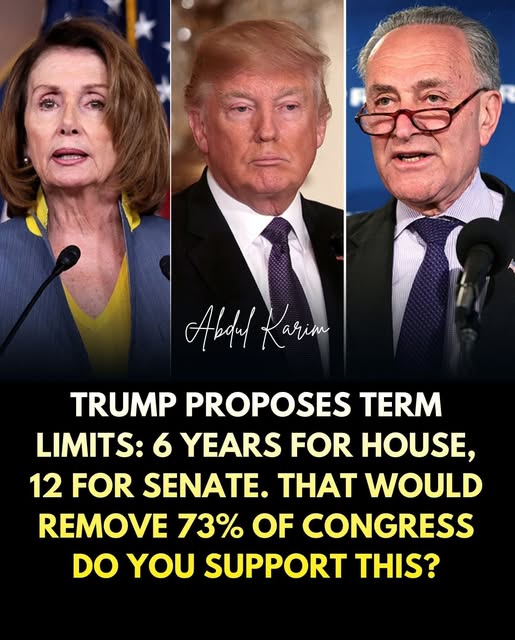
Term limits for members of Congress have long been one of those ideas that flare up in American politics, fade into the background, and then re-emerge when public frustration with Washington runs high. Now, the concept is back in the spotlight, attached to a specific proposal: capping service at six years in the House of Representatives and twelve years in the Senate. Supporters say it could fundamentally reshape how Congress works. Critics warn it might create new problems while solving few old ones. Either way, the debate taps into a deep vein of voter sentiment about power, accountability, and the nature of political careers.
At its core, the argument for term limits is simple: no one should hold legislative power for too long. The House was designed to be the “people’s chamber,” with frequent elections and close ties to constituents. The Senate, with longer terms, was meant to provide stability and deliberation. But nowhere in the original design of Congress were limits placed on how many times someone could be reelected. Over time, this has led to the rise of long-serving lawmakers who build decades-long careers on Capitol Hill.
For many voters, that reality feels increasingly disconnected from the founders’ vision. They see a political class that can become insulated from everyday concerns, more focused on reelection, party dynamics, and influence within Washington than on delivering tangible results back home. Term limits, in this view, are a structural fix—an automatic reset button that prevents power from becoming too concentrated.
The six-and-twelve-year framework is designed to strike a balance. Six years in the House would equal three terms, enough time for a representative to learn the ropes, develop policy expertise, and pursue a legislative agenda. Twelve years in the Senate equals two full terms, allowing senators to work on long-term issues without turning the position into a lifetime post. Proponents argue these windows are long enough for impact but short enough to prevent entrenchment.
One of the biggest selling points for supporters is the promise of “fresh blood.” New lawmakers could bring different professional backgrounds, regional perspectives, and generational priorities. In theory, this could make Congress more dynamic and more reflective of a changing country. If members know their time is limited, they might focus less on building seniority and more on achieving clear policy wins.
There’s also the argument about incentives. Critics of the current system say career politicians can become overly cautious, avoiding tough votes that might threaten their long-term prospects. With term limits, the logic goes, lawmakers might be freer to take principled stands, knowing they are not trying to protect a 30-year career. The focus could shift from political survival to legislative legacy.
However, the case against term limits is just as serious. Opponents often start with a practical concern: experience matters. Lawmaking is complex. Understanding budgets, regulations, foreign policy, and oversight takes time. Senior lawmakers often know how to navigate the system, build coalitions, and negotiate compromises. If everyone is constantly rotating out, Congress could lose institutional knowledge and become less effective, not more.
There is also the question of who really gains power under term limits. Some political scientists argue that when elected officials are less experienced, unelected actors—like lobbyists, senior staff, and executive branch officials—can gain influence. These players are not term-limited and may provide continuity and expertise that short-term lawmakers lack. In that scenario, term limits might weaken the very democratic accountability they aim to strengthen.
Another critique is democratic in nature: voters already have term limits at the ballot box. If constituents are unhappy with a lawmaker, they can vote them out. From this perspective, mandatory limits remove choice from voters. If a district or state strongly supports a representative or senator, why should the law force that person out?
State-level experiences add nuance to the debate. Many U.S. states have implemented term limits for their legislatures. Research on the results is mixed. Some states have indeed seen more turnover and diversity among lawmakers. Others have reported reduced policy expertise and a stronger role for lobbyists and bureaucrats. These mixed outcomes make it hard to predict exactly how federal term limits would play out.
There’s also a constitutional hurdle. Implementing congressional term limits would almost certainly require a constitutional amendment. That means approval by two-thirds of both houses of Congress and ratification by three-fourths of the states, or a constitutional convention called by the states. Either path is politically steep. Ironically, it would require many long-serving lawmakers to vote for a system that could end their own careers.
Public opinion, though, has often leaned in favor of term limits in polls. The idea resonates across party lines, especially during times of low trust in government. It fits into a broader narrative of “draining the swamp,” reducing corruption, and making government more responsive. Even people who disagree on many policies can agree that Washington sometimes feels stuck.
Still, term limits are not a magic wand. They do not automatically fix polarization, gridlock, or the influence of money in politics. A short-term lawmaker can still be partisan. A rotating Congress can still be divided. Structural reform may help at the margins, but it does not replace the need for political will and civic engagement.
In the end, the renewed push for term limits reflects something deeper than one proposal. It reflects a public wrestling with how democracy should function in a modern, polarized, media-saturated era. How do you balance experience with renewal? Stability with accountability? Voter choice with systemic safeguards?
The six-and-twelve-year plan puts a clear number on those questions, which is part of why it grabs attention. It turns a general frustration into a concrete reform idea. Whether it ever becomes reality is uncertain. But the conversation itself signals that many Americans are still searching for ways to make their government feel closer, cleaner, and more responsive.
And that may be the real story: not just how long politicians should serve, but how a democracy keeps renewing itself without losing what it has learned along the way.