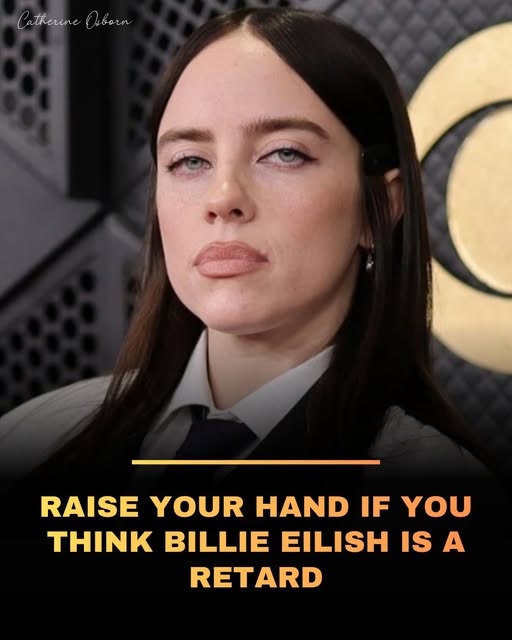
In today’s hyper-connected world, words travel faster than ever. A single sentence, a caption, or a quote can circle the globe in minutes, reaching millions of people from different cultures, backgrounds, and life experiences. When those words come from a global figure like Billie Eilish, their impact multiplies. Fame brings visibility — but it also brings responsibility.
Recently, a controversial line attributed to a celebrity reignited an old but important conversation: do words still carry weight in an era where outrage is constant and attention spans are short? For many people, the answer is a clear yes. Language shapes perception, influences behavior, and signals what we tolerate as a society.
This isn’t about silencing opinions. It’s about recognizing that communication has consequences.
The Power of a Microphone
Public figures live in a different reality than most people. Their casual remark can become a headline. Their joke can become a trend. Their opinion can become a talking point in classrooms, homes, and workplaces. That level of reach is not neutral; it’s power.
Power doesn’t mean a celebrity must be perfect or scripted. It means awareness matters. It means recognizing that millions of listeners don’t hear words in a vacuum — they hear them through the lens of their own lives, struggles, and identities.
When language touches on intelligence, disability, nationality, or identity, it can hit nerves that run deep. For families of people with disabilities, for example, certain words are not edgy or funny — they’re reminders of real stigma that affects education, employment, and social acceptance.
Why Some Words Hurt More Than Others
Language evolves. Words once casually used can later be recognized as harmful. Society learns, adapts, and redefines what respectful speech looks like. That process isn’t about censorship; it’s about empathy.
Many advocacy groups have worked for years to reduce the use of language that dehumanizes people with disabilities. Their argument is simple: words influence how society treats people. If a term becomes shorthand for “stupid” or “less than,” it reinforces bias.
For those who’ve been bullied, excluded, or underestimated because of a disability, these aren’t abstract debates. They’re personal realities.
Opinion vs. Impact
A common defense in controversies is: “It’s just my opinion.” But impact and intent are not the same thing. Someone may not intend harm, yet still cause it. Recognizing impact is part of maturity — both personal and societal.
Free speech allows people to express views. Accountability allows others to respond. The two coexist. Criticism is not censorship; it’s part of dialogue.
Public conversation works best when people can say:
- “Here’s why that hurt.”
- “Here’s why that matters.”
- “Here’s how we can do better.”
Those responses aren’t attacks; they’re participation in social growth.
The Speed of Virality
Social media amplifies everything. Nuance gets lost. Context disappears. Outrage spreads faster than reflection. A phrase can go viral before anyone pauses to ask what it truly means or who it affects.
That speed can be dangerous. It can also be educational. Many past controversies have led to productive discussions about race, gender, disability, and culture. Progress often starts with discomfort — but only if people are willing to listen.
Celebrity Culture and Human Reality
Celebrities are human. They make mistakes. They speak off-the-cuff. They grow and change like anyone else. The difference is scale: their missteps happen on a public stage.
The healthiest path forward isn’t cancellation or blind defense. It’s responsibility paired with room to learn. When influential people acknowledge harm and evolve, it sends a powerful message that growth is possible.
Accountability should not be confused with hate. Calling attention to harmful language doesn’t mean wishing harm on the speaker. It means expecting better from those with large platforms.
The Role of the Audience
Audiences also carry responsibility. We choose what to amplify, what to critique, and what to ignore. Outrage can sometimes become performative, focused more on drama than solutions.
A constructive response asks:
- Can this moment educate?
- Can it raise awareness?
- Can it promote kinder language?
If the answer is yes, then the conversation has value.
Words as Tools, Not Weapons
Language can build bridges or burn them. It can include or exclude. It can simplify complex issues or respect their depth. When words reduce people to labels or stereotypes, they stop being tools and start being weapons.
No artist, influencer, or public figure benefits from alienating the very audiences that support them. And no society benefits from normalizing language that diminishes others.
Moving Forward
The goal isn’t perfection. It’s awareness. It’s choosing words with care when possible and owning mistakes when they happen. It’s understanding that influence is a privilege, not just a perk.
Public figures who handle criticism thoughtfully often come out stronger. They show that listening is not weakness, and adjusting language is not surrender — it’s growth.
In the end, the real issue isn’t one quote or one celebrity. It’s the broader reminder that words still matter. They always have. They always will.
The question isn’t whether people should speak freely. The question is whether we can speak freely and responsibly.
Because a microphone can spread light just as easily as it can spark fire. And in a world already full of noise, choosing light is rarely the wrong move.