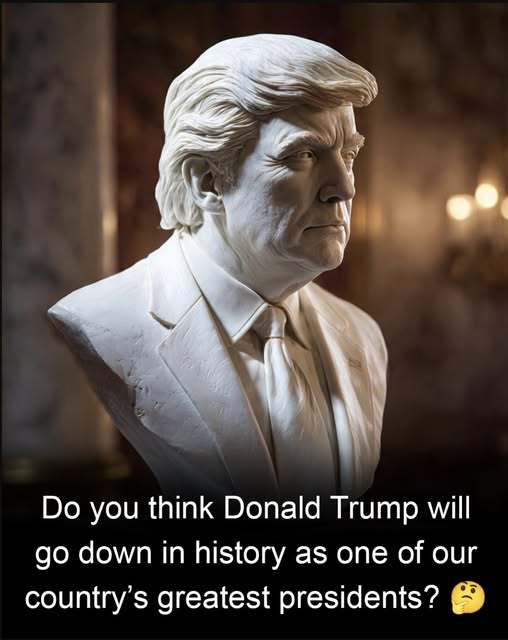
The question of whether Donald Trump will ultimately be remembered as one of the greatest presidents in United States history is one that continues to spark debate across the political spectrum. Presidential legacies are rarely decided immediately after a leader leaves office. Instead, they are shaped over decades as historians, political scientists, and citizens examine the long-term consequences of policies, leadership decisions, and cultural impact. Trump’s presidency, marked by both strong support and strong opposition, will likely remain a topic of discussion for many years to come.
Supporters of Trump argue that his administration achieved several significant accomplishments that could influence the country for generations. One of the most frequently cited achievements is the passage of the Tax Cuts and Jobs Act of 2017, a major overhaul of the American tax system. Advocates believe the policy helped stimulate economic activity by lowering corporate taxes and encouraging investment. Before the global pandemic disrupted economies around the world, the United States experienced low unemployment rates and strong stock market growth, which many supporters credit to economic policies introduced during Trump’s presidency.
Another important aspect of Trump’s legacy involves the federal judiciary. During his time in office, Trump appointed three justices to the Supreme Court of the United States: Neil Gorsuch, Brett Kavanaugh, and Amy Coney Barrett. These appointments significantly shifted the ideological balance of the court and are likely to shape legal interpretations for decades. In addition to these Supreme Court nominations, Trump also appointed hundreds of federal judges to lower courts, creating a judicial legacy that could influence American law long into the future.
Supporters also point to Trump’s approach to international trade and foreign policy. His administration pursued an “America First” agenda, emphasizing national economic interests and renegotiating several major trade agreements. One of the most prominent changes was replacing the North American Free Trade Agreement with the United States–Mexico–Canada Agreement, which supporters argue modernized trade rules and strengthened protections for American workers and industries. Trump’s negotiating style, often characterized by direct engagement with world leaders, also reshaped discussions on global trade, defense spending within alliances, and international diplomacy.
Despite these accomplishments, critics of Trump’s presidency highlight several controversial aspects that complicate evaluations of his leadership. Many observers argue that his time in office coincided with a period of intense political polarization in the United States. Critics frequently point to his communication style, particularly on social media, as contributing to heightened political tensions and divisions between political groups. For some Americans, the political climate during his presidency felt more confrontational than in previous eras.
Trump’s presidency also included two impeachment proceedings in the United States House of Representatives, an event that remains relatively rare in American history. Although he was acquitted by the United States Senate in both cases, the impeachments became defining moments of his presidency and continue to influence how historians and political analysts discuss his time in office. Supporters argue the proceedings were politically motivated, while critics view them as evidence of serious concerns regarding presidential conduct.
Another issue that will likely influence Trump’s historical legacy is the debate surrounding the 2020 election and the broader discussion about election integrity and democratic norms. The aftermath of the election generated significant political controversy and sparked ongoing conversations about the resilience of democratic institutions in the United States. Historians will likely examine this period carefully to understand how political narratives, public trust, and institutional responses shaped the country’s democratic processes.
Evaluating any presidency requires more than analyzing policy achievements or political controversies. Historians often examine broader themes such as leadership style, national unity, crisis management, and long-term influence on institutions. In Trump’s case, these areas remain subjects of intense debate. Some observers argue that his outsider status challenged entrenched political systems and gave voice to voters who felt overlooked by traditional political elites. Others believe that his leadership style made it more difficult to build national consensus.
It is also important to recognize that presidential reputations often change dramatically over time. Leaders once criticized during their lifetimes may later be reassessed more favorably as historical distance allows for a more balanced evaluation. For example, presidents such as Harry S. Truman and Ulysses S. Grant experienced significant reevaluations by historians decades after leaving office. Similarly, presidents who were widely praised during their administrations have sometimes seen their reputations decline when later generations reconsider their policies and decisions.
Trump’s long-term historical standing will likely depend on several factors that are still unfolding. The lasting influence of his judicial appointments, the future direction of American economic policy, and the long-term effects of his foreign policy decisions will all contribute to how scholars interpret his presidency. Additionally, the broader cultural and political changes that occurred during his time in office may shape how future generations understand the era.
Another important element in evaluating Trump’s legacy is the broader global context in which he governed. The early twenty-first century has been marked by rapid technological change, increasing influence of social media on politics, and rising political polarization across many democratic societies. Historians may eventually view Trump’s presidency not only as a reflection of his individual leadership but also as a product of these larger social and political transformations.
Ultimately, determining whether Donald Trump will be remembered as one of the greatest presidents in American history is a question that cannot be answered definitively today. History tends to weigh a variety of factors, including policy outcomes, leadership during crises, institutional impact, and the long-term consequences of decisions made during a presidency. These evaluations often require decades of reflection and analysis.
What is certain is that Trump’s presidency had a profound effect on American politics. He reshaped debates about globalization, trade, immigration, and national identity while mobilizing both supporters and critics in unprecedented ways. The political movement that emerged during his presidency continues to influence American political discourse and may shape future elections and policy debates.
As time passes, historians and scholars will examine the Trump era with greater perspective. They will analyze not only the policies enacted during his presidency but also the broader cultural and institutional shifts that occurred during that time. Whether those changes will ultimately be viewed as transformative progress or as a period of deep division remains one of the most significant unanswered questions in modern American political history.
In the end, the judgment of history is rarely immediate. It unfolds gradually as new generations study the past and reconsider the events that shaped their nation. Only with time will it become clear whether Donald Trump will be remembered among the greatest leaders in the history of the United States or simply as one of the most consequential and controversial presidents of his era.