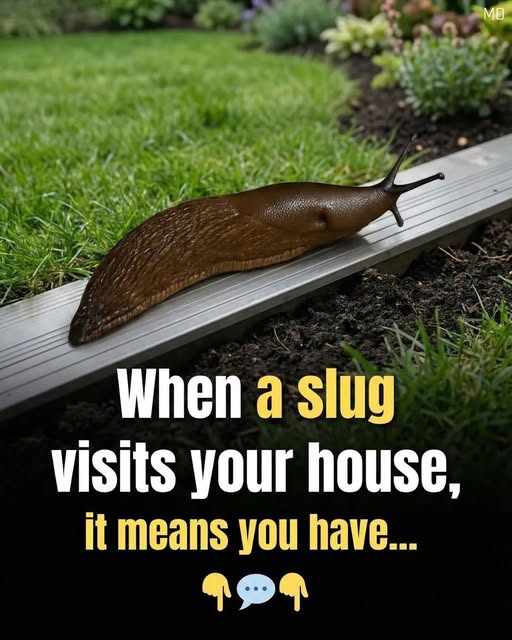
For many people, slugs are simply damp garden visitors that appear after rainfall, quietly gliding across sidewalks or flowerbeds. Their appearance may not win popularity contests, but these modest creatures play a meaningful role in the natural world. Far from being just a nuisance, slugs contribute to ecological balance in ways that often go unnoticed. When we look beyond first impressions, we discover that they are part of a much larger system that keeps our environment functioning smoothly.
In nature, slugs act as efficient recyclers. They feed on fallen leaves, decaying plants, fungi, and other organic matter, helping break it down into simpler components. This process returns valuable nutrients to the soil, enriching it and supporting healthy plant growth. Without organisms like slugs, natural debris would accumulate more quickly, and soil fertility could decline over time. Their quiet work beneath shrubs and garden beds helps maintain the cycle of growth and renewal that sustains forests, parks, and backyards alike.
Slugs also serve as an important food source for a variety of animals. Birds, frogs, toads, hedgehogs, and certain insects rely on them as part of their diet. In this way, slugs contribute to the delicate balance of the food chain. Every species, even those we may overlook, plays a part in supporting biodiversity. Removing one link from that chain can have ripple effects throughout an ecosystem. Understanding this interconnectedness encourages a more thoughtful view of wildlife, even the small and slimy members of it.
Beyond their ecological importance, slugs have drawn attention in scientific research. Their mucus, often considered unpleasant, contains natural compounds that researchers are studying for potential applications in health and skincare. Some studies suggest that it may have regenerative, antibacterial, and soothing properties. In addition, slugs have been valuable in neuroscience research. Their relatively simple nervous systems have helped scientists explore how learning and memory work, offering insights that contribute to broader understanding of brain function. Though humble in appearance, slugs continue to demonstrate that even the smallest creatures can hold surprising value in both nature and science.