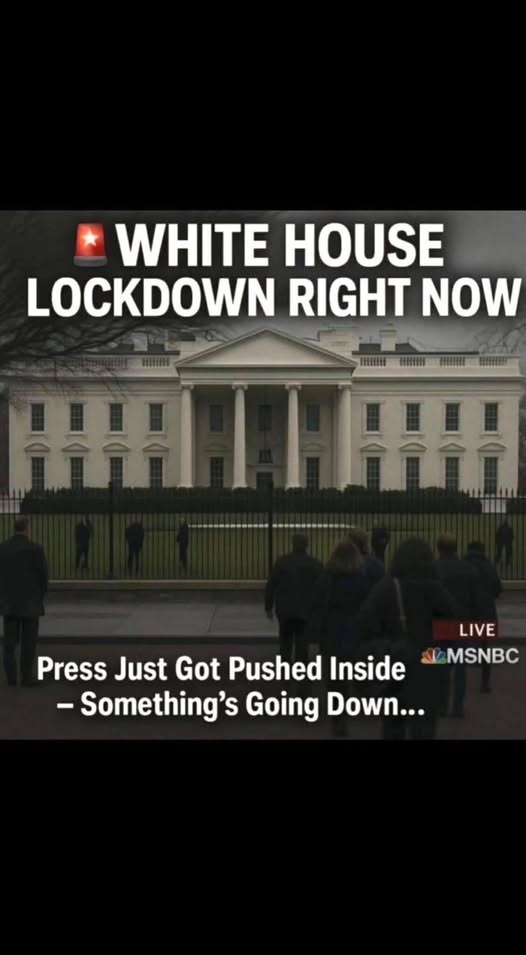
A wave of concern spread rapidly across social media after reports surfaced that the White House was placed under a temporary lockdown, with members of the press reportedly ushered indoors as security tightened around the complex. Posts claiming “something is going down” quickly gained traction, amplifying speculation and anxiety nationwide.
Here’s what can be responsibly said — and what should be approached with caution.
What a “Lockdown” at the White House Usually Means
The White House operates under one of the most sophisticated security systems in the world. A “lockdown” does not automatically mean an attack or confirmed threat. In many cases, it refers to a protective posture triggered by anything from an unidentified object, an unauthorized drone, a perimeter breach, or even routine security drills.
When such measures occur, the United States Secret Service often moves swiftly to control movement, restrict access, and temporarily shelter staff and press until a situation is assessed.
Why the Press May Be Pulled Inside
Journalists working at or near the White House are subject to the same safety protocols as staff. If security officials perceive any risk — confirmed or potential — they may instruct the press to move indoors immediately. This is standard procedure and designed to reduce exposure while authorities investigate.
Footage or screenshots showing press movement, especially when paired with on-screen graphics from outlets like MSNBC, can look dramatic, but they do not inherently signal a major incident.
The Role of Social Media in Escalating Fear
Moments like these highlight how quickly partial information can spiral. A single image or caption can imply far more than what is actually known. In the absence of official statements, speculation fills the gap — often inaccurately.
Historically, many White House security alerts resolve quietly within minutes or hours, with no threat to the public and minimal disruption beyond the immediate area.
What Officials Typically Do Next
When a security posture is elevated:
- The Secret Service assesses the threat source
- Local and federal partners coordinate responses
- The perimeter may be temporarily sealed
- Normal operations resume once cleared
If a situation rises above routine protocols, officials usually issue statements through official channels or brief the press shortly after.
What Has Not Been Confirmed
As of now, there has been no official confirmation of:
- An attack
- An active shooter
- A confirmed explosive device
- A national emergency declaration
Until verified information is released, claims suggesting catastrophic events should be treated with skepticism.
Why Calm Matters in Moments Like This
Security responses at the White House are designed to err on the side of caution. That caution can look alarming — especially when filtered through social media headlines — but it is also what keeps people safe.
The most reliable information will come from:
- Official White House statements
- The Secret Service
- Established news briefings
Bottom Line
Yes, security was heightened. Yes, the press appears to have been moved indoors as a precaution. But heightened security does not automatically equal crisis.
Until authorities provide verified details, the smartest response is patience — not panic.
If anything significant has occurred, the public will be informed through official channels. Until then, this appears to be another example of rapid-response security doing exactly what it was designed to do.