There are few places in society more closely associated with peace than a church. It is a space where people gather seeking comfort, guidance, and community. A place where burdens are laid down, prayers are lifted, and safety is assumed. When violence erupts in or near such a space, it does more than take lives—it fractures a sense of moral order and shakes the foundations of collective trust.
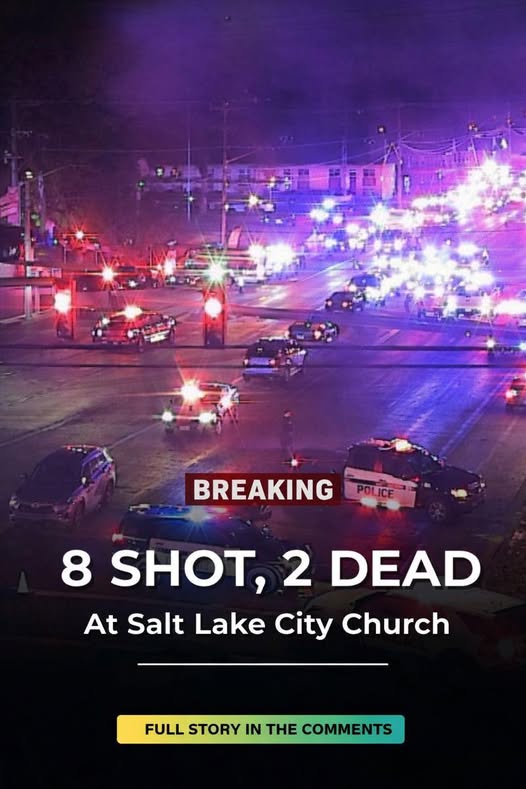
A deadly shooting in the parking lot of a church is not just another breaking-news alert. It is a rupture. A reminder that nowhere feels fully insulated from harm anymore. And when the details emerge—multiple people shot, lives lost—the weight of the moment settles in slowly, heavily, and painfully.
Numbers dominate early headlines: how many shot, how many dead. But numbers can never convey the full reality. They cannot capture the final moments of fear, the chaos that followed, or the devastation left behind. Each number represents a person who woke up that day expecting an ordinary routine. Each number represents a family whose future has been irreversibly altered.
Violence near a house of worship carries a unique emotional gravity. Churches are not simply buildings; they are symbols. They represent refuge, hope, and continuity. Many people associate them with life’s most meaningful moments—baptisms, weddings, funerals, quiet prayers offered in desperation or gratitude. When violence intrudes into that space, it feels like a violation not just of physical safety, but of something sacred and deeply personal.
For those who were present or nearby, the trauma does not end when the sirens fade. Shock lingers in the body. Sounds replay. Images intrude without warning. The sense of security once attached to familiar surroundings dissolves. A parking lot that was once mundane becomes a place associated with fear and loss. Ordinary spaces become charged with memory.
For the wider community, the impact spreads outward. Congregations elsewhere feel it too. People attending services in other cities may look around with heightened awareness, scanning exits, holding loved ones closer. Parents feel the instinctive urge to protect, even when there is no immediate threat. Violence, even when geographically distant, has a way of shrinking the world and reminding us how interconnected fear can be.
In moments like this, the public response matters. Too often, tragedy is immediately pulled into cycles of speculation, outrage, and argument. Social media accelerates this process, rewarding speed over care and reaction over reflection. But the immediate aftermath of loss is not the time for certainty or conclusions. Facts take time. Healing takes longer.
What victims’ families and affected communities need first is acknowledgment—not of opinions, but of pain. They need space to grieve without their loved ones becoming symbols, talking points, or ammunition in broader debates. They need to know that their loss is seen as human, not abstract.
Language plays a powerful role here. Words can comfort, or they can compound suffering. Thoughtless phrasing, sensational headlines, and premature judgments can feel like a second injury to those already hurting. Compassion requires restraint. It asks us to pause before speaking, to prioritize dignity over drama.
It is also important to recognize that reactions to such events vary widely—and all are valid. Some people turn to prayer. Others to silence. Some feel anger, confusion, or numbness. Trauma does not follow a script. Grief does not unfold neatly. Communities heal unevenly, and that process cannot be rushed or standardized.
First responders, too, carry invisible burdens. The images they witness, the decisions they make under pressure, the lives they are unable to save—all of this leaves marks that persist long after the scene is cleared. Their service deserves recognition, support, and care beyond simple praise.
At a deeper level, incidents like this force uncomfortable reflection. They challenge assumptions about safety, community, and the boundaries between violence and everyday life. They raise questions without easy answers. Why does this keep happening? How do we protect spaces meant for peace? What responsibility do we carry toward one another in a world that feels increasingly fragile?
Yet even in the midst of such darkness, something else often emerges: solidarity. Vigils. Shared silence. People showing up for one another, even when words fail. These moments do not erase loss, but they affirm a shared humanity that violence cannot fully extinguish.
There is a temptation, after tragedy, to seek closure quickly. To move on. To return to normal. But loss demands to be acknowledged. It asks us to remember. Not obsessively, but respectfully. To carry forward the names and lives affected, rather than allowing them to fade into statistics.
A church parking lot should never be the site of mourning. But now that it is, how we respond matters. We can choose to center compassion over commentary, humanity over headlines, and remembrance over reaction.
In the end, what remains most important is simple and profound: lives were lost, and they mattered. Their absence leaves a void that cannot be filled by explanations or debates. It can only be honored by empathy, care, and a commitment to treating one another with the dignity every human being deserves.
In moments like these, the world does not need louder voices. It needs kinder ones.