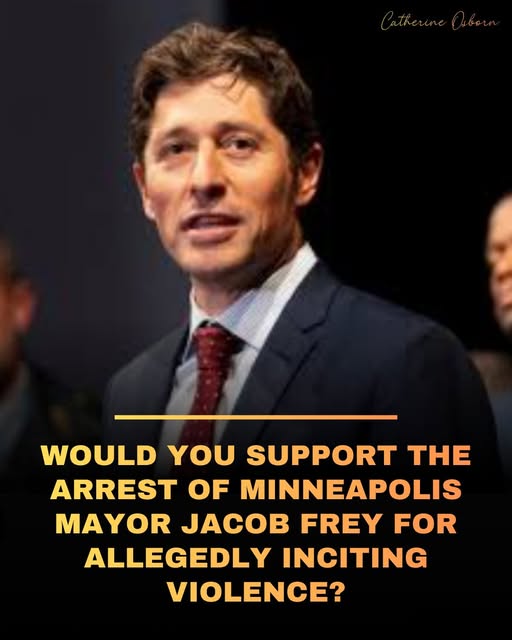
In America’s federal system, tension between local leaders and federal authorities is nothing new. But every so often, that tension sharpens into a national debate about where political speech ends and legal liability begins. Recent claims and commentary circulating online have reignited that debate, raising questions about how far elected officials can go in criticizing or resisting federal enforcement actions before crossing a legal line.
Because many of the specific allegations being discussed are part of ongoing public and political discourse — and because facts in fast-moving situations can evolve — it’s useful to step back from the headlines and examine the broader legal and constitutional principles at stake.
The Core Question: Speech vs. Action
At the heart of the controversy is a fundamental issue:
When does political rhetoric become criminal conduct?
Elected officials regularly speak passionately about immigration, policing, and federal authority. Governors and mayors often criticize federal priorities or pledge limited cooperation. That alone is not illegal — it is part of the political process and protected by the First Amendment.
The legal threshold changes, however, if speech is alleged to:
- Directly encourage unlawful acts
- Coordinate efforts to obstruct federal officers
- Include threats or intimidation
- Move beyond opinion into operational interference
Courts have historically drawn a high bar between protected speech and criminal incitement. The U.S. Supreme Court has ruled that speech must be intended and likely to produce imminent lawless action to lose constitutional protection.
In other words, strong words alone rarely qualify as crimes. Context and intent matter enormously.
Understanding 18 U.S.C. § 372
One federal statute often mentioned in these debates is 18 U.S.C. § 372, which addresses conspiracies to impede or injure federal officers. It is a serious law, but also one used relatively narrowly.
To trigger it, prosecutors generally must show:
- A genuine agreement between parties
- Intent to obstruct federal duties
- Some form of threat, intimidation, or force
Political disagreement or non-cooperation policies by themselves usually do not meet that standard. Federalism allows states and cities some discretion in how they allocate local resources, even when federal priorities differ.
The Federal–Local Balancing Act
American governance is built on shared power. Local officials are not simply branch managers of the federal government. They are independently elected and answer to their constituents.
That said, they cannot nullify federal law. The Constitution’s Supremacy Clause ensures that valid federal law prevails when conflicts arise. The friction comes in how enforcement works in practice.
For example:
- Cities may decline to use local police for certain federal tasks
- States may challenge federal rules in court
- Federal agencies still retain their own enforcement authority
This push-and-pull is longstanding and not unique to any party or era.
The Role of Political Narrative
Modern political messaging often amplifies legal disputes into symbolic battles. Supporters may frame investigations as necessary accountability. Opponents may frame them as intimidation or overreach.
Both narratives can coexist in the public sphere before courts ever weigh in. That’s why legal analysts often caution against drawing conclusions from early reports, subpoenas, or investigations alone. An investigation is not a conviction, and a subpoena is not proof of wrongdoing.
Historical Parallels
Some commentators point to earlier eras — including the early 20th century — when federal authority expanded in response to corruption or unrest. It’s true that the Department of Justice professionalized and strengthened during that period.
But historical comparisons can oversimplify. Each era has unique legal standards, political climates, and constitutional interpretations. What matters most is how current courts apply present-day law.
Why This Debate Resonates
These controversies strike a nerve because they sit at the crossroads of:
- Free speech
- Public safety
- Immigration policy
- Federalism
- Political accountability
Americans hold deeply different views on these issues. When legal scrutiny touches elected officials, it can feel to some like justice and to others like politics.
That division is less about one case and more about broader trust in institutions.
The Importance of Due Process
In any situation involving potential legal exposure for public officials, due process is critical. Investigations must follow evidence, and outcomes must rest on law, not headlines.
A healthy system allows:
- Independent review
- Judicial oversight
- Presumption of innocence
- Transparent legal standards
These safeguards protect both the public and the officials involved.
The Bigger Picture
Ultimately, debates like this reflect a larger national conversation:
How should leaders speak in polarized times?
Passionate advocacy is part of democracy. But so is respect for the rule of law. Elected officials walk a narrow line between energizing supporters and avoiding language that could be interpreted as encouraging unlawful acts.
Most legal experts agree the safest course for any official is clarity — making it unmistakable that disagreements with federal policy do not equal encouragement of interference or violence.
A Measured Takeaway
Political storms often move faster than legal realities. Claims, counterclaims, and commentary can outpace verified facts. For voters and observers, the most reliable approach is patience and attention to credible legal findings rather than viral narratives.
The Constitution protects speech robustly. It also protects the rule of law. The boundary between the two is defined not by politics, but by courts applying established standards.
That boundary has been tested before and will be tested again.
How it is drawn each time helps define the balance of American democracy.