Kindness is often described as a simple act: a smile, a helping hand, a thoughtful word. But when you look closer, kindness is also something bigger—something that can shape the culture of a neighborhood, change the mood of a workplace, and rebuild trust in a community that feels disconnected.
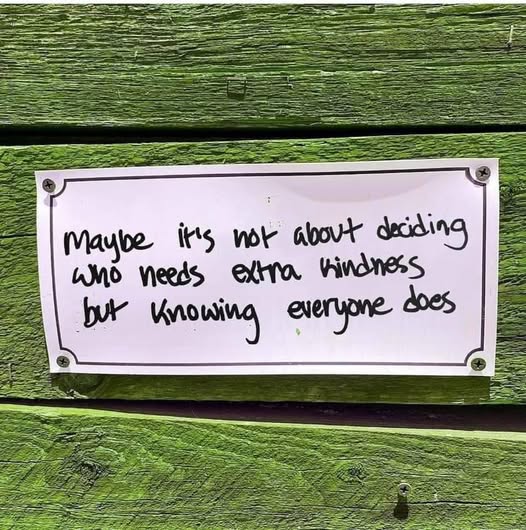
A sign I once saw said: “Maybe it’s not about deciding who needs extra kindness but knowing everyone does.” That message lands because it’s true. We don’t always see what people are carrying. The cashier might be managing grief. The student might be overwhelmed. The neighbor who seems distant may be lonely. The person who looks confident may be silently struggling. Kindness doesn’t require us to guess who “deserves” it—kindness asks us to remember that everyone needs it.
That’s why we can say this with confidence: WE ARE UNITING AROUND KINDNESS. We may choose a different Act of Kindness, but our Collective Kindness binds us together.
Kindness is not one action—it’s a shared identity
In many communities, people care deeply, but they act alone. Someone donates quietly. Someone checks on an elderly neighbor. Someone mentors a teenager. Someone organizes a cleanup day. These acts matter—and they become even more powerful when we start to see them as a shared purpose instead of isolated moments.
Collective kindness is what happens when kindness becomes normal—when it’s woven into how we greet each other, how we solve problems, and how we respond to tension. It’s the difference between a single candle and a street lit with lights. One act warms a moment. Many acts, repeated, can warm a whole community.
And the beautiful part is: we don’t need to agree on one specific type of kindness. Some people show kindness through giving time. Others through giving resources. Others through listening. Others through standing up for someone. What unites us isn’t the exact method—it’s the intention to leave people better than we found them.
Why kindness matters right now
We’re living in a time where it’s easy to become hardened. We scroll past crises. We absorb anger from headlines. We see people arguing online. We feel pressure, stress, and uncertainty. In that environment, kindness is not weakness—it’s courage.
Kindness slows the cycle of negativity. It interrupts suspicion. It reduces isolation. It creates “micro-moments” of safety, where a person feels seen and valued. Over time, those moments build something important: belonging.
And belonging is not a luxury. Belonging is the foundation of strong communities. When people feel they belong, they participate. They volunteer. They collaborate. They care about shared spaces and shared outcomes. Kindness is one of the fastest paths to belonging.
The ripple effect is real
One of the most underrated truths about kindness is how far it travels.
A small act—holding a door, paying attention, offering encouragement—can shift someone’s whole day. That person then speaks more gently to their child. Their child feels safer at school. The teacher experiences less disruption. The classroom becomes calmer. This is not theory; it’s how human emotion moves through environments.
Kindness spreads because people tend to mirror what they receive. When someone experiences respect, they are more likely to give respect. When someone is humiliated, they often pass that pain forward. Kindness is how we change the pattern.
Kindness doesn’t have to be dramatic to be meaningful
Many people hesitate because they imagine kindness requires big gestures or lots of money. But some of the most impactful kindness is quiet and consistent.
Here are a few everyday ways kindness shows up:
- Attention: Put your phone away and truly listen.
- Encouragement: Tell someone you appreciate their effort—not just results.
- Inclusion: Invite someone into the conversation, the table, the group.
- Patience: Let someone make a mistake without being shamed for it.
- Respect: Speak about others the way you’d speak if they were in the room.
- Support: Offer practical help—rides, meals, childcare, advice, connections.
Small doesn’t mean insignificant. Small means repeatable. And repeatable kindness is what creates cultural change.
How to promote kindness in your community: a practical blueprint
If you want kindness to become contagious, don’t rely only on inspiration—build systems around it. Here are simple steps that make kindness more visible and sustainable:
- Start with one habit, not ten.
Choose one act you can do weekly: checking on one neighbor, complimenting one coworker, helping one student, or supporting one local business. - Make kindness visible (without turning it into performance).
Create a “Kindness Wall” in a school, mosque/church, community center, or workplace where people can post short notes: “Someone helped me today by…” This keeps kindness top of mind. - Organize a monthly kindness project.
Community cleanups, food drives, school supply collections, visiting elders, or mentoring sessions can become community rituals. Rituals create identity. - Build bridges across differences.
Kindness grows when people actually know each other. Host a “Meet Your Neighbor” tea/coffee evening. Encourage intergenerational events. Pair youth with seniors for storytelling. - Practice “repair kindness.”
Communities don’t need perfect people—they need people willing to repair harm. Promote apologies, second chances, and constructive conversation. Kindness includes accountability and compassion. - Invite others to join you.
The sentence “Want to do this with me?” is powerful. Kindness multiplies when it becomes shared.
A challenge: choose your act of kindness
We may all choose different acts, and that’s the point. Kindness is not a competition. It’s a commitment.
So here’s a simple challenge for the next seven days:
- Pick one act of kindness you will do intentionally.
- Do it every day for one week.
- At the end of the week, tell one person what you learned—and invite them to do the same.
It could be as small as sending one encouraging message per day. Or as practical as helping one person with a task. Or as community-focused as organizing one small gathering where people feel connected.
What will you do?
Kindness isn’t only something we admire. It’s something we practice. It’s something we build—together.
WE ARE UNITING AROUND KINDNESS. We may choose a different Act of Kindness, but our Collective Kindness binds us together. The real question is simple and personal:
What will you do to promote Kindness in your community?
#KindnessIsOurSharedPurpose