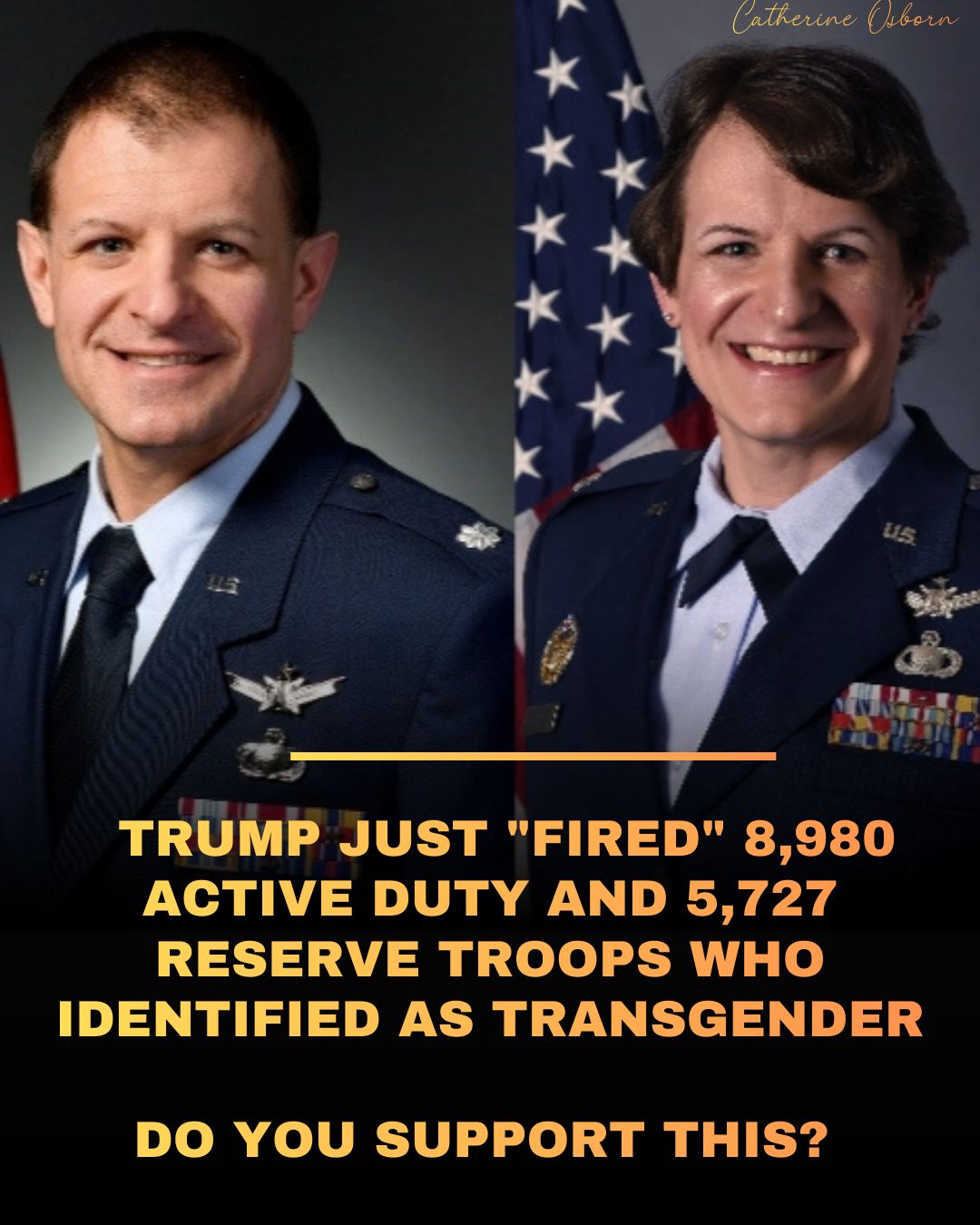
A new chapter in the long-running debate over transgender service in the U.S. armed forces has unfolded following reports about the enforcement of Executive Order 14183, issued by Donald Trump. According to the details circulating publicly, the order is being implemented with the stated goal of prioritizing “military excellence and readiness,” and it has led to the separation of thousands of service members who identify as transgender from active duty and reserve roles. The development has quickly reignited discussion across political, military, and civil rights circles, highlighting once again how closely questions of national security and social policy can intersect.
At the center of the conversation is the reported scale of the separations: 8,980 active-duty personnel and 5,727 reserve members. If accurate, those figures represent a significant number of trained individuals across multiple branches. The numbers alone have drawn attention because modern militaries invest substantial time and resources in recruiting, training, and retaining qualified personnel. Any policy that affects staffing levels naturally raises questions about readiness, morale, and long-term force management.
Supporters of the order argue that military policy must be built first and foremost around operational effectiveness. From this perspective, the armed forces are a specialized institution with unique standards related to deployability, medical readiness, and unit cohesion. Advocates of stricter policies often emphasize that the military’s mission is fundamentally different from civilian workplaces, and they argue that leadership must have broad discretion to set standards they believe support combat effectiveness. For these supporters, the executive order is framed as part of a wider philosophy that prioritizes uniform standards and predictability in deployment.
Critics, however, see the situation differently. Civil rights organizations, including National Center for Transgender Equality, have warned that removing transgender personnel could weaken rather than strengthen the force. Their argument centers on the idea that trained, experienced service members are valuable regardless of gender identity. They also note that many transgender troops have already served honorably in a variety of roles, including critical specialties where recruitment can be challenging. From this viewpoint, the loss of skilled personnel could create gaps that take years to fill.
Beyond readiness, critics raise broader concerns about equality and nondiscrimination. They argue that military service has historically been one pathway for social integration in the United States, with past debates involving race, gender, and sexual orientation eventually leading to expanded inclusion. In their eyes, the transgender service debate is part of that larger historical arc, and they caution against policies that single out specific groups.
Legally, the issue remains complex. The Supreme Court of the United States has reportedly allowed the administration to proceed with enforcement while legal challenges continue. This does not necessarily mean a final ruling on the policy’s merits; rather, it indicates that, at least for now, implementation can move forward as courts review the broader constitutional and statutory questions. Legal experts often note that interim decisions like these are procedural steps in a longer judicial process.
The judiciary’s involvement reflects how military policy, while granted deference by courts, is not beyond review. Historically, courts have recognized the executive branch’s authority in military affairs but have also examined whether policies align with existing laws and constitutional protections. That balance between deference and oversight is part of the American system of checks and balances.
Public reaction has been predictably divided. Some Americans view the policy through a national security lens, asking what standards best support a ready and effective force. Others view it through a civil rights lens, focusing on fairness, dignity, and equal opportunity. Social media and opinion polls often show that people’s views on this issue can align closely with their broader political and cultural perspectives.
For the military itself, policy shifts can create practical challenges. Commanders must implement guidance while maintaining morale and clarity within their units. Sudden changes in personnel policy can also require administrative processes related to reassignment, benefits, and transitions. Military leaders typically emphasize stability and predictability because frequent policy swings can be disruptive to long-term planning.
Another important dimension is recruitment. The U.S. military, like many volunteer forces around the world, competes for talent in a strong civilian job market. Policies perceived as restrictive by some potential recruits could influence who chooses to serve. On the other hand, some supporters argue that clear, consistent standards can also attract recruits who value structure and defined expectations. The real-world impact on recruitment often takes time to measure.
Internationally, U.S. military policies are sometimes watched by allies and partners, especially those engaged in joint operations. Different countries have adopted different approaches to transgender service, reflecting their own legal systems, cultures, and military needs. As a result, comparisons are often made, though each nation ultimately sets policy based on its own framework.
It is also worth remembering that military policy is not static. Over decades, rules on service eligibility have changed in response to new research, social change, and operational experience. Whether current policies remain in place or are revised in the future can depend on court rulings, election outcomes, and defense assessments. In that sense, today’s debates may be one phase in an evolving discussion.
For many observers, the core tension lies between two principles: maximizing military readiness and upholding equal treatment. Both are widely valued in American society, yet they can point to different policy conclusions depending on how leaders weigh evidence and priorities. That tension is unlikely to disappear anytime soon.
What is clear is that decisions about military personnel policy carry real consequences for individuals and for the institution as a whole. Behind every statistic are people who volunteered to serve, trained for demanding roles, and built careers in uniform. At the same time, policymakers are tasked with making decisions they believe serve national defense interests. Navigating those responsibilities is rarely simple.
As legal challenges proceed and more details emerge, the conversation will likely continue in courts, Congress, and the public sphere. For now, the reported enforcement of Executive Order 14183 stands as the latest development in a debate that touches law, security, and identity all at once.
In the end, how the nation resolves these questions will say a great deal about how it balances military priorities with evolving social values. And like many issues at the intersection of policy and identity, the discussion is far from over.