To understand why rumors like this gain traction, it’s important to revisit the events surrounding Epstein’s death. Epstein was arrested in July 2019 on federal charges of sex trafficking minors. While awaiting trial at the Metropolitan Correctional Center in New York, he was found unresponsive in his jail cell on August 10, 2019. Authorities ruled the death a suicide by hanging. The official investigation was conducted by the New York City medical examiner’s office, and multiple federal agencies reviewed the case.
However, Epstein’s death immediately raised eyebrows across the political spectrum. Given his extensive network of wealthy and powerful associates—including politicians, business leaders, and celebrities—many people questioned whether the official explanation told the full story. Epstein had long been accused of running a massive sex trafficking operation involving underage girls, and some believed he possessed information that could implicate influential figures around the world.
Several unusual details fueled skepticism. Reports indicated that surveillance cameras outside Epstein’s cell malfunctioned the night he died. Additionally, the two guards assigned to monitor him reportedly fell asleep and failed to perform regular checks. Epstein had also previously been placed on suicide watch earlier in July but was removed shortly before his death. For critics, these irregularities seemed too convenient, leading many to speculate about foul play or a cover-up.
These unresolved questions created fertile ground for conspiracy theories. Over the years, countless claims have circulated suggesting Epstein either faked his death or was secretly helped to escape. Some theories propose that powerful allies staged his death to prevent him from testifying in court. Others suggest intelligence agencies or wealthy associates relocated him to a private island or another country.
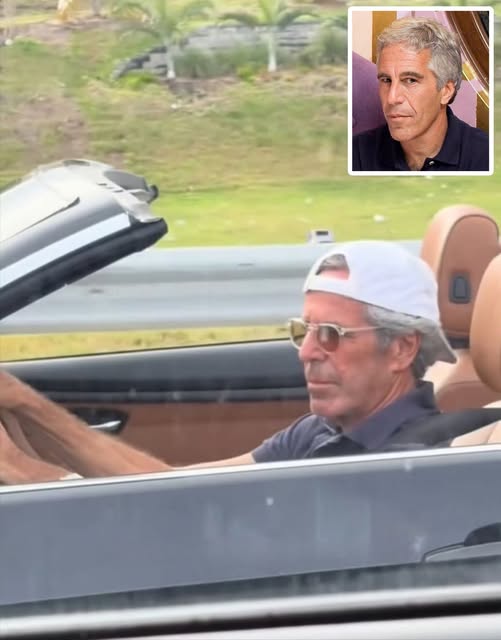
The viral Puerto Rico photo taps directly into those narratives. Puerto Rico has occasionally been mentioned in Epstein-related discussions because the island hosts private luxury properties and remote coastal areas where wealthy individuals often vacation. Rincón, located on the island’s west coast, is known for its beaches, surfing culture, and relatively quiet communities. The setting therefore fuels imagination: a place where someone could theoretically live without drawing much attention.
Yet viral images alone rarely provide reliable evidence. In most cases like this, the person photographed simply resembles the individual in question. Humans are naturally inclined to see familiar faces even when the resemblance is superficial. Social media often amplifies these coincidences, especially when the subject is already surrounded by controversy and mystery.
Experts in misinformation frequently point out that viral sightings of supposedly deceased or missing public figures are common. Similar rumors have circulated about many famous individuals over the decades. For example, conspiracy theories about musicians or celebrities secretly surviving their reported deaths have persisted for generations. In the case of Epstein, the global outrage surrounding his crimes and the unresolved questions about his connections make such rumors even more persistent.
From a practical standpoint, successfully faking a death while in federal custody would require an extraordinary level of coordination. It would involve prison staff, medical professionals, investigators, and likely government officials all participating in or ignoring the deception. Maintaining such a conspiracy over multiple years without credible leaks would be extremely difficult. While mistakes and negligence can occur—as investigators acknowledged in the failures surrounding Epstein’s supervision—organizing a long-term disappearance would be vastly more complex.
Another factor to consider is the absence of credible investigative evidence supporting the idea that Epstein survived. Since his death in 2019, journalists, law enforcement agencies, and independent researchers have examined the case extensively. Despite intense scrutiny and widespread public interest, no verified documents, financial records, or witness testimonies have emerged indicating he escaped or was relocated.
In contrast, viral photos and alleged sightings frequently appear without context or verification. Images circulating online are often low-resolution, taken from a distance, or cropped in ways that make identification impossible. In many cases, the people sharing the images already believe in the conspiracy, which shapes how the evidence is interpreted. Once a claim begins trending, thousands of users repost it before any fact-checking can occur.
The psychology behind these theories also plays an important role. Epstein’s crimes were deeply disturbing, and many people feel justice was never fully served because he died before facing trial. When a case ends without closure, it often leaves space for speculation. Believing that Epstein is still alive can feel, for some, like an explanation for why powerful individuals connected to him have not been fully exposed or prosecuted.
Additionally, distrust of institutions has grown in recent years. Scandals, political polarization, and the rapid spread of misinformation online have eroded public confidence in official narratives. As a result, when authorities declare a controversial figure dead under suspicious circumstances, some people immediately assume the opposite must be true.
However, skepticism alone does not equal proof. Extraordinary claims require strong evidence, and so far none has surfaced to support the idea that Epstein survived. Without verifiable confirmation—such as official investigations reopening the case, credible witnesses coming forward, or authenticated documents—the Puerto Rico photo remains just another unverified rumor.
Ultimately, the viral image likely reflects a familiar pattern of internet speculation rather than a genuine breakthrough in the Epstein story. People resembling famous individuals are photographed all the time, and once the resemblance is pointed out online, the narrative spreads rapidly. In an era where viral content travels faster than fact-checking, such rumors can gain millions of views before anyone questions their authenticity.
So, is Jeffrey Epstein still alive? Based on all available evidence, there is no credible proof to support that claim. While the circumstances of his death continue to raise legitimate questions about prison management and oversight, the idea that he is secretly living in Puerto Rico remains firmly in the realm of speculation.
Until concrete evidence appears, the most reasonable conclusion is that the viral photo shows someone who simply looks like Epstein—and that the internet, once again, has turned coincidence into controversy.