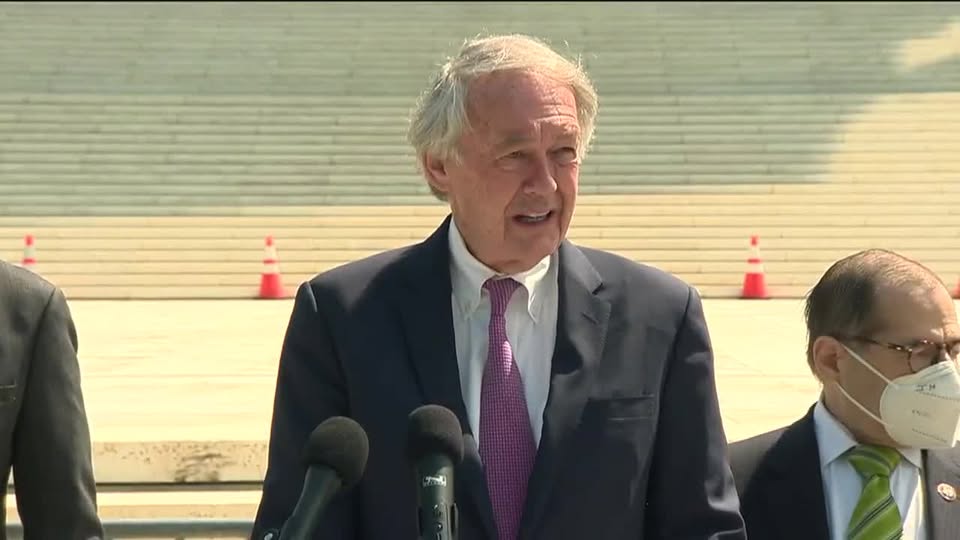
U.S. Senator Ed Markey addressed growing public confusion and concern after reports circulated online claiming that Venezuelan President Nicolás Maduro had been captured by U.S. forces and was facing charges in the United States. Speaking with Western Mass News, Markey emphasized the importance of facts, international law, and responsible discourse amid a wave of viral misinformation.
The senator’s remarks came as social media posts and sensational headlines spread rapidly, many presenting dramatic imagery and unverified assertions about U.S. military action in Venezuela. According to Markey, such claims risk escalating fear, misunderstanding, and geopolitical tension when not grounded in verified reporting.
Markey Urges Caution and Verification
In his comments, Markey stressed that no official confirmation exists supporting claims that the U.S. military has captured Maduro. He warned that misleading narratives can undermine public trust and distort serious foreign policy discussions.
“We are living in a moment where false information can spread faster than facts,” Markey said, underscoring the need for Americans to rely on credible sources and official statements rather than viral posts. He noted that any military action involving the capture of a sitting foreign president would represent a major international event, requiring transparency, congressional oversight, and global diplomatic engagement.
The Reality of U.S.–Venezuela Relations
Markey acknowledged that tensions between the United States and Venezuela are real and longstanding. The U.S. government has imposed sanctions on Maduro’s administration, citing concerns over human rights abuses, democratic erosion, and alleged criminal activity. In the past, U.S. authorities have announced indictments related to narcotics trafficking involving Venezuelan officials.
However, Markey made clear that sanctions and indictments are not equivalent to military capture. He explained that any such action would have enormous consequences under international law and would not occur without widespread, immediate reporting from global media outlets and official government channels.
Addressing Public Anxiety
The senator said he understands why dramatic claims gain traction, particularly during periods of global instability. Images depicting explosions, military imagery, and prominent political figures can trigger emotional reactions and lead people to assume events have already occurred.
Markey urged constituents not to confuse speculation with reality. “When people see headlines that suggest war or military escalation, it’s natural to feel alarmed,” he said. “But that’s precisely why accuracy matters.”
The Dangers of Viral Misinformation
Markey highlighted how modern misinformation campaigns often blend truth with fiction. In this case, real elements — such as U.S. sanctions and past indictments — are combined with unverified conclusions, creating a narrative that feels plausible but lacks evidence.
He warned that such misinformation can have tangible consequences, including market instability, diplomatic strain, and public fear. “False claims don’t just mislead,” Markey said. “They can actually make the world more dangerous.”
Congressional Oversight and the Use of Force
A central point in Markey’s remarks was the constitutional role of Congress. He reminded viewers that military action abroad, particularly one as severe as capturing a foreign head of state, would require significant congressional involvement.
“There are checks and balances for a reason,” he said. “No president can unilaterally carry out such an action in secrecy.”
Markey reaffirmed his commitment to ensuring that any U.S. foreign policy decisions are debated openly, lawfully, and with respect for international norms.
Respect for International Law
The senator also emphasized the importance of international law and sovereignty. Capturing a sitting president would represent a profound violation unless justified under extraordinary circumstances recognized by international bodies.
Markey noted that diplomacy, pressure through lawful means, and multilateral engagement remain the preferred tools for addressing disputes with foreign governments.
A Call for Media Responsibility
Markey urged both traditional media outlets and social media users to act responsibly. He called on journalists to verify claims rigorously and on platforms to reduce the amplification of unverified content.
“Freedom of speech does not mean freedom from responsibility,” he said, adding that democracy depends on an informed public.
What Americans Should Know Now
Markey concluded by reassuring the public that there has been no confirmed capture of Nicolás Maduro and no announced U.S. military operation of that nature. He encouraged Americans to pause before sharing sensational claims and to consult multiple reliable sources.
“This moment should remind us that truth matters,” Markey said. “In foreign policy especially, misinformation can lead to real harm.”
Final Perspective
Senator Ed Markey’s remarks serve as a timely reminder in an era of rapid information spread. While U.S.–Venezuela relations remain complex and tense, claims of dramatic military actions require extraordinary evidence — and at present, that evidence does not exist.
By urging caution, verification, and respect for democratic processes, Markey positioned himself as a voice of restraint amid online speculation. His message was clear: responsible citizenship begins with responsible consumption of information.
Source
This article is based on the uploaded file referencing Senator Ed Markey’s comments to Western Mass News regarding claims about the capture of Venezuelan President Maduro.