Another major point frequently highlighted by Trump’s supporters is his influence on the federal judiciary. During his presidency, Trump appointed three justices to the Supreme Court of the United States — Neil Gorsuch, Brett Kavanaugh, and Amy Coney Barrett. These appointments significantly reshaped the ideological balance of the court and may affect American law and constitutional interpretation for decades. In addition to Supreme Court appointments, Trump also nominated hundreds of federal judges to lower courts, creating a lasting judicial legacy that many observers believe will continue to influence legal decisions long after his presidency.
Supporters also praise Trump’s “America First” approach to trade and international relations. His administration renegotiated several trade agreements, including replacing North American Free Trade Agreement with the United States–Mexico–Canada Agreement. Advocates say this shift aimed to protect American industries, strengthen domestic manufacturing, and reduce trade imbalances with other countries. Trump’s foreign policy style was also marked by direct negotiations with global leaders and an emphasis on national sovereignty, which his supporters argue reshaped global diplomatic dynamics.
However, critics of Trump’s presidency present a very different perspective. They argue that his time in office was characterized by intense political polarization and unprecedented divisions within American society. Critics frequently point to his communication style, use of social media, and confrontational rhetoric as factors that heightened tensions between political parties and within the broader public. For many observers, the tone of national discourse during his presidency became increasingly combative, contributing to a deeply divided political environment.
Trump’s presidency also included two impeachment proceedings in the United States House of Representatives — a rare event in American history. The first impeachment, in 2019, centered on allegations related to interactions with Ukraine, while the second occurred in 2021 following the events surrounding the certification of the presidential election. Although he was acquitted in the United States Senate both times, the impeachments remain a central part of debates about his presidency and are frequently cited by critics as evidence of controversy and political conflict during his administration.
Another major issue that shapes historical evaluation of Trump’s presidency is the debate over the 2020 election and the broader questions surrounding democratic institutions and political norms. Supporters argue that concerns about election procedures and transparency deserved investigation, while critics believe the disputes over election integrity contributed to distrust in democratic processes. How historians ultimately interpret these events will likely influence assessments of Trump’s leadership and his role in shaping modern American politics.
Beyond specific controversies and policies, scholars often evaluate presidents based on broader measures of leadership. These include their ability to unify the country, respond effectively to crises, and strengthen democratic institutions. In Trump’s case, these areas remain subjects of intense scholarly debate. Some observers argue that his outsider status allowed him to challenge entrenched political systems and bring attention to concerns among voters who felt overlooked by traditional leaders. Others contend that the confrontational style of his leadership made national consensus more difficult to achieve.
It is also important to recognize that presidential reputations frequently change over time. Many historical figures have experienced dramatic shifts in how they are perceived decades after leaving office. Presidents such as Harry S. Truman and Ulysses S. Grant were once ranked poorly by historians but have been reevaluated more positively as new perspectives and historical evidence emerged. At the same time, some leaders initially praised during their lifetimes have seen their reputations decline as historians reassessed their actions and policies.
Because of this historical pattern, Trump’s long-term reputation will likely depend on factors that are still unfolding. The lasting impact of his judicial appointments, the future trajectory of the American economy, and the long-term consequences of his foreign policy decisions may all shape how scholars and citizens evaluate his presidency in the coming decades. Additionally, the broader cultural and political changes that occurred during his time in office may influence how historians interpret the era.
Another element that will affect Trump’s legacy is the way future generations interpret the broader political climate of the early twenty-first century. The period during which he served as president was marked by rapid technological change, social media influence on political communication, and increasing ideological polarization across many democracies worldwide. Historians may view his presidency not only as a reflection of individual leadership but also as a product of these larger societal shifts.
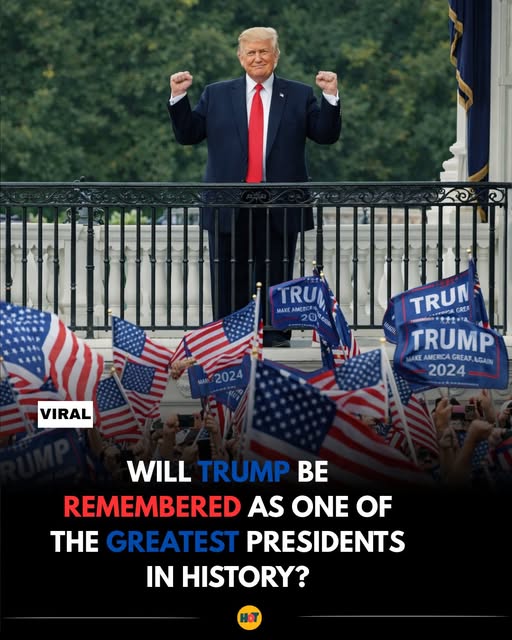
Ultimately, determining whether Trump will be remembered as one of the greatest presidents involves balancing measurable achievements with broader social and institutional consequences. Economic growth, judicial influence, and policy reforms will likely be weighed alongside questions about national unity, political stability, and democratic norms. Such evaluations require time, distance, and careful analysis by historians who can examine the era without the immediate emotions and political divisions that surround current events.
For now, Trump remains one of the most consequential and controversial figures in modern American political history. His presidency transformed the Republican Party, reshaped debates about globalization and national identity, and energized both supporters and opponents in unprecedented ways. Whether these changes will ultimately be viewed as transformative progress or as a period of intense division remains an open question.
As history has shown, the final judgment of a presidency often emerges slowly. Decades from now, scholars and citizens may look back on the Trump era with greater clarity, examining the outcomes of his policies and the lasting effects of his leadership. Only with time will it become clear where Donald Trump ultimately stands among the long line of American presidents and whether he will be remembered as one of the greatest leaders in the nation’s history.