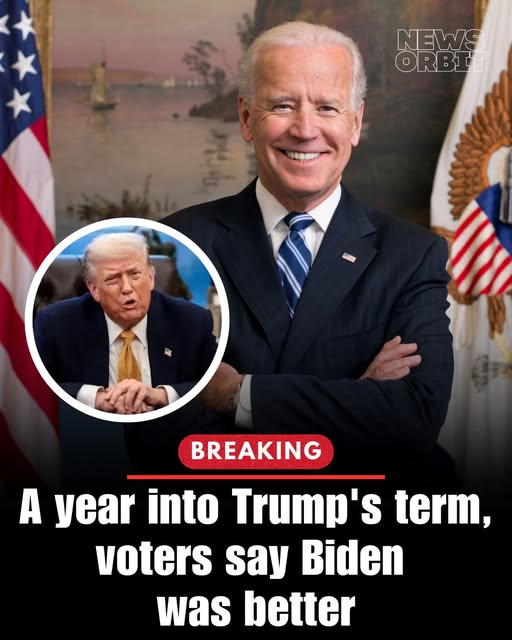
Just one year into his second term, President Donald Trump finds himself in politically uncharted and turbulent waters, according to a recent Axios analysis of multiple major polls. The data paints a concerning picture for Trump as he heads toward the 2026 midterm elections, with historically high disapproval ratings and a surprising shift in public sentiment — including growing comparisons to his predecessor, Joe Biden.
With economic frustration mounting and controversial executive decisions drawing ire across the political spectrum, a notable portion of the electorate now seems to view the past administration more favorably than Trump’s current performance — a development political analysts are calling “politically toxic.”
Here’s a closer look at what the data says, why it matters, and what it means for the future of American politics.
A Deepening Approval Crisis
According to Axios, recent polling data shows that approximately 56% of Americans disapprove of the job Trump is doing as president — an approval spread that results in a -19 net approval rating, one of the lowest for any modern president this far into a term.
This negative turn in the polls is not just a matter of numbers; it signals deepening dissatisfaction with leadership at a time when the country faces persistent economic pressure and ongoing debates over immigration, foreign policy, and domestic priorities.
The data includes results from three major national polls, notably including an Economist/YouGov survey, which underscores the breadth of disapproval across demographic and political groups.
Shifting Views on Biden’s Presidency
Perhaps the most striking finding in these surveys is that a growing segment of the electorate now looks back on Biden’s presidency more favorably than they view Trump’s current performance.
While Biden’s time in office was itself marked by deep polarization, these results suggest an emerging sentiment among voters: that Trump has failed to deliver on critical promises in ways that would make him more effective or preferable to his predecessor.
This “retrospective favorability” toward Biden is not uniform across all voters, but it is significant enough to indicate a broader shift in public mood than many political observers expected.
“Squandering Electoral Advantages”
Analysts cited in the Axios report argue that Trump “squandered virtually every advantage” that helped secure his 2024 victory.
Two areas stand out:
Economy
Traditionally a strong suit for Republican candidates, the economy has not delivered the expected feel-good results for ordinary Americans. Inflation concerns, housing affordability, and wage stagnation continue to weigh on public confidence. As households struggle, Trump’s messaging about economic success has come under increased scrutiny.
Immigration
Another pillar of Trump’s political platform — strict immigration enforcement — has produced controversial executive actions and ongoing legal battles, but cracks in the policy outcomes have created frustration on both conservative and centrist fronts.
When key campaign pillars begin to lose their persuasive force, approval ratings often follow.
Voter Remorse
One of the most talked-about themes emerging from the data is voter remorse — the idea that voters who backed Trump in 2024 are now reconsidering their choice.
While some degree of regret after any election is normal, the depth and distribution of remorse reflected in these polls is notable. It crosses ideological lines, affecting independents more strongly but also registering among segments of Republican voters who had once been staunch supporters.
Economists and political strategists alike see this remorse not just as dissatisfaction but as an early signal of potential trouble for the GOP in the 2026 midterms.
Midterms on the Horizon
Historically, midterm elections serve as a referendum on the sitting president’s performance. In an ordinary year, the opposition party stands to gain seats in Congress if the president’s approval is low — and with Trump entering the 2026 cycle at historically high disapproval, Democrats and independents alike are watching closely.
The shift in public sentiment has prompted strategic recalibrations on both sides:
- Democrats are using these polling trends to argue that Trump’s leadership is unstable and unreliable, pointing to rising disapproval and economic frustrations.
- Republicans are warning that internal divisions and backlash over executive actions might further erode base enthusiasm and suppress turnout.
Both sides recognize that the upcoming midterms could reshape the landscape of American politics for years to come.
What Voters Are Saying
Poll respondents cite several key concerns:
- Economic Strain: Many voters feel that economic gains touted by the administration have not materialized in their daily lives.
- Leadership Style: Trump’s highly combative approach remains controversial. Some voters say that constant political conflict distracts from governance and real problem-solving.
- Immigration Policy: While strict immigration policies are popular with some groups, others say the approach feels chaotic or ineffective, especially in border communities.
These voter experiences feed into the overall negative perceptions reflected in the approval ratings.
Is Trump Heading Toward a Political Turning Point?
Political analysts are divided on whether this decline is temporary turbulence or the start of a long-term slide for Trump’s political influence.
Some argue that presidents often face rough patches midterm and can rebound with strong messaging or economic improvements. Others say that without tangible policy wins, approval numbers will remain sluggish.
Regardless of interpretation, the polls point to a reality: Trump’s second term is already one of the most politically challenging presidencies in recent memory.
The Broader Narrative
The unfolding saga of shifting voter sentiment raises larger questions about how America evaluates presidential leadership:
- What role do short-term economic conditions play versus long-term policy impact?
- How does public perception evolve when campaign promises meet real-world governance?
- Can nostalgia for a past administration reshape present support?
These questions are at the heart of today’s political debate.
The Bottom Line
A year into his second term, President Trump is facing a political moment marked by widening disapproval, voter reevaluation of past choices, and unexpected comparisons to a former rival.
With the 2026 midterms on the horizon, the implications of these new polls are significant. Whether this trend stabilizes, reverses, or deepens, one thing is clear: the American electorate is signaling profound dissatisfaction — and the political ramifications could be far-reaching.