My husband proposed selling the house my late father left my daughter to fund his son’s dream wedding, and I agreed — but on one condition he never saw coming.
My father passed away three years ago from a long illness. He was a quiet, stubborn man who spent his whole life working so that the people he loved would be taken care of after he was gone. The house he left behind wasn’t grand — a modest two-bedroom in a neighborhood he’d lived in for forty years — but he left it specifically to my daughter, Camila, in his will. Not to me. Not jointly. To her.
Camila was eighteen when he died. She cried harder than anyone at the funeral. They had a bond I still can’t fully put into words. That house was the last solid thing she had of him.
I remarried two years ago. My husband, Renato, came with his own family — a grown son, Lucas, from his first marriage. Lucas is charming, the kind of person who fills a room and somehow always ends up being everyone’s favorite. I liked him, genuinely, at first.
Then Lucas got engaged, and everything changed.
The wedding he and his fiancée planned was not a small affair. They wanted a venue that held three hundred guests, a live band, a custom dress, catering that cost more per plate than my monthly grocery bill. The quote they came back with was staggering. Lucas’s mother had already contributed what she could. Renato started looking for the rest.
At first it was small things. Could we take out a personal loan? Could I dip into my savings? I said we could talk about it, and I meant that honestly. I wanted to support his son’s happiness.
But then one evening Renato sat across from me at the kitchen table and slid a piece of paper toward me. It was a rough estimate from a real estate agent. For Camila’s house.
“It would cover everything,” he said. “Lucas deserves a real wedding, and the house is just sitting there. Camila doesn’t even live in it.”
I stared at him for a long moment. The house was not sitting there doing nothing. Camila was renting it out, quietly building a little financial cushion for herself as she finished her degree. More than that, it was hers. My father had made that decision deliberately, carefully, because he loved her and wanted her protected.
“That house is not mine to sell,” I said.
“You’re her mother. You have influence. Talk to her.”
I couldn’t believe what I was hearing. I asked him to think about what he was actually asking — that I pressure my grieving daughter to give up the last material gift her grandfather ever gave her, so that his son could have a bigger party.
But Renato kept coming back to it. Over the following weeks, he framed it every way he could. It was an investment in family unity. Lucas and Camila would be siblings one day, shouldn’t she want to help him? The house would sell quickly in this market. We could find Camila something else later.
“Later” was doing a lot of work in that sentence.
I watched him rationalize it further each time, and I felt something in me go very still and very clear. I had seen this before — the slow softening of a person’s boundaries, the gentle insistence that what belongs to someone vulnerable is actually a communal resource available to whoever needs it most urgently right now.
Camila called me one night, upset. Renato had called her directly. He had been kind about it, she said, but the message was plain: the family needed her to consider selling.
She asked me what she should do. I told her the house was hers and no one could make her do anything with it. I told her to sleep well.
Then I told Renato that I would help him. I would talk to Camila, I would support the sale, I would do everything he was asking — on one condition.
He smiled, relieved. “Name it.”
“You put it in writing,” I said. “A legal document, signed and notarized. It states that the full sale proceeds go into an account in Camila’s name only. Not for the wedding. For her. If you want her to sacrifice something that was hers, then whatever replaces it has to be hers too. Lucas finds another way to fund his wedding.”
The smile faded.
He argued that I had misunderstood him, that he never meant to take from Camila, that this was about family helping family. I let him talk. Then I put the document I had already drafted — I had seen a solicitor two days earlier — on the table in front of him.
“Sign it and I’ll call Camila tonight,” I said. “Don’t sign it and we never mention her house again.”
He didn’t sign it.
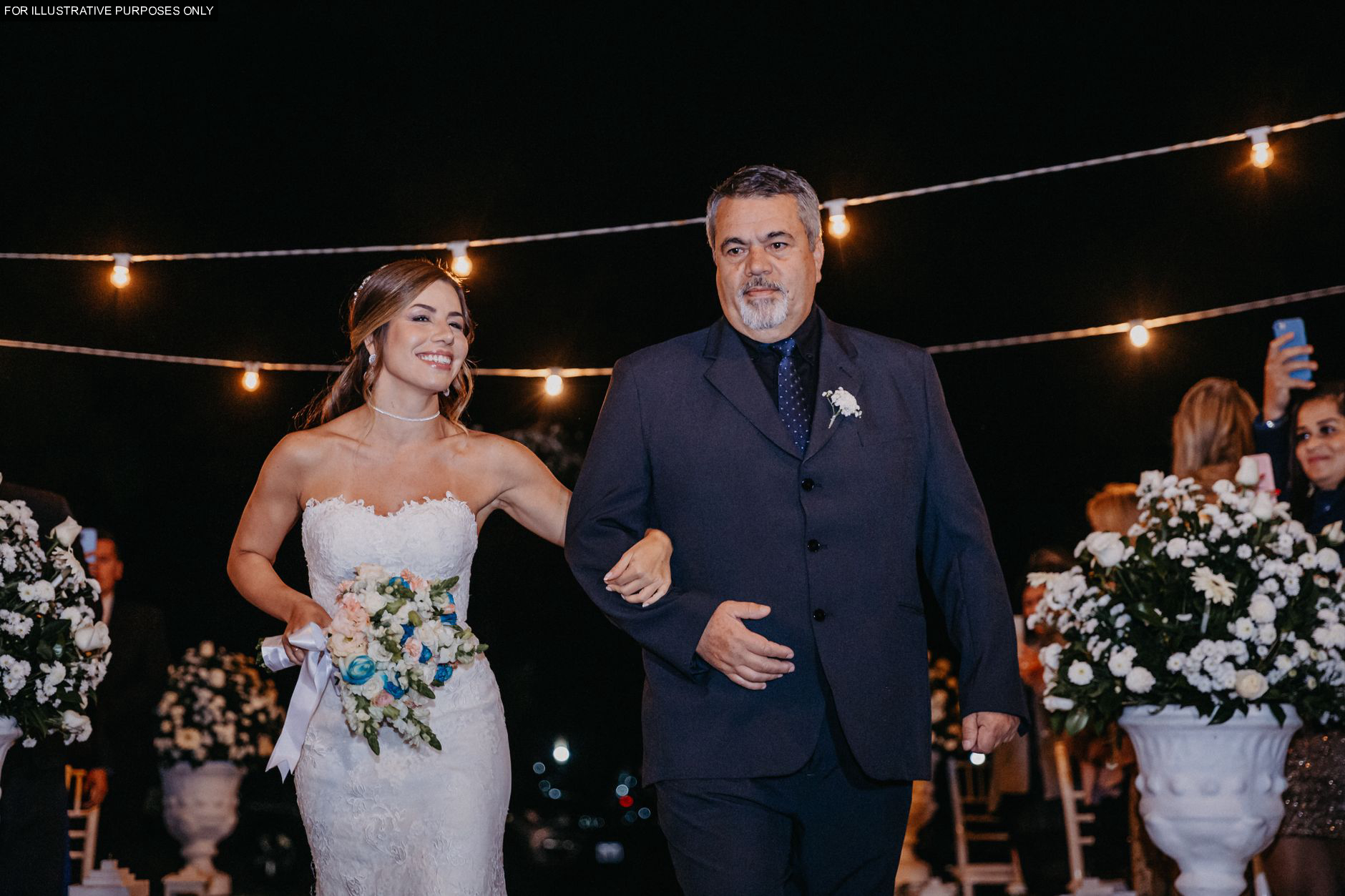
Lucas and his fiancée scaled the wedding back. They found a smaller venue, a different caterer, a band that played only the reception. The photos I saw afterward were beautiful. Camila attended and danced and laughed with her new stepbrother and his wife, and she had no idea how close she had come to losing the one thing her grandfather made sure to leave her.
Renato and I have not spoken about it since. Some things don’t need a final conversation. They just need a line that doesn’t move.