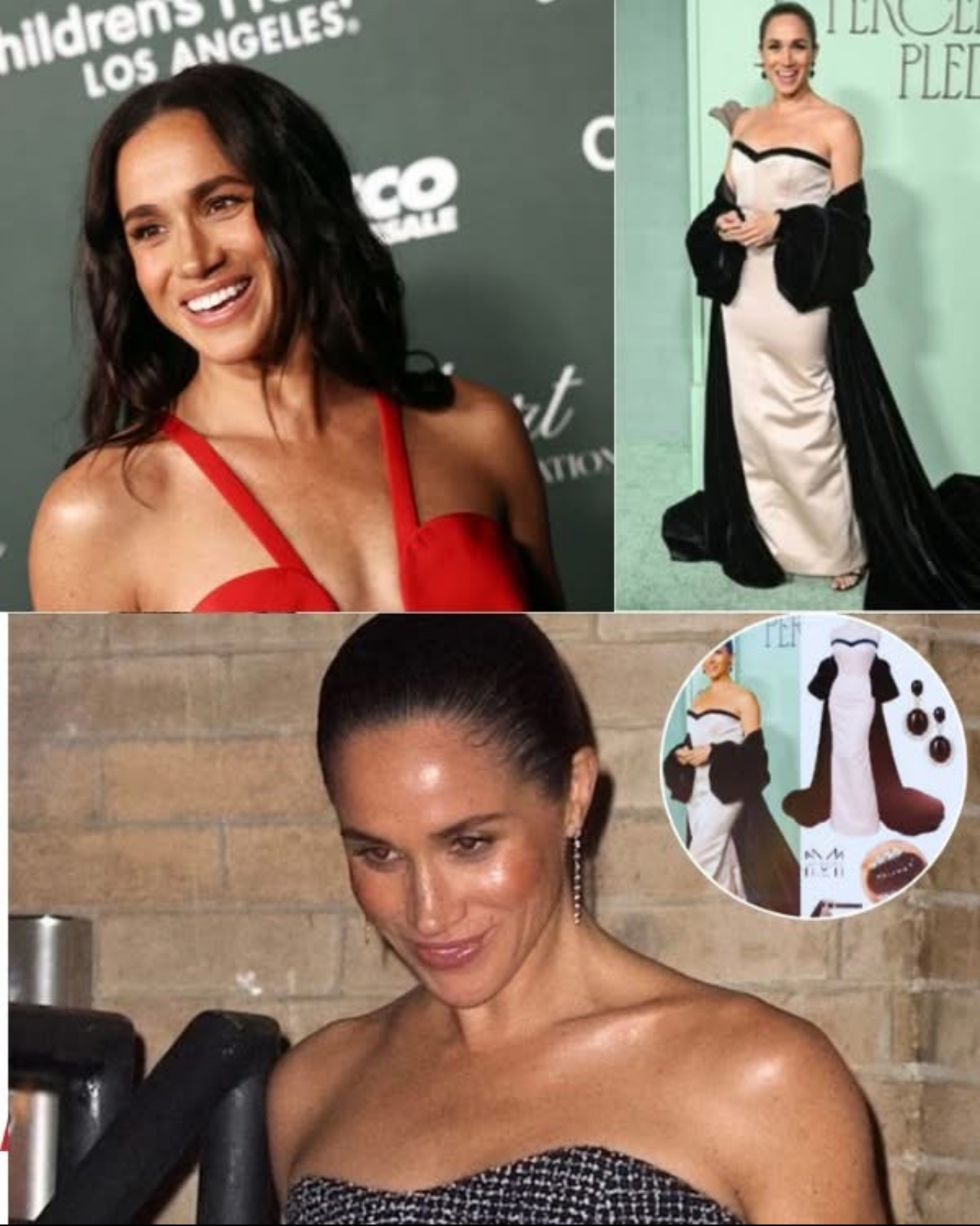
✔ Fact Check: The controversy centers on the reported price of a designer gown worn during a televised interview about “authenticity.” Claims about hidden meanings or “secret tags” remain unverified and largely speculative.
When Meghan Markle sat down for what was billed as a candid conversation about identity, resilience, and authenticity, producers likely expected headlines about empowerment. Instead, the internet zeroed in on something else entirely: the dress.
Within hours of the broadcast, social media platforms were ablaze with debate over the reported $37,850 price tag of the designer gown she wore during the interview. Critics called it tone-deaf. Supporters called it predictable outrage. And somewhere in between, a fashion detail—described online as a “hidden tag”—fueled yet another round of speculation about optics, branding, and intention.
So what actually happened?
The Dress That Launched a Thousand Posts
The gown in question was quickly identified by fashion bloggers and luxury style trackers as a high-end couture piece, retailing for nearly $38,000. While celebrity wardrobes often reach such price points without controversy, this appearance struck a different nerve because of the context.
The interview’s theme centered on “authentic living” and navigating public scrutiny. Critics argued that discussing relatability while wearing a couture garment costing more than many people’s annual salary created a jarring contrast.
“Disgusting lies,” some online detractors wrote, accusing her of hypocrisy. Others framed the moment as symbolic—suggesting that her carefully curated public image had collided with the reality of elite celebrity life.
But was this truly a misstep—or simply the modern internet doing what it does best?
Celebrity Optics in the Age of Viral Clips
In the pre-social media era, wardrobe choices might have sparked a fashion column or two. Today, they ignite algorithmic wildfire.
Short clips from the interview circulated rapidly, often stripped of context and paired with captions highlighting the dress’s price. Memes juxtaposed quotes about “authenticity” with screenshots of luxury fashion listings. Within 24 hours, commentary ranged from thoughtful cultural critique to outright hostility.
It’s worth noting that high-profile public figures—especially those who straddle royalty and Hollywood—are routinely styled in borrowed designer pieces. In many cases, garments are loaned for publicity purposes rather than purchased outright. No verified evidence has confirmed whether the gown was bought, gifted, or loaned, despite widespread assumptions.
Yet nuance rarely trends.
The “Hidden Tag” Theory
Adding fuel to the online frenzy was a claim from fashion commentators that a small internal label or production marker had been briefly visible during the interview. Some social media users suggested this indicated the dress might have been a sample, runway archive piece, or promotional loan.
However, there has been no confirmed statement from the designer, stylist, or production team clarifying the situation. Fashion experts often note that couture pieces carry internal tags for inventory, atelier identification, or event tracking. Such details are not unusual.
Despite this, speculation spiraled. Posts framed the supposed tag as “proof” of staging or branding manipulation—claims that remain unsupported by concrete evidence.
In the digital age, ambiguity becomes narrative clay.
The Relatability Paradox
The deeper issue behind the uproar may not be the price tag itself—but the ongoing tension between celebrity branding and relatability.
Modern audiences expect public figures to be aspirational yet grounded, successful yet accessible. When those expectations clash, backlash follows.
Meghan’s public persona has long emphasized themes of authenticity, independence, and social awareness. For critics, the couture gown symbolized disconnect. For supporters, the outrage reflected an impossible double standard applied disproportionately to women in the spotlight.
After all, high-profile interviews often involve meticulous styling. Luxury fashion on talk shows is not new. But certain figures exist under a magnifying glass that magnifies every thread.
Hypocrisy or Hyper-Scrutiny?
The reaction also reflects broader cultural conversations about wealth signaling during economically strained times. In periods of financial uncertainty, displays of luxury can trigger visceral reactions.
Yet context matters. Public figures are frequently styled by professionals whose choices aim to balance aesthetics, brand partnerships, and visual impact. It’s possible that the dress was selected precisely because it projected confidence and power—qualities often associated with structured couture.
The narrative that the “mask finally slipped” depends largely on the assumption that authenticity must visually align with modesty. But authenticity in media appearances is more about messaging consistency than wardrobe cost.
That hasn’t stopped critics from framing the moment as revealing.
Social Media: Judge, Jury, Amplifier
The controversy illustrates how quickly an interview can be reframed. What was intended as a discussion about identity became a case study in digital pile-ons.
Algorithms reward outrage. The more extreme the headline—“$37,000 Mistake!” or “The Mask Slips!”—the faster it spreads. As commentary intensified, secondary debates emerged about media bias, gendered criticism, and the monetization of celebrity narratives.
Interestingly, the backlash itself generated far more engagement than the interview’s substantive themes.
A Pattern of Polarization
It’s impossible to separate this incident from the larger public discourse surrounding Meghan. Few contemporary figures provoke such sharply divided reactions.
For supporters, the dress controversy exemplifies relentless scrutiny—evidence that even neutral wardrobe choices become ammunition. For critics, it reinforces skepticism about branding versus reality.
The truth likely sits somewhere less dramatic: a highly visible public figure wore an expensive dress during a carefully produced television segment, and the internet responded as it often does—with speed, intensity, and minimal restraint.
So, Was It Really a “Mistake”?
From a purely strategic standpoint, optics matter. In a conversation centered on authenticity and everyday connection, a luxury couture gown predictably invites commentary.
But labeling it a catastrophic blunder may oversimplify a more complex dynamic. Celebrity branding operates at the intersection of aspiration and accessibility—a tightrope few walk without criticism.
The so-called “hidden tag” has not been substantiated as evidence of anything improper. And without confirmation regarding whether the garment was purchased, loaned, or styled as part of a fashion partnership, many of the louder accusations remain speculative.
What’s undeniable is the power of imagery. In today’s media landscape, a single visual detail can overshadow hours of spoken content.
The Bigger Question
Perhaps the real takeaway isn’t about one dress at all. It’s about the evolving standards to which public figures—especially women—are held.
Can someone speak about authenticity while wearing couture? Must relatability be visually modest to be credible? And why does luxury worn by certain individuals trigger stronger reactions than others?
The $37,000 figure may dominate headlines, but the debate it sparked says more about audience expectations than about fabric and stitching.
In the end, the “mask slipping” narrative may be less revelation and more reflection—of how quickly perception hardens in the age of viral judgment.
Whether this moment becomes a lasting reputational bruise or fades into the endless churn of online controversy remains to be seen. But one thing is certain:
In 2026, even a dress can become a global flashpoint.