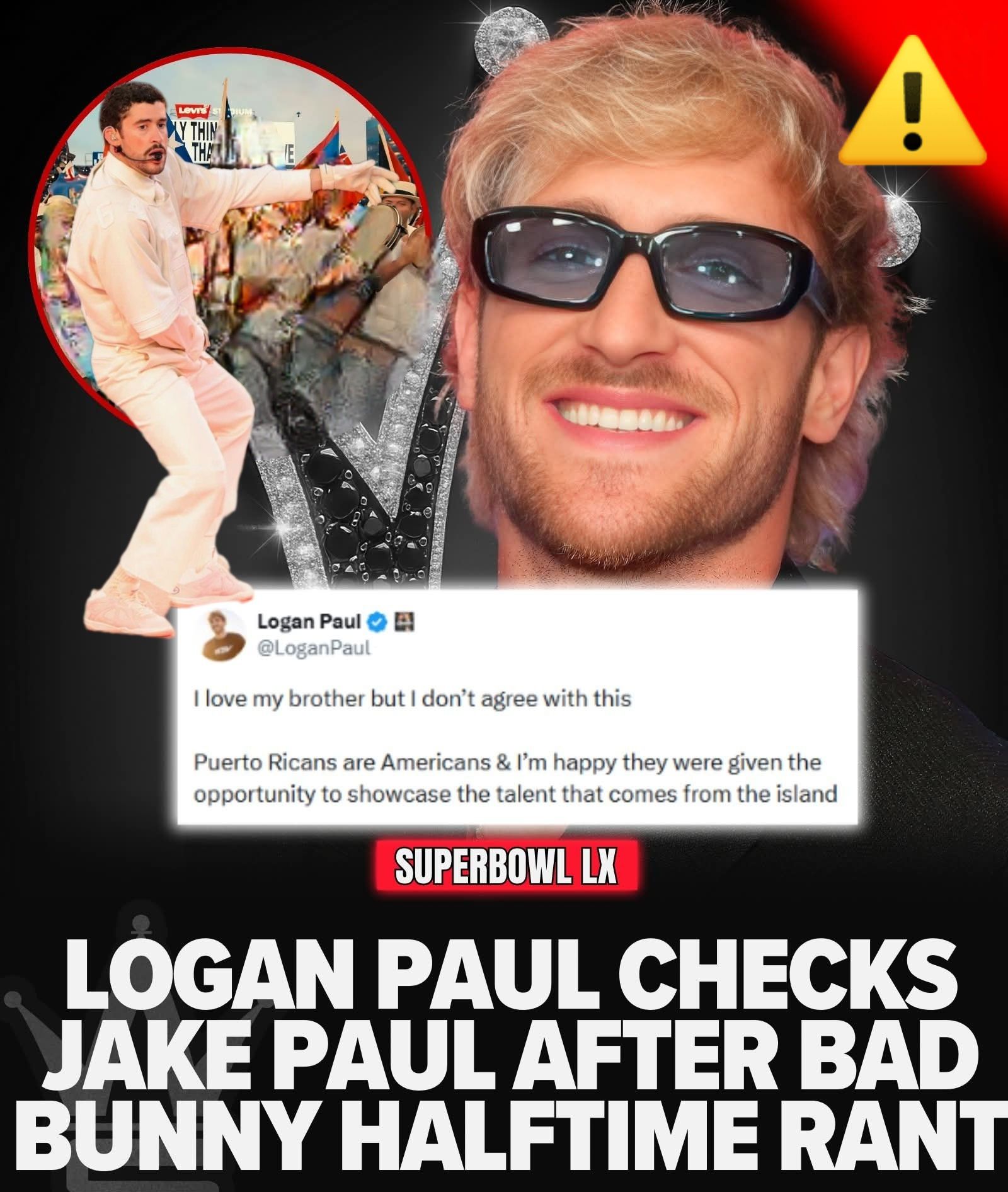
In the fast-moving world of social media, a single comment can spark global discussion within minutes. That’s exactly what happened following the Super Bowl halftime performance by Bad Bunny, when online reactions ranged from praise to criticism. Among those reactions was a reported rant from Jake Paul that stirred debate — and then a calmer, more measured response from his brother, Logan Paul, who chose to publicly share a different perspective.
Logan’s tweet, as circulated widely online, emphasized two key points: love for his brother and disagreement with his stance. He reportedly wrote that while he supports his sibling, he did not agree with the sentiment behind the rant. He also highlighted that Puerto Ricans are Americans and expressed happiness that Puerto Rican talent had the opportunity to be showcased on such a massive stage. That statement quickly became part of the larger conversation surrounding the halftime show and cultural representation.
The Super Bowl halftime show has long been more than entertainment. It’s one of the most watched musical events in the world, often doubling as a cultural statement. When Bad Bunny performed, many viewers saw it as a celebration of Puerto Rican and Latin culture on one of the biggest stages in American media. Others debated the themes, language, and presentation. As is often the case with global broadcasts, reactions varied widely depending on personal perspective, cultural awareness, and expectations.
What made this situation notable wasn’t just the performance itself, but how it spilled into influencer and celebrity discourse. The Paul brothers, both highly visible figures in sports and online media, have audiences numbering in the millions. Their opinions carry weight with fans and critics alike. So when one brother expressed criticism and the other countered with a more inclusive message, the discussion naturally expanded.
Logan Paul’s response stood out because it balanced loyalty with independence. Saying “I love my brother but I don’t agree” signaled that family ties don’t always mean shared opinions. In today’s climate, where public figures are often expected to fall in line with their inner circles, that nuance caught attention. It showed that disagreement can be expressed without hostility and that differing views can coexist publicly.
It also touched on a larger topic: understanding Puerto Rico’s relationship with the United States. Many Americans are still unaware that Puerto Ricans are U.S. citizens by birth. Moments like this sometimes serve as unexpected educational points, prompting people to learn more about history, citizenship, and cultural identity. Social media, for all its noise, can occasionally push these conversations into the spotlight.
The internet’s reaction was mixed but energetic. Some praised Logan for taking a respectful and informed stance. Others felt the entire debate was overblown. Still others used the moment to discuss representation in mainstream media. That range of reactions reflects how layered modern pop culture discussions have become. A halftime show isn’t just music anymore — it can be identity, politics, art, and symbolism all at once.
For the Paul brothers themselves, public disagreements are nothing new. Both have built careers partly on controversy, bold statements, and headline-grabbing moments. Yet this exchange felt slightly different because it intersected with cultural pride and national identity. That tends to raise the emotional stakes and broaden the audience beyond typical influencer drama.
Another interesting aspect is how audiences interpret celebrity responsibility. Some believe public figures should be careful and informed when commenting on cultural topics. Others argue they have the same right to speak freely as anyone else. Logan’s tweet seemed to land in the middle ground: acknowledging the topic while trying to keep the tone positive.
The episode also highlights how quickly narratives form online. A performance happens, someone reacts, another person responds, and within hours there’s a storyline. Media pages, fan accounts, and commentators all contribute to shaping how the situation is perceived. Sometimes the reaction becomes bigger than the original event.
Beyond the headlines, there’s a simpler takeaway. Cultural moments on large stages matter because they represent real communities and histories. When artists like Bad Bunny perform, they bring pieces of their heritage with them. That can inspire pride in some viewers and curiosity in others. It can also challenge people who aren’t familiar with that culture. All of that is part of what makes global entertainment impactful.
Logan Paul’s message, at its core, leaned toward recognition and appreciation of talent from Puerto Rico. Regardless of how one views influencer opinions, acknowledging cultural contributions is rarely a negative step. In that sense, his comment aligned with a broader theme of inclusion that many fans welcomed.
As for the brothers, their differing reactions may simply reflect two individuals seeing the same event through different lenses. That’s normal in any family, famous or not. The only difference here is that their conversation happened in front of millions.
In the end, this moment will likely fade into the long timeline of internet debates. But it serves as a snapshot of how entertainment, culture, and influencer commentary now intersect. A halftime show can spark dialogue far beyond music, reaching into identity and representation. And sometimes, it even leads to a public lesson in respectful disagreement.
Whether people followed the story for the drama, the culture, or the celebrity angle, one thing is clear: the halftime show did exactly what big performances often aim to do — it got people talking.