The Meaning Behind a Subtle Gesture: What It Can Signal When Someone Scratches Your Palm
Human communication goes far beyond words. Often, the most powerful messages are delivered through gestures so subtle they almost go unnoticed—until they don’t. A glance held a second too long, a lingering touch, a slight shift in posture—these moments can carry meaning that feels instinctive, even if it’s hard to explain.
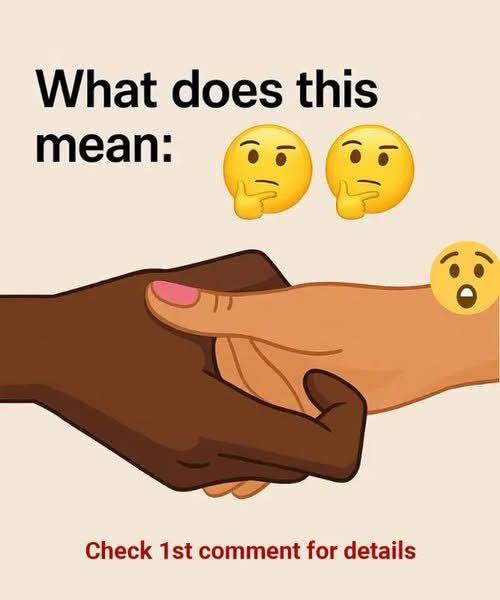
One such gesture that has sparked curiosity and interpretation across cultures is when a man lightly scratches the palm of a woman’s hand. It’s a small, almost fleeting action, yet many people sense that it carries something more than coincidence. The question is: what does it actually mean?
The answer, like most forms of body language, is not simple or universal. It depends on context, intention, and, most importantly, how it is received.
A Gesture That Feels Intentional
Unlike accidental contact—such as brushing hands while passing something—scratching someone’s palm is rarely random. The palm is not an area people typically touch casually, especially in social settings. It is sensitive, personal, and somewhat intimate.
Because of this, when someone deliberately makes contact with it—especially in a slow or lingering way—it often signals intention.
In many interpretations, particularly in the context of flirting or romantic signaling, this gesture is seen as a subtle way of expressing attraction. It can be a non-verbal cue that suggests interest without openly stating it. For some, it’s a way to test boundaries, to see how the other person reacts before making a more direct move.
This is why the gesture can feel charged, even if it lasts only a second.
The Role of Subtlety in Attraction
Attraction is not always expressed through obvious words or actions. In fact, much of it exists in subtle signals—small behaviors that communicate interest without drawing too much attention.
A palm scratch falls into this category.
It’s quiet. It’s easy to overlook. And yet, for those who notice it, it can feel deliberate. Body language experts often point out that such gestures bypass conscious processing and speak directly to instinct. You may not immediately think, “This means something,” but you feel it.
And that feeling is often what gives the gesture its meaning.
Touch, especially in sensitive areas like the palm, activates a different level of awareness. It can create a moment of connection that feels more personal than a simple handshake or casual contact.
How It’s Done Matters
Not all gestures are equal, and the way something is done can completely change its meaning.
A light, slow, and lingering scratch—especially during a handshake or while holding hands—tends to feel intentional. It suggests that the person is aware of what they’re doing and is choosing to extend the moment.
This version of the gesture is often interpreted as flirtatious or suggestive. It’s subtle enough to avoid drawing attention, but distinct enough to be noticed by the person receiving it.
On the other hand, a quick or absent-minded movement may not carry the same weight. If the contact is brief, inconsistent, or clearly unintentional, it may not mean anything beyond coincidence.
This is where interpretation becomes nuanced. The same physical action can feel completely different depending on timing, pressure, and context.
Context Changes Everything
No gesture exists in isolation.
The meaning of a palm scratch depends heavily on the relationship between the two people involved. Between individuals who already share a romantic or emotionally close connection, such a gesture may simply be an extension of that bond. It can be playful, affectionate, or part of an established dynamic.
In this context, it may not feel unusual or surprising. Instead, it fits naturally into the way those individuals interact.
However, when the same gesture occurs between acquaintances—or especially between strangers—it can feel very different.
Without an existing foundation of trust or familiarity, the action may come across as unexpected or even invasive. What might be interpreted as flirtation in one setting could feel uncomfortable or inappropriate in another.
This is why context is so important. The same gesture can carry completely different meanings depending on who is involved and how well they know each other.
Cultural Interpretations
In some cultures, the idea of scratching someone’s palm has been linked to specific symbolic meanings, often associated with romantic or sexual interest. These interpretations are passed through social understanding rather than formal rules, and they can vary widely from one place to another.
In certain circles, the gesture is almost like a coded message—a way of expressing attraction discreetly. In others, it may not carry any recognized meaning at all.
Because of this, relying solely on cultural interpretations can be misleading. What matters more is the immediate context and the individuals involved, rather than any universal rule.
The Psychology of Touch
Touch is one of the most powerful forms of non-verbal communication.
It can convey comfort, connection, reassurance, or attraction, often more effectively than words. The palm, in particular, is a highly sensitive area, rich in nerve endings. It is not typically touched casually, which is why contact there can feel more intimate.
When someone deliberately touches or scratches the palm, it can create a heightened awareness. The brain registers the sensation quickly, and the body often responds instinctively.
This is part of what gives the gesture its impact.
It’s not just the action itself, but how it is perceived and felt in the moment.
The Most Important Factor: Personal Comfort
While interpretations can be interesting, the most important aspect of any physical gesture is how it makes the person receiving it feel.
No gesture, no matter how subtle or culturally interpreted, overrides personal boundaries.
If the action feels welcome, it may be perceived as playful or meaningful. If it feels uncomfortable, confusing, or unwelcome, that reaction is equally valid—and should be respected.
Body language is not just about sending signals; it’s also about receiving them.
And in that exchange, comfort and consent are essential.
Reading the Moment, Not Just the Gesture
It’s easy to focus on the gesture itself and try to assign it a fixed meaning. But human interaction is rarely that simple.
Instead of asking, “What does this always mean?” it can be more helpful to ask:
- What is the context of this interaction?
- What is the relationship between the people involved?
- How did the gesture feel in the moment?
These questions provide a more complete understanding than any single interpretation.
Because in the end, meaning is not just in the action—it’s in the interaction.
A Small Gesture, A Big Impression
A scratch on the palm may seem like a minor detail, something that could easily be dismissed. But as with many forms of body language, its impact lies in its subtlety.
It’s the kind of gesture that doesn’t announce itself, yet lingers in memory.
For some, it may be a quiet signal of interest. For others, it may be confusing or unwelcome. And for many, it may pass unnoticed entirely.
What gives it meaning is not just the gesture itself, but the awareness it creates—the moment of pause, the question it raises, the feeling it leaves behind.
And in that sense, it reflects something larger about human connection.
Not everything is said out loud. Not everything is clear or direct.
Sometimes, meaning exists in the smallest of actions—waiting to be noticed, interpreted, and understood.