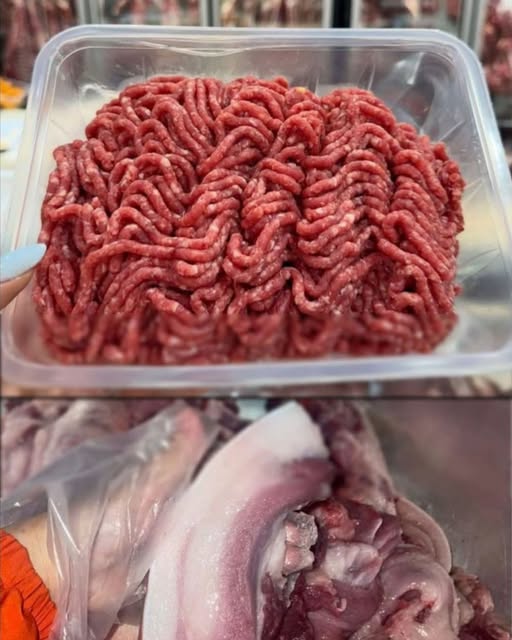
The Truth Behind the Meat Counter: What You’re Really Buying
Walk into any supermarket and the meat section is designed to reassure you. Bright lighting, neatly arranged cuts, labels promising freshness, tenderness, and quality—it all creates the impression that what you’re buying is simple, natural, and wholesome. A steak looks like a steak. Chicken looks like chicken. It feels straightforward.
But the reality is often far more complicated.
Behind the clean packaging and appealing descriptions lies an industrial process that can transform what appears to be “meat” into something very different from what most consumers imagine. Additives, injected solutions, preservatives, and even misleading labeling practices can all play a role in shaping what ends up on your plate. And unless you know what to look for, it’s surprisingly easy to be misled.
The first misconception begins with the idea that meat is always just meat. In many cases—especially with processed or pre-packaged products—that’s simply not true. Some products are enhanced with added water, salt, and chemical solutions designed to improve appearance, extend shelf life, or increase weight.
Yes, weight.
In certain products, water is injected directly into the meat along with sodium-based solutions. This can make the meat appear plumper and juicier while increasing its weight—meaning you may be paying meat prices for added water. While this process is often disclosed in small print, it’s rarely highlighted in a way that consumers immediately notice.
The result? A product that looks appealing in the store but may shrink significantly during cooking, lose flavor, and offer less nutritional value than expected.
Then there are preservatives and additives. These are commonly used in processed meats such as sausages, deli slices, and pre-seasoned products. Ingredients like nitrates, nitrites, phosphates, and artificial flavor enhancers are added to improve color, texture, and shelf life. While many of these substances are approved for use in regulated amounts, their presence changes the nature of the product.
What you’re eating is no longer just meat—it’s a formulation.
This doesn’t necessarily mean all processed meat is harmful, but it does mean it’s different from fresh, unaltered cuts. The nutritional profile can shift, often with higher sodium levels and reduced protein density per gram. For consumers trying to make healthy choices, this distinction matters.
Labeling plays a major role in how these products are perceived—and this is where things become even more complex.
Words like “juicy,” “tender,” “premium,” or “farm-style” are designed to attract attention, but they are not always indicators of quality. These terms are often marketing language rather than factual descriptions. A product labeled “tender” may have achieved that texture through mechanical processing or chemical treatment rather than the natural quality of the meat itself.
Similarly, appealing brand names or packaging that suggests tradition or authenticity can create a sense of trust that isn’t always backed by the actual contents. Rustic imagery, references to farms, or phrases like “homestyle” can influence perception, even when the product is mass-produced.
In some cases, the gap between perception and reality becomes more serious.
There have been documented instances in various markets where meat products were mislabeled—either intentionally or due to supply chain complexity. This can include mixing meat from different sources and selling it as a single type, or labeling imported meat as local. Such practices have triggered investigations and, in some cases, legal action.
While these cases may not represent the entire industry, they highlight a vulnerability in the system: consumers often rely on labels to make decisions, and when those labels are misleading, trust is compromised.
So how does an average shopper navigate this landscape?
The first step is awareness. Understanding that not all meat products are created equal—and that appearance can be deceptive—is essential. A glossy, well-packaged product is not automatically better than a simpler one. In fact, the opposite is often true.
Reading labels carefully is one of the most effective tools consumers have. This means going beyond the front of the package and looking at the ingredient list. If a product contains more than just meat—if you see added water, sodium solutions, or unfamiliar chemical names—it’s worth considering what that means for quality and nutrition.
Pay attention to percentages as well. Some labels will indicate how much of the product is actually meat. A lower percentage may suggest the presence of fillers or additives.
Another important factor is sourcing.
Whenever possible, choosing meat from trusted suppliers can make a significant difference. This might mean buying from a local butcher, a farmers’ market, or a retailer known for transparency. These sources are often more direct, with fewer intermediaries, which can reduce the likelihood of mislabeling or excessive processing.
Fresh meat—cuts that are not pre-marinated, pre-seasoned, or heavily packaged—tends to be the simplest and most reliable option. While it may require more preparation at home, it gives you control over what is added and how it is cooked.
Price can also be a clue, though it should not be the only factor.
Deep discounts on meat products can sometimes indicate lower quality or higher levels of processing. While everyone appreciates a good deal, it’s important to consider why a product is priced the way it is. Is it a seasonal promotion, or is it a reflection of the product’s composition?
That said, higher price does not automatically guarantee better quality either. The key is to combine price awareness with label reading and source evaluation.
There is also a broader context to consider—the industrialization of food production.
Modern supply chains are designed for efficiency, scale, and consistency. This has made food more accessible and affordable for many people, which is a positive development. However, it has also introduced layers of processing and complexity that can obscure the original nature of the product.
In the case of meat, this means that what appears to be a simple, natural item may have undergone multiple stages of treatment before reaching the shelf. Each stage can add something—whether it’s water, preservatives, or flavor enhancers—changing the final product in subtle but meaningful ways.
For consumers, the challenge is not to reject the system entirely, but to engage with it more critically.
Making informed choices does not require perfection. It does not mean avoiding all processed foods or only buying from niche sources. Instead, it means asking questions, reading labels, and being mindful of what you are purchasing.
It also means recognizing that convenience often comes with trade-offs.
Pre-seasoned meats, ready-to-cook products, and heavily packaged options save time, but they may include ingredients you wouldn’t add yourself. Deciding when that trade-off is acceptable—and when it’s not—is a personal choice, but one that should be made consciously.
Education plays a crucial role in this process. The more consumers understand about how food is produced, labeled, and marketed, the better equipped they are to navigate the choices available to them. This knowledge empowers individuals to align their purchases with their values, whether those values prioritize health, sustainability, or transparency.
Ultimately, the goal is not to create fear or distrust, but to encourage awareness.
The meat counter is not inherently deceptive, but it is shaped by systems and incentives that don’t always prioritize simplicity or clarity. By looking beyond the surface—beyond the packaging, the labels, and the marketing—consumers can make choices that are more informed and, in many cases, more satisfying.
Because at the end of the day, what you bring home from the supermarket is more than just a product. It’s part of your daily life, your health, and your understanding of what you’re consuming.
And that understanding begins with a simple realization: not everything is as straightforward as it looks.