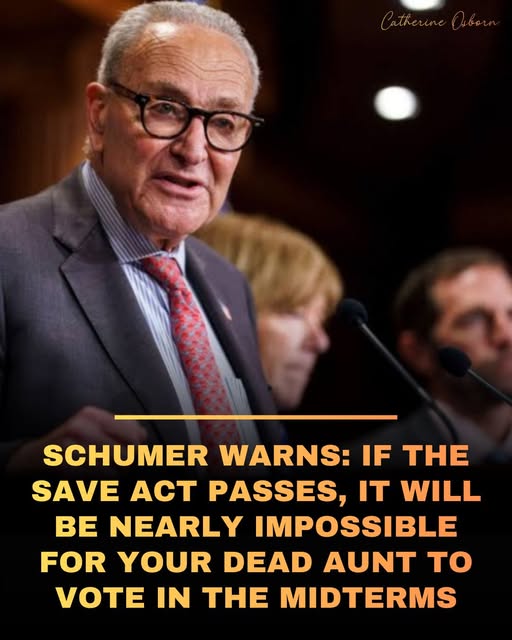
A striking meme-style image featuring Chuck Schumer and a sarcastic line about a “dead aunt” voting in the midterms has been making the rounds online. Like many political graphics today, it blends humor, exaggeration, and a real policy debate into one viral package.
But behind the punchline is a serious national conversation about election security, voter eligibility, and how to balance access with integrity. Let’s unpack what’s really being discussed.
The Joke vs. The Issue
The line about a “dead aunt voting” is clearly tongue-in-cheek. It plays on a long-running political talking point about voter fraud — specifically the claim that deceased individuals sometimes remain on voter rolls.
While isolated cases have occurred over the years, multiple studies and investigations have generally found that widespread fraud of this type is rare. Still, the concern persists among many voters, and politicians respond to those concerns in different ways.
That’s where legislation like the SAVE Act (Safeguard American Voter Eligibility proposals often described by that acronym) enters the conversation.
What Supporters of Stricter Voting Rules Argue
People who favor tighter voter verification laws typically say:
- Accurate voter rolls protect election credibility
- Citizenship verification ensures only eligible voters participate
- Public trust increases when safeguards are visible
- Preventative measures are better than reactive ones
From this perspective, reforms are about confidence as much as security. Even the perception of weak safeguards can make some voters skeptical of results.
What Critics Worry About
On the other side, critics of stricter voting laws often argue:
- Extra requirements can burden eligible voters
- Documentation rules may disproportionately affect certain groups
- Administrative errors can wrongly flag legitimate voters
- The focus should be on access and turnout
Their concern is that in trying to solve a small problem, policymakers might create larger participation barriers.
Why the Rhetoric Gets Heated
Voting laws hit at the core of democracy. That naturally makes emotions run high. Add social media to the mix, and debates become faster, louder, and more polarized.
Memes and satire spread quickly because they’re simple and emotionally charged. But they rarely capture the nuance of policy. A one-liner can frame a narrative, yet real legislation involves pages of legal language and implementation details.
The Reality: Election Policy Is a Balancing Act
Most election experts agree on two things at once:
- Election systems should be secure
- Voting should be accessible for eligible citizens
The debate is about where the balance lies. Reasonable people can disagree on the best approach without either side being anti-democracy.
Healthy democracies regularly update procedures as technology, population, and risks change. That doesn’t automatically mean crisis — it can also mean maintenance.
A Thoughtful Takeaway
The viral image is designed to provoke a reaction, not provide a policy briefing. It uses humor to spotlight a real divide in how Americans view election rules.
If there’s a constructive path forward, it likely involves:
- Clear standards
- Transparent processes
- Regular voter roll maintenance
- Safeguards paired with accessibility
These goals don’t have to conflict if designed carefully.
Final Thought
Political humor has always existed, and it can be a useful way to spark discussion. But when it comes to voting laws, informed conversations matter more than viral lines.
Democracy works best when citizens look beyond the meme and understand the policy underneath.