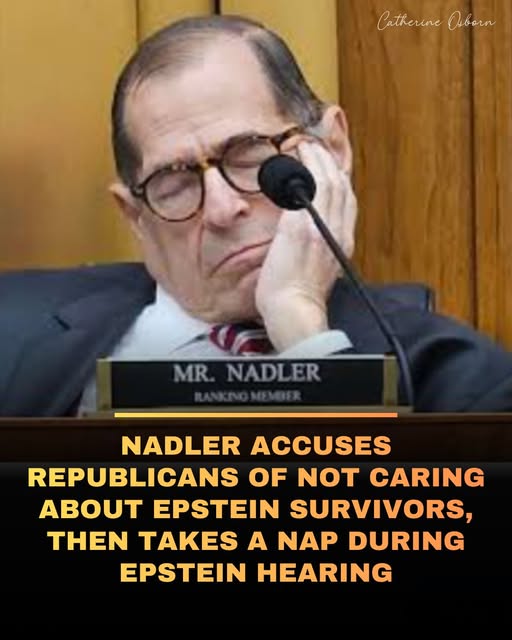
In the age of viral clips and meme-speed news cycles, a single photograph can ignite a nationwide debate before the facts have time to put their shoes on. That’s exactly what happened this week when a widely shared image from a congressional hearing appeared to show a senior lawmaker with eyes closed and head resting on a hand during a serious discussion about justice for victims in a high-profile case. Within hours, social media lit up with accusations, jokes, and partisan takes that said as much about our political culture as they did about the moment itself.
Let’s be clear from the start: viral moments are not always what they seem. A still photo can capture a blink, a pause, or a fleeting expression and freeze it into a narrative that travels far beyond reality. But in modern politics, perception often becomes its own form of truth. And when the topic at hand involves victims, accountability, and public trust, even the appearance of disengagement can be politically combustible.
The Optics Problem in Modern Politics
Politics has always been about optics, but today’s environment supercharges every gesture. Lawmakers sit through hours of testimony, briefings, and hearings—many of them dense, technical, and emotionally draining. Cameras are always rolling. A yawn, a glance downward, or a moment of closed eyes can be clipped, captioned, and broadcast as a symbol of indifference.
Supporters of the lawmaker in question argue that it’s unfair to draw sweeping conclusions from a single image. They note that long hearings are grueling and that participants often review notes, listen with eyes closed, or rest briefly between segments. Critics, however, counter that when the subject matter is grave, elected officials carry a responsibility to project attentiveness and empathy at all times. In their view, optics aren’t superficial—they’re part of the job.
Viral Narratives and Partisan Spin
Once the image began circulating, partisan commentators rushed to frame it. Some portrayed it as emblematic of a political class out of touch with the public and disengaged from victims’ concerns. Others dismissed the uproar as manufactured outrage, arguing that opponents were weaponizing a mundane moment for political gain.
This dynamic is now familiar. A moment goes viral → narratives form → each side reinforces its priors. The result is less about what actually happened and more about how the moment can be used to energize supporters or criticize opponents.
What gets lost in the shuffle? The underlying issue that prompted the hearing in the first place. When the focus shifts to a meme, the substance—policy proposals, investigative findings, victim support, and legal accountability—often fades into the background.
The Human Factor
It’s also worth remembering that lawmakers are human. Many are older, juggling punishing schedules, travel, and high-pressure decisions. Voters rightly expect sharpness and stamina from their representatives, but there’s a broader conversation to be had about workload, transparency, and how Congress structures its marathon sessions.
None of this excuses genuine disengagement. If a representative consistently appears inattentive during critical proceedings, constituents are justified in asking questions. But a single snapshot rarely tells the whole story.
Why These Moments Stick
So why do these images resonate so strongly?
- They’re visual and simple. A photo is easier to process than a 200-page report.
- They confirm biases. People share what aligns with their views.
- They’re emotional. When hearings involve victims or justice, emotions run high.
- They’re shareable. A caption can turn a neutral image into a viral statement.
In short, they’re tailor-made for the social media era.
A Better Standard for Accountability
If there’s a silver lining, it’s that viral moments can push for higher standards. Voters can demand transparency: full video context, attendance records, voting histories, and clear positions on victim support and accountability. Those metrics say more about a lawmaker’s priorities than a single frame.
Media literacy also matters. Before sharing a claim, it’s fair to ask:
- Is this verified?
- Is there full-context footage?
- Are captions editorialized or factual?
- Who benefits from this narrative?
The Bigger Picture
The real story shouldn’t be about whether someone’s eyes were closed for a moment. It should be about whether institutions are delivering justice, supporting victims, and maintaining public trust. Those outcomes require sustained attention from lawmakers of all parties—and scrutiny from citizens who look beyond the meme of the day.
In the end, viral politics rewards outrage, but democracy rewards informed engagement. The next time a photo explodes across your feed, take a beat. The truth is often bigger—and more complicated—than a blink caught on camera.