In Washington, the word investigation has a way of instantly raising temperatures. Supporters hear “accountability.” Critics hear “politics.” And the public is often left trying to sort out what is actually happening versus what is being said online.
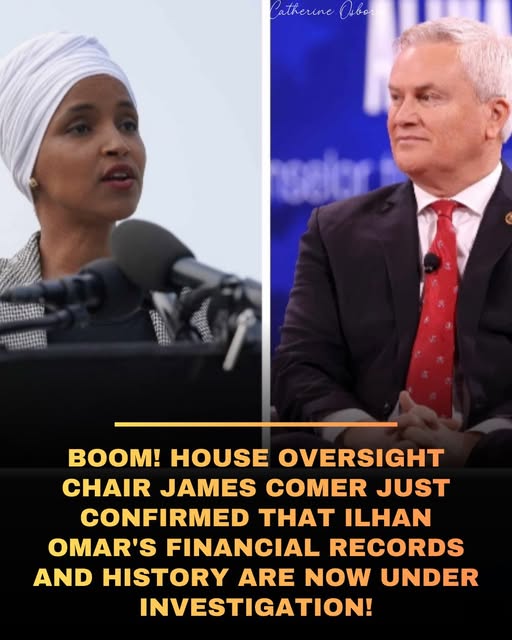
Recent commentary and social media posts have circulated claims that House Republicans, led by James Comer, are taking a closer look at matters connected to Representative Ilhan Omar. As with many fast-moving political stories, the rhetoric around it has been louder than the confirmed details, which makes it a good moment to step back and look at the bigger picture: how congressional oversight works, why it matters, and how politics and perception shape the narrative.
Oversight: A Core Power of Congress
Congressional oversight is not new, and it is not inherently partisan. The U.S. Constitution gives Congress authority to investigate in order to:
- monitor how laws are implemented
- examine potential misuse of public office
- ensure transparency in government
- inform future legislation
Both parties have used this power for decades. When control of the House changes hands, oversight priorities often shift too. What one majority ignored, another may pursue aggressively.
That doesn’t automatically mean wrongdoing exists. It means questions are being asked. In the American system, asking questions is allowed; proving allegations requires evidence.
The Politics of Investigations
Investigations in Washington rarely happen in a political vacuum. They unfold in an environment shaped by:
- media competition
- partisan messaging
- election cycles
- donor and voter expectations
Supporters of investigations often argue they are defending the rule of law and equal accountability. Opponents often argue the same investigations are politically motivated or selective.
Both claims can appear in the same story depending on who is speaking. That’s part of why voters sometimes feel cynical — every side claims principle, every side accuses the other of politics.
Media Narratives and Double Standards
A frequent criticism in today’s political climate is that media coverage can feel uneven. Some Americans believe certain figures receive harsher scrutiny; others believe the opposite. Research shows people across the political spectrum think the media is biased — just in different directions.
The reality is that news coverage is driven by many factors:
- available evidence
- public interest
- timing
- competition for attention
- editorial judgment
That doesn’t mean bias never exists, but it does mean the picture is often more complex than a simple “protecting one side” narrative.
Presumption of Innocence Still Matters
One principle sometimes lost in political debate is the presumption of innocence. In the U.S. system:
- an inquiry is not a finding
- a subpoena is not a conviction
- an allegation is not proof
Public officials, like all citizens, are entitled to due process. Oversight can uncover problems, but it can also clear them. Both outcomes are part of the system working as designed.
Why Voters Care About Oversight
Oversight resonates because it connects to trust. Many voters worry that powerful people escape consequences. Others worry that investigations are weaponized for political gain.
Both concerns are real to the people who hold them. That’s why transparency is crucial. When oversight is conducted openly and grounded in facts, it can strengthen confidence in institutions. When it looks performative or purely partisan, it can weaken that confidence.
The Incentive to Be Seen as a “Fighter”
Modern politics rewards visibility. Lawmakers in both parties often emphasize investigations because they show action. Voters who feel frustrated with Washington often want representatives who promise to “dig in” and “expose the truth.”
But governing requires more than confrontation. It also requires legislation, negotiation, and policy work that rarely goes viral.
A Broader Pattern in U.S. Politics
The cycle of investigation and counter-investigation has become a defining feature of recent decades. Control flips, priorities flip, and scrutiny follows. This pattern reflects polarization as much as principle.
Some analysts argue this is healthy accountability. Others warn it risks normalizing permanent political warfare. The truth likely depends on how responsibly the power is used.
✔️ Check Below — The Real Takeaway
👇 Check below for the key point:
Oversight is a legitimate and important function of Congress, but it only builds public trust when it sticks to facts and fair process. Claims online often move faster than verified information, and strong opinions appear long before conclusions do.
For voters, the most reliable approach is to watch what evidence emerges, how procedures are followed, and whether standards are applied consistently — regardless of party.
Accountability matters. So does fairness. A democracy needs both to stay credible.