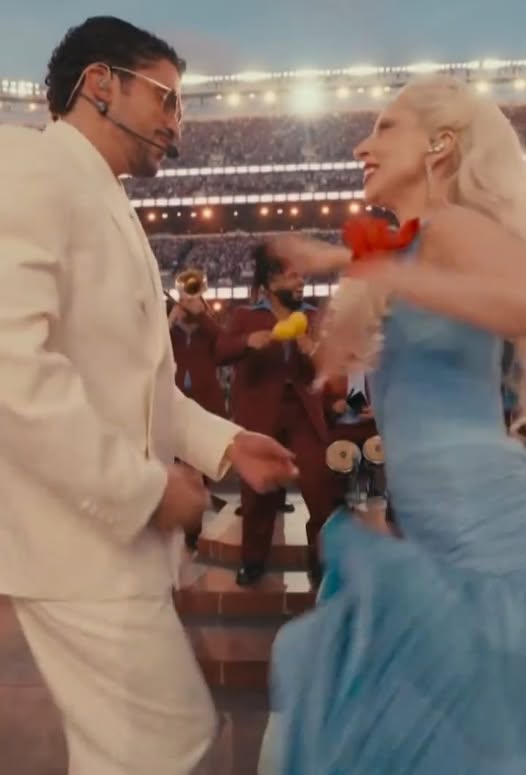
The 2026 Super Bowl Apple Music Halftime Show will go down as one of the most unforgettable performances in the history of the event, not just for its high-energy music and cultural depth, but for a surprise moment that captivated millions: Bad Bunny dancing salsa with Lady Gaga live onstage. That clip — Bad Bunny smiling, swaying, and stepping rhythmically beside Gaga as she delivered a salsa-styled rendition of her song — became an instant highlight of the show and a viral moment that spread across social media soon after the performance aired.
From the moment the halftime show kicked off on February 8 at Levi’s Stadium in Santa Clara, California, it was clear this wasn’t going to be a typical performance. Bad Bunny, already firmly etched in cultural history as the first male solo Latin artist to headline the Super Bowl halftime stage, brought a celebration of Puerto Rican heritage and Latin music to a massive global platform.
The setlist blended New York’s reggaeton rhythms, salsa undertones, and energetic beats that spanned genres and generations, paying homage to the island’s musical traditions while also pushing the artistic boundaries of a halftime spectacle. Dancers, musical ensembles, and visual motifs from everyday Latin culture filled the stage, creating a vibrant backdrop for a performance that was as much a cultural narrative as it was entertainment.
But nothing prepared viewers for the moment when Lady Gaga appeared seemingly out of nowhere. Midway through the set, the crowd and millions watching at home watched as she took the stage to perform a salsa version of her 2024 track “Die With a Smile.” In her elegant blue dress accented with red flor de maga — the national flower of Puerto Rico — Gaga delivered the performance with joy and intensity. What made it truly special, though, was not just her captivating vocals, but the fact that Bad Bunny joined her for a dance right on the field, sashaying, stepping, and matching rhythms with her in a style rooted in salsa tradition.
The interaction between the two artists was more than a fun collision of pop and Latin music worlds — it was a symbolic gesture of mutual respect and musical fusion. Bad Bunny, who has blended salsa and other Latin rhythms into his music in recent years, seemed thrilled to share this moment with Gaga, whose versatility as a performer has always been one of her signature strengths. Online clips of the two artists dancing together spread widely, with many fans calling it one of the most joyous moments of the entire broadcast.
Lady Gaga herself later took to social media to express her gratitude for being part of the show. In an Instagram note thanking Bad Bunny, she described the experience as “powerful, important, and meaningful,” and highlighted what an honor it was to be included in such a culturally rich performance. Her comments reflected the mutual admiration between the two artists — admiration that came through both in the music and in the playful yet respectful way they moved together onstage.
For fans and critics alike, one of the most striking aspects of this moment was how it highlighted the universality of dance and rhythm. Salsa, a genre deeply embedded in Latin heritage and celebrated around the world, became a bridge between Gaga’s pop sensibilities and Bad Bunny’s own evolving musical identity. Watching two artists from distinct backgrounds find common ground through movement and music was a compelling reminder of how performance can transcend language and genre.
The scene also resonated strongly with viewers because it felt genuine, unforced, and joyful. Rather than being a pre-choreographed showpiece or a flashy “guest spot,” this dance felt like a moment of two musicians simply enjoying the music they were creating together. Many social media users noted how infectious the energy was, with clips of the dance gaining rapid shares and reactions across platforms as fans celebrated the unifying power of the performance.
Beyond the dance itself, this moment contributed to the broader narrative of Bad Bunny’s historic halftime performance. The show was already being celebrated for its unapologetic celebration of Latin culture, from sugar cane fields and domino-playing elders to references to Puerto Rican traditions and sounds. Gaga’s cameo, and especially the dance with Bad Bunny, added a layer of cross‐genre collaboration that elevated the entire experience.
Critics and fans alike responded enthusiastically to the moment. While some outlets focused on Gaga’s surprise appearance and how she fit into the broader structure of the show, many others highlighted the chemistry and sheer fun of watching the two artists share the stage in motion. The dance was, for many viewers, one of the standout images of an already memorable event.
In the weeks following the broadcast, that clip of Bad Bunny and Gaga dancing salsa became a touchstone for discussions about the show’s cultural impact. It was shared in posts about genre-blending collaborations, highlighted in music commentary, and celebrated by fans of both artists. For many, the moment offered a glimpse of something larger — a symbolic unity between artists and audiences, emphasizing joy, respect, and shared musical heritage.
Ultimately, the lasting image of Bad Bunny dancing salsa with Lady Gaga at the Super Bowl isn’t just about a brief moment of spectacle. It represents a fusion of cultural expression, a celebration of artistic versatility, and a reminder that music — and movement — can connect people in ways that go far beyond the confines of a stadium or a broadcast. It’s a moment that fans will talk about for years, emblematic of a halftime show that didn’t just entertain, but inspired.