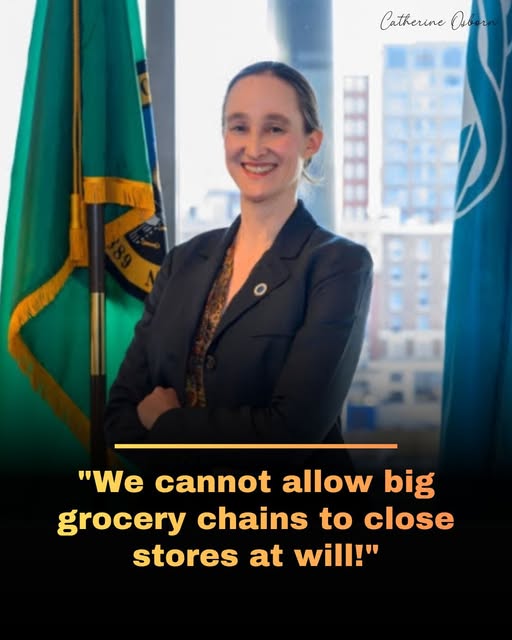
A heated debate is unfolding in Seattle over a provocative idea: should a city have the power to stop grocery stores from closing in order to protect community access to food?
Online posts and political commentators have been circulating claims that Seattle leadership is exploring aggressive measures to prevent large grocery chains from shutting down stores, including potential use of eminent domain and public ownership models. Supporters frame such ideas as protecting vulnerable communities. Critics see them as a troubling expansion of government power into private business decisions.
Whatever one’s politics, the controversy taps into real tensions facing many American cities: food deserts, retail theft, rising costs, and the struggle to balance community needs with market realities.
Let’s unpack the issues behind the headlines.
The Core Issue: Food Access
At the center of this conversation is a genuine policy concern: access to affordable, healthy food.
When grocery stores close in urban neighborhoods, especially lower-income areas, residents can be left with few options beyond convenience stores or long trips to other districts. Researchers and public health officials often call these areas “food deserts,” where fresh produce and staple goods are harder to find.
For families without reliable transportation, a store closure can be more than an inconvenience — it can affect nutrition, budgets, and quality of life.
Because of this, some policymakers across the U.S. have explored incentives to keep grocers in underserved areas:
- tax breaks
- grants
- zoning support
- public-private partnerships
- community-owned co-ops
These approaches aim to make stores financially viable without forcing private operators to stay.
Where the Controversy Begins
The debate becomes more intense when discussions shift from incentives to mandates.
The idea that a city could block a store from closing or seize property to keep a grocery location operating raises big legal and economic questions.
Eminent domain — the government’s power to take private property for public use with compensation — does exist in U.S. law. It’s typically used for infrastructure projects like highways or utilities. Using it to maintain grocery operations would be unusual and likely face legal challenges.
Critics argue that:
- forcing a business to operate against its will could deter investment
- companies might avoid opening stores in high-risk areas
- it sets a precedent for deeper government intrusion
Supporters counter that:
- food access is a public necessity
- communities suffer when corporations leave abruptly
- cities already intervene in housing and utilities
This clash reflects two different philosophies: market freedom vs. social obligation.
The Business Reality
Grocery stores operate on thin margins. Industry analysts often note that supermarkets can struggle with:
- theft and shrinkage
- security costs
- supply chain pressures
- labor expenses
- rent and taxes
If a location becomes consistently unprofitable, chains may decide to close it. From a corporate perspective, this is a financial decision. From a community perspective, it can feel like abandonment.
The friction between those viewpoints is not new. Cities nationwide — from Chicago to San Francisco to New York — have wrestled with similar tensions.
Public Ownership: A Radical or Practical Idea?
Some advocates have floated publicly owned grocery models. While uncommon in the U.S., municipal or cooperative food markets do exist in parts of the world and in small American communities.
Potential benefits:
- focus on service over profit
- stable presence in underserved areas
- community accountability
Potential downsides:
- taxpayer burden
- management inefficiencies
- political influence over operations
Whether such models scale well in major cities remains debated among economists.
The Politics of the Narrative
It’s also important to note how quickly these stories become politicized.
Terms like “socialist,” “war on business,” or “corporate greed” can energize supporters but oversimplify complex policy discussions. Viral posts sometimes present proposals in the most dramatic light possible, which can blur the line between serious policy exploration and political messaging.
As with many online claims, details can evolve, and proposals may differ from how they’re portrayed in commentary.
The Bigger Question
Stepping back, the real policy question might be:
What responsibility do cities have to ensure food access, and what responsibility do businesses have to the communities they serve?
There’s no easy answer. A purely market approach can leave gaps. A heavy-handed government approach can carry risks. Most cities try to navigate a middle path.
Possible balanced strategies include:
- subsidies for high-need areas
- stronger theft prevention partnerships
- community co-ops
- streamlined permits and tax relief
- encouraging smaller local grocers
These solutions aim to keep stores open voluntarily rather than by force.
Why This Debate Matters
Food access affects health, education, and economic stability. When grocery stores leave neighborhoods, the ripple effects are real. That’s why emotions run high on this topic.
At the same time, stable business environments matter for job creation and investment. Policies seen as unpredictable can have long-term consequences.
The challenge for city leaders is finding solutions that support residents without discouraging the very businesses that provide services.
A Measured Takeaway
The grocery store debate is less about ideology and more about practical trade-offs. Most people agree communities need reliable food access. Most also agree businesses need sustainable conditions to operate.
The path forward likely lies in collaboration rather than confrontation.
Good policy rarely fits into a viral headline. It’s built in the gray areas between public need and private enterprise.