She was a pioneer in every sense of the word — a woman whose life quietly reshaped history and inspired generations, even if not everyone recognized her name at first glance.
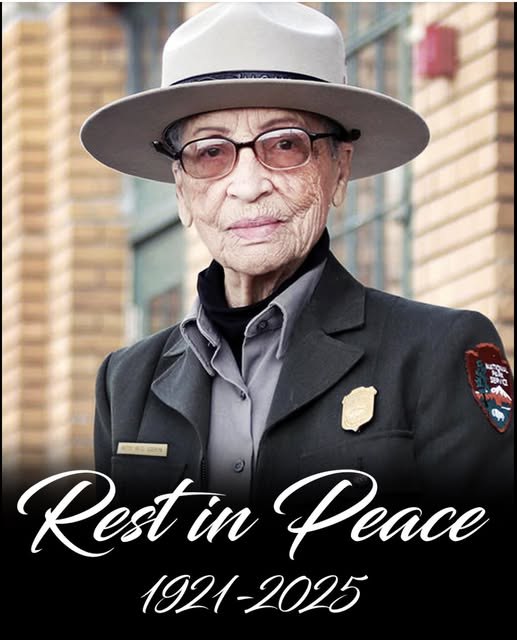
Today, we pause to honor Betty Reid Soskin, a remarkable force of courage, memory, and truth.
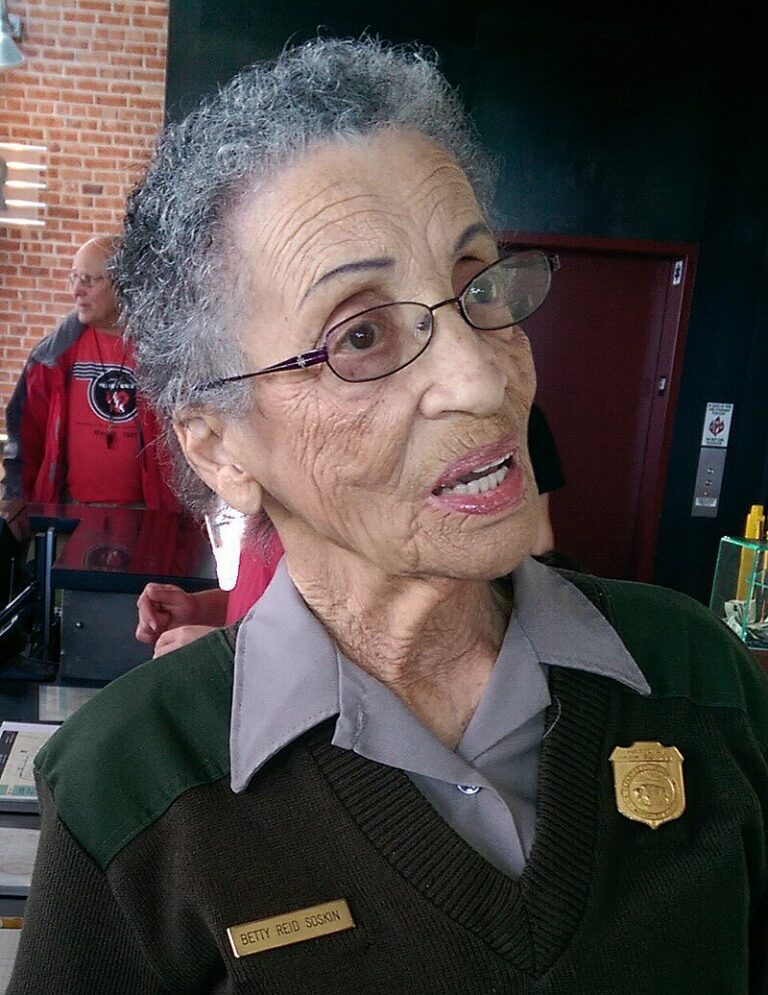
Until her passing on December 21, 2025, Soskin held the distinction of being the oldest living National Park Service ranger, a title she carried with humility and pride at the extraordinary age of 104. Yet her legacy cannot be measured by age or position alone. It is measured by the barriers she broke, the stories she reclaimed, and the lives she touched across more than a century of change.
A Life Lived With Purpose
Betty Reid Soskin passed away peacefully, surrounded by loved ones — a final chapter that mirrored the way she lived: fully, deliberately, and with meaning. In a statement released by her family, they shared that she had “lived a fully packed life and was ready to leave.” Few phrases could better summarize a journey as rich and impactful as hers.
Soskin officially retired from the National Park Service in 2022 at the age of 100, becoming the agency’s oldest active ranger. But even in retirement, her voice, her wisdom, and her influence continued to resonate far beyond park boundaries.
Rewriting History — One Story at a Time
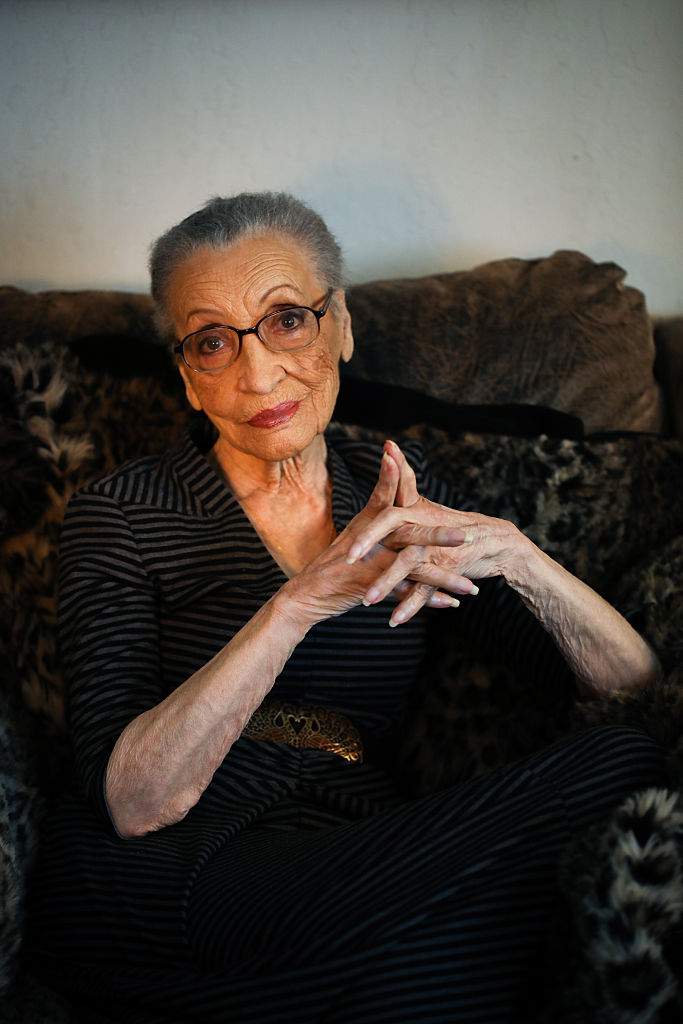
Long before she ever wore a ranger’s uniform, Soskin was already shaping the future of historical preservation. She played a crucial role in the creation of the Rosie the Riveter/World War II Home Front National Historical Park in Richmond, California. Working closely with city officials and the National Park Service, she helped design the park’s management plan — insisting that the experiences of African Americans and other people of color, so often erased from World War II narratives, be included at the center of the story.
Remarkably, Soskin didn’t begin her official career with the Park Service until she was 84 years old. Through a grant funded by PG&E, she assisted in uncovering overlooked accounts of Black Americans who labored on the WWII home front. What began as a temporary project evolved into a permanent role, where her interpretive programs transformed how visitors understood American history — not as a single story, but as a tapestry of voices long denied space.
Born Betty Charbonnet in 1921 in Detroit, Soskin grew up in a Cajun-Creole African American family whose life was shaped by migration and resilience. After the catastrophic Great Flood of 1927, her family moved first to New Orleans and later to Oakland, California, following the path of Black railroad workers seeking opportunity — and escape — from the brutal realities of the Jim Crow South.
Her memory stretched across nearly every defining moment of modern American history. She remembered ferry boats crossing the Bay before bridges existed, Oakland’s airport when it consisted of only two hangars, Amelia Earhart’s final flight, and the devastating Port Chicago explosion of 1944.
During World War II, Soskin worked as a file clerk in a segregated union hall — a firsthand experience with systemic racism that would shape her lifelong activism. In 1945, she and her husband founded Reid’s Records, one of the first Black-owned music stores in the United States. The store became a cultural hub and endured for more than 70 years, a testament to its importance in the community.
A Lifetime of Public Service
Soskin’s dedication to service never faded. She went on to work in local and state government, serving as a staff member to a Berkeley city council member and later as a field representative for California legislators. At every stage, she advocated for equity, inclusion, and historical truth — often challenging institutions to confront uncomfortable realities.
One of the most moving moments of her later life came in 2015, when President Barack Obama personally invited her to light the National Christmas Tree. He honored her with a commemorative coin bearing the presidential seal — a powerful recognition of a woman who had spent her life serving a nation that often overlooked her contributions.
“I look at it now and it seems almost unreal,” Soskin reflected in 2021. “It was something I never had dreamed, and it turned out to be wonderful.”
Even in her final years, Soskin remained deeply connected to the world — especially to politics and social justice. In an interview with The Guardian, she spoke openly about her concerns for the direction of the United States.
“I follow politics very closely,” she said from her home in Richmond, where she lived with her daughter, Di’ara. Reflecting on the civil rights struggles of the 1950s and 1960s, she acknowledged the progress she had lived to see — but worried it was slipping away.
“I don’t feel as if that’s so now,” she said candidly, expressing deep concern about the Trump era. “It’s seemed to me that he has no idea what he’s doing. I think we’ve lost our sense of direction.”
For a woman who had spent more than a century fighting for justice, that fear weighed heavily. “And that’s terrifying to me,” she said, “because I’m going to leave the world in such a shape.”
A Legacy That Endures
Betty Reid Soskin passed away at her home in Richmond, California, at age 104, her family confirmed. A public memorial will be announced at a later date.
In lieu of flowers, her family has requested donations be made to Betty Reid Soskin Middle School or toward completing her documentary film, Sign My Name to Freedom — a fitting tribute to a woman who devoted her life to reclaiming truth, dignity, and voice.
Her story reminds us that history is not just written — it is lived, challenged, and preserved by people brave enough to speak. And Betty Reid Soskin did exactly that, until her very last days.