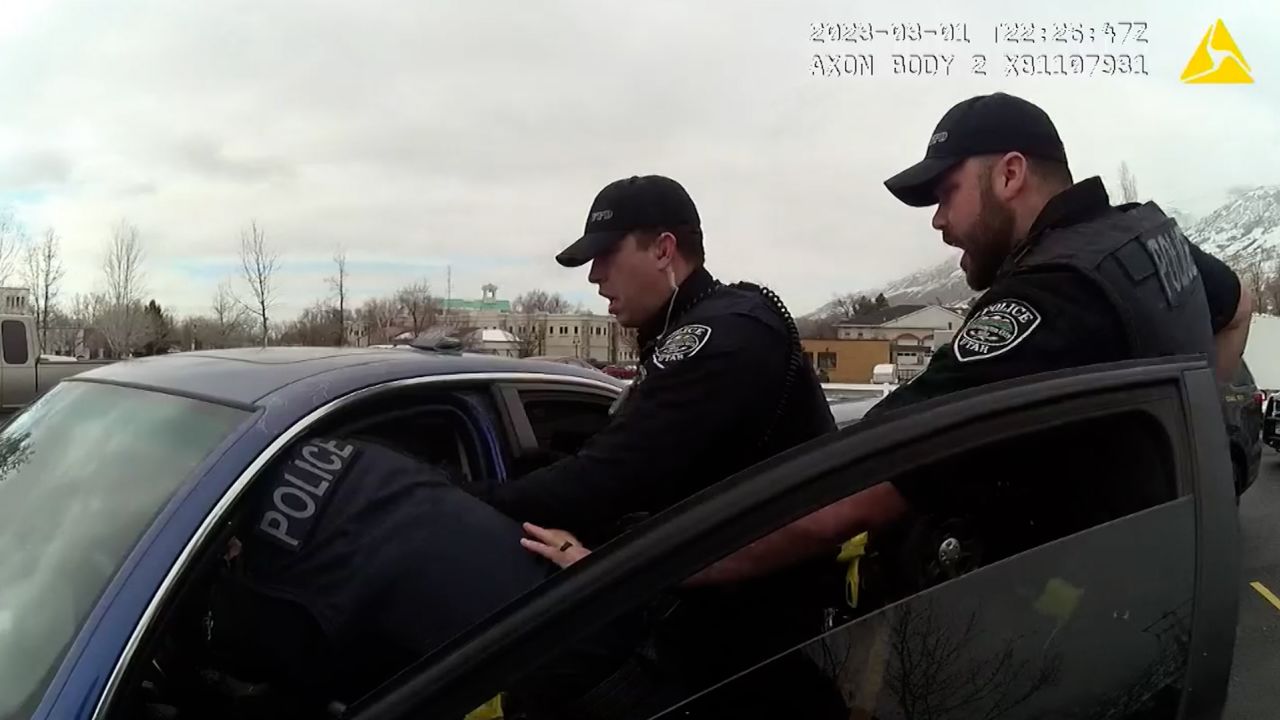
What begins as a routine moment captured on bodycam quickly turns into one of the most unsettling police encounters viewers have seen in recent years. In the video, a law enforcement officer reacts to a sudden noise — later identified as an acorn falling — and within seconds, unleashes a barrage of gunfire. There is no visible weapon. No confirmed threat. Just panic, confusion, and a decision that cannot be undone.
The clip is shocking not because of dramatic buildup, but because of how quickly things spiral.
A Routine Situation Takes a Dangerous Turn
At the start of the video, everything appears calm. The officer is conducting what looks like a standard interaction. There’s no yelling, no struggle, no visible danger. The scene is quiet — the kind of quiet that typically signals control.
Then it happens.
A sharp sound breaks the silence. It’s sudden, unexpected, and loud enough to startle. But instead of pausing to assess, the officer reacts instantly. He shouts, retreats, and begins firing his weapon repeatedly.
Later investigations confirm what the video already suggests: the sound was not a gunshot. It was an acorn falling from a tree.
Seconds That Define a Career
What’s most disturbing is how little time passes between the sound and the response. There is no clear confirmation of danger. No visual cue. No attempt to identify a shooter.
The officer fires rapidly — emptying his magazine in a matter of seconds.
Viewers watching the footage are left stunned. Many replay the clip, trying to understand how a natural sound could trigger such a violent reaction. The answer appears to lie in fear, training, and a mindset primed for worst-case scenarios.
The Power — and Danger — of Perception
This incident highlights a harsh truth: in high-stress policing, perception can override reality. The officer believed he was under fire — even though he wasn’t. And that belief alone was enough to justify lethal force in his mind.
But belief is not the same as fact.
The video shows no muzzle flash from another weapon. No suspect aiming a gun. No immediate threat. Yet the response is absolute and final.
That disconnect is what has fueled outrage.
Bodycam Footage Leaves Little Room for Interpretation
Unlike secondhand reports or written statements, bodycam footage removes ambiguity. Viewers see exactly what happened, in real time, from the officer’s perspective.
And what they see is fear escalating faster than reason.
The audio captures panic in the officer’s voice. The movement is frantic. Shots ring out one after another. It’s a visceral reminder of how quickly deadly force can be deployed — even when it isn’t warranted.
Public Reaction: Shock, Anger, and Fear
Reactions online have been intense. Many viewers express disbelief that an acorn could be mistaken for a gunshot. Others focus on the broader implication: if this can happen here, it can happen anywhere.
Parents, drivers, and everyday citizens see themselves in this situation — one unexpected noise away from catastrophe.
The video has sparked renewed debate over police training, use-of-force standards, and accountability.
Training Under the Microscope
Law enforcement training often emphasizes officer safety, awareness, and readiness. Critics argue that this can sometimes create a hair-trigger mentality — where every sudden sound is interpreted as a lethal threat.
Supporters of reform say this incident is a clear example of training that prioritizes fear over assessment.
“How is an officer trained to empty a magazine without identifying a threat?” is one of the most common questions being asked.
Accountability and Investigation
Following the release of the video, investigations were launched to determine whether the officer’s actions violated department policy or use-of-force guidelines.
Key questions include:
- Was deadly force justified?
- Were proper identification and assessment protocols followed?
- Should the officer remain on duty?
These investigations matter not just for this case, but for public trust moving forward.
The Human Cost — Even When No One Is Hit
In this case, no one was killed by the gunfire. But that doesn’t mean there was no harm.
Gunshots in public spaces put everyone at risk. Bullets don’t stop at intentions. They travel through cars, walls, and lives.
The psychological impact — on bystanders, on the community, and even on the officer — is real and lasting.
A Moment That Will Be Remembered
This video will not fade quietly. It has become a symbol of a larger problem — one where fear, authority, and weapons intersect with irreversible consequences.
An acorn should never result in a hail of bullets.
Yet it did.
What This Incident Forces Us to Confront
This case forces uncomfortable questions:
- Are officers trained to slow down under pressure?
- Is fear being confused with justification?
- How many similar incidents never get caught on camera?
Bodycams were introduced to increase transparency. In this case, they did exactly that — and the result is deeply troubling.
Final Thoughts
The title says it all: A cop heard an acorn, thought it was a gunshot, then emptied his magazine.
It sounds unbelievable — until you watch the video.
This incident isn’t just about one officer or one mistake. It’s about systems, training, accountability, and the razor-thin line between safety and tragedy.
And it’s a reminder that in policing, seconds matter — but judgment matters more.