What should have been a routine cash withdrawal turned into a legal nightmare that has left many people questioning fairness, responsibility, and how doing the “right thing” can sometimes backfire.
According to reports, a man was using an ATM like any other day when the machine suddenly malfunctioned. Instead of dispensing the requested amount, the ATM allegedly began spewing extra money. Faced with a situation most people never expect, the man made a decision that would later place him at the center of a shocking dispute.
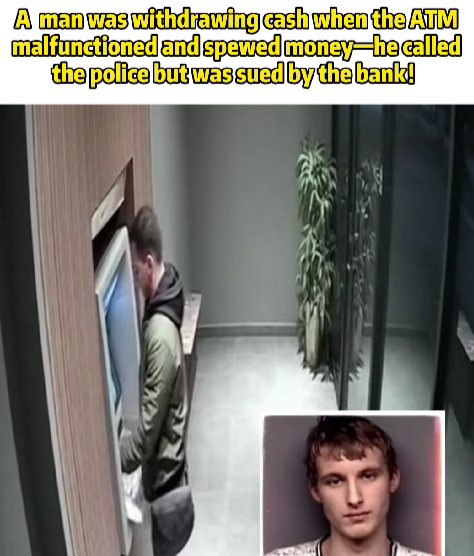
Rather than walking away with the unexpected cash, the man reportedly contacted police immediately to report the malfunction. Surveillance footage shows him standing at the machine as bills continued to come out, clearly confused by what was happening. Officers were called, the situation was documented, and the money was secured.
At that point, many assumed the story would end with praise for honesty.
It didn’t.
Despite notifying authorities and cooperating fully, the man later learned that the bank had filed a lawsuit against him, claiming financial losses related to the ATM error. The move stunned the public, especially after details emerged showing he did not attempt to hide the incident or keep the excess money.
The case quickly gained attention online, where people began asking the same question: How can someone be punished for reporting a problem?
Legal experts explain that banks are required to account for missing funds, even when machines malfunction. In some cases, financial institutions pursue legal action to recover losses — regardless of intent. Still, many argue that intent should matter, especially when a customer involves law enforcement and follows instructions.
Supporters of the man say the lawsuit sends the wrong message. “Why would anyone report a malfunction if this is the result?” one commenter asked. Others warned that punishing honesty could encourage people to assume silence is safer than transparency.
The bank, meanwhile, has defended its position by citing contractual obligations and financial regulations. According to statements, ATM transactions are governed by strict rules, and disputes over cash discrepancies often default to legal processes rather than internal resolutions.
Consumer advocates say this case highlights a growing problem in modern banking: automation without accountability. As machines replace human oversight, customers are increasingly caught in the middle when technology fails. When errors occur, the burden often falls on the individual — even when they did nothing wrong.
The emotional toll has reportedly been significant. Friends say the man never expected to face legal trouble for reporting a malfunction. What began as a confusing moment at an ATM quickly turned into stress, legal fees, and public scrutiny.
The case has also sparked calls for clearer protections for consumers who act in good faith. Advocates argue that banks should establish policies that protect customers who immediately report errors, rather than treating them as adversaries.
Online reaction has been overwhelming. Many people say the story changed how they view banks altogether. “If honesty gets you sued,” one user wrote, “what incentive is there to do the right thing?”
As the legal process continues, the outcome could set an important precedent. At stake is more than just money — it’s trust. Trust between customers and banks, and trust that integrity won’t be punished.
For now, the story serves as a cautionary tale. A simple withdrawal. A broken machine. A decision to call police. And a lawsuit no one saw coming.
In a world increasingly run by automated systems, this case raises an uncomfortable question: when technology fails, who really pays the price?